

By Daniel Kipchumba
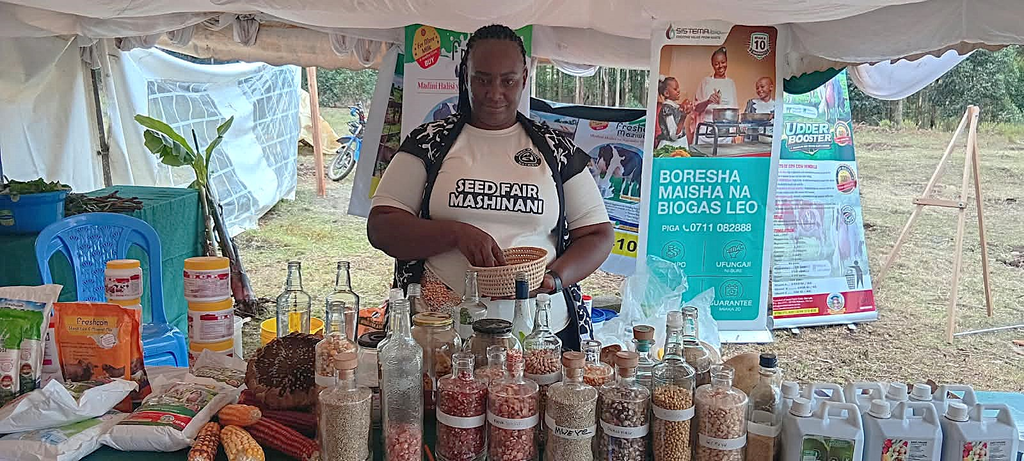
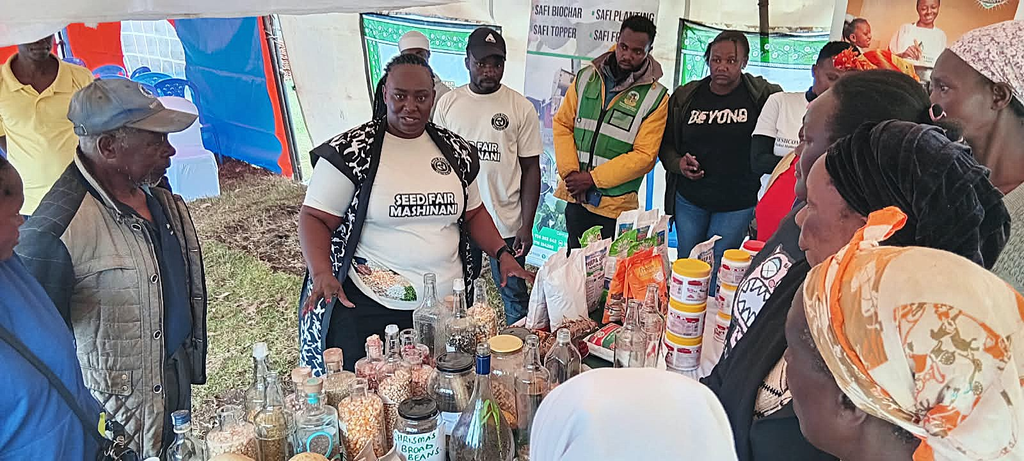
It is midmorning in Kigogo village, Gilgil, Nakuru County, and farmers are arriving at the home of Lilian Ngatia, where tents mark the venue of a field day bringing together 120 farmers, agricultural exhibitors and community leaders.
The gathering is an opportunity for farmers to exchange knowledge on preserving indigenous seeds, restoring soil fertility and adopting renewable energy technologies that can reduce production costs and strengthen their resilience to climate change.
Organised by Ngatia, who leads the Kigogo Self-Help Women Group, the event marks the village’s first field day dedicated to promoting regenerative agriculture, resilient community seed systems and the productive use of renewable energy.
On display are indigenous seeds, soil improvement products and clean energy technologies, each offering a possible response to challenges facing smallholder farmers, including declining soil fertility, unpredictable rainfall and the rising cost of farm inputs. “We are excited because this is the first event of its kind to happen in this village,” says Ngatia.
The women spent months preparing for the event, which builds on the group’s work as a farmer field school. The group has 20 members who are using shared learning and practical demonstrations to promote sustainable farming methods. Its demonstration farms provide space for farmers to learn and practise different techniques, with the group planning to continue the activities beyond the field day.
For Ngatia, bringing farmers together is an important step towards making agricultural knowledge and practical solutions more accessible within the community.
The emphasis on indigenous seeds reflects the need to conserve crop varieties that have been passed down through generations. Such varieties can contribute to agricultural diversity and provide farmers with alternatives suited to different growing conditions. Their performance, however, depends on the crop, variety and local environment.
Preserving seeds also allows farmers to maintain some control over what they plant, while reducing the risk of losing locally adapted varieties as farming systems change.
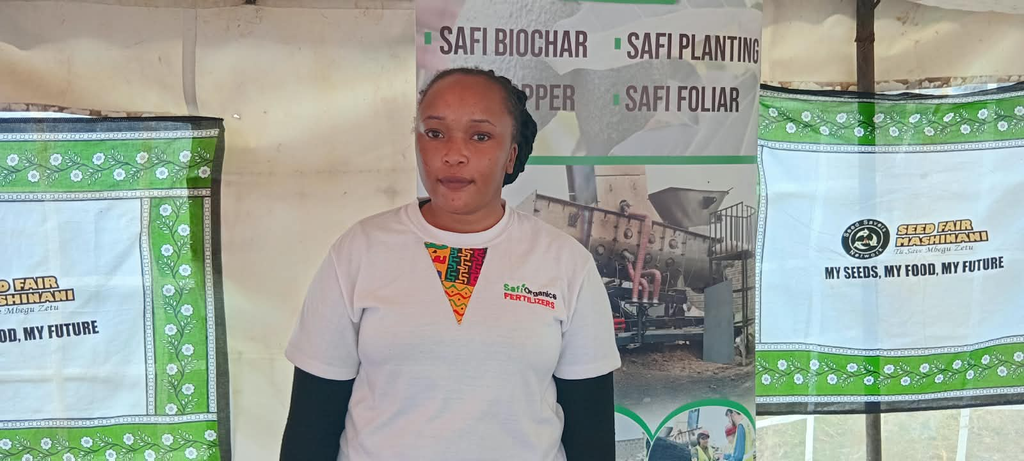
Soil health is another major concern at the field day, where exhibitors are demonstrating alternatives and complementary approaches to conventional fertiliser use. Among them is Grace Wakonyo Mwangi, an agronomist at Safi Organic Fertiliser, a company based in Mwea. She is showcasing a soil amendment made from biochar produced by burning rice husks.
Biochar is a carbon-rich material that can improve soil properties, including water retention, depending on the characteristics of the material and the soil in which it is applied. Its effectiveness varies with production methods, application rates and existing soil conditions.
Mwangi says the company recommends combining its soil amendment with conventional fertilisers for farmers who want to improve their soils but are not yet ready to move entirely away from synthetic inputs.
The recommended application depends on the amount of conventional fertiliser a farmer normally uses. For example, a farmer applying two bags of conventional fertiliser is advised to use one bag of the soil amendment, according to the company’s guidance.
The product retails at KSh 2,850, while soil testing costs KSh 3,000, and the esults are typically available within a week. She cautions farmers against applying soil amendments without first establishing the condition of their soils. Testing helps identify nutrient deficiencies and other constraints, allowing farmers to make more informed decisions about the interventions their farms require.
Although some farmers buy the product without testing their soils, the company encourages them to obtain the necessary information before choosing an application method. “I would like to encourage farmers to try organic farming, and also, let us do soil tests for future purposes,” she says.
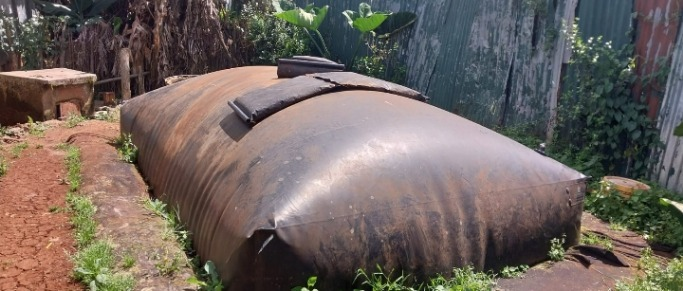
The field day also demonstrates how renewable energy can complement efforts to improve agricultural productivity. Jane Kimani, representing Systema Bio, an organisation involved in biodigester technology and biogas production, is encouraging farmers to turn livestock waste into fuel for household cooking.
A biodigester processes organic waste, such as cow dung, under oxygen-free conditions to produce biogas, which contains methane. The gas can replace some conventional cooking fuels, while the remaining digestate can potentially be used as a soil amendment, subject to appropriate handling and application.
For farmers who keep livestock, the technology offers a way to derive additional value from waste that might otherwise be discarded or poorly managed. “Any farmer who owns cows, even as few as two, can install our biodigester, and it will be beneficial to them,” says Kimani.
Systema is showcasing the Systema 8, a biodigester designed for small-scale farmers keeping between two and eight cows. The system costs KSh 89,000 and is particularly suited to zero-grazing operations, where collecting animal waste is relatively straightforward.
Recognising that the upfront cost can be a barrier, the company offers instalment payment plans extending to 25 months and has partnered with financial institutions to help farmers finance the systems.
For households that depend on purchased cooking fuels, biogas could reduce recurring expenditure. The actual savings, however, would depend on the quantity of gas produced, household energy needs, the cost of alternative fuels and the expenses associated with installing and maintaining the system.
The technology also illustrates the connection between agricultural production and energy. Farms generate organic waste that can be used to produce fuel, while the resulting digestate may support nutrient recycling.
Area chief Ngige Mbogo welcomes the initiative, saying farmers are more likely to benefit when agricultural knowledge and technologies are brought directly to their communities.
Holding demonstrations within villages, he says, gives farmers an opportunity to learn about available technologies, ask questions and assess their practical relevance before deciding whether to adopt them. The approach also creates space for farmers to learn from one another rather than relying solely on external experts.
The field day is linked to the Power for Food partnership, a movement comprising eight implementing partners and operating in seven counties in Kenya. Terryann Wamucii, a programme officer with the partnership, says its objective is to build resilient food systems powered by renewable energy.
On its part, Seed Savers Network (SSN) is working to generate and document evidence on how integrated approaches to agriculture and energy can strengthen the resilience of farming communities in Nakuru and Kericho counties.
As climate change contributes to shifts in rainfall patterns and increases the risks associated with drought and other weather extremes, farmers need approaches that can help them manage uncertainty while maintaining production and protecting their livelihoods.
Through collaboration with county governments, research institutions, small and medium-sized enterprises, farmer groups and other organisations, SSN is promoting the integration of regenerative agriculture, the productive use of renewable energy and resilient community seed systems.