
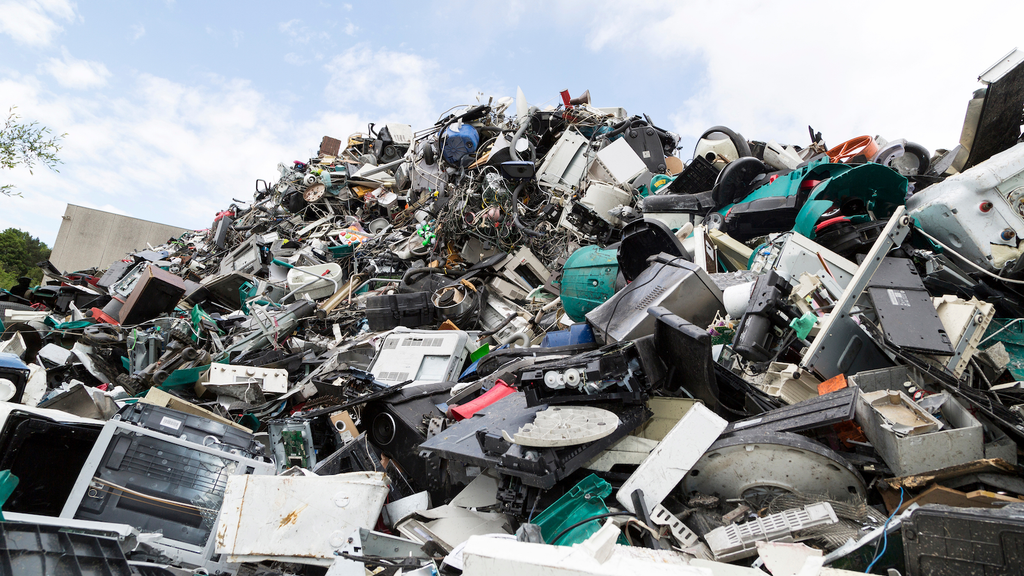

Kenya generated 56,000 tonnes of electronic waste in 2025, but formal collection and recycling systems handled only 5.1 per cent of it, leaving valuable materials worth millions of dollars largely unrecovered, a new report shows.
The National E-waste Monitor 2026, prepared by the United Nations Institute for Training and Research (UNITAR) and the Kenya National Bureau of Statistics (KNBS), estimates that metals contained in the country’s discarded electronic equipment were worth between KES 4 billion and KES 6 billion in 2025.
The report identifies opportunities to create businesses and jobs through repairing, refurbishing and reselling used equipment, as well as recovering metals and other materials for manufacturing.
However, inadequate collection infrastructure, limited domestic processing capacity and financing constraints are preventing Kenya from recovering more of the economic value in discarded electronics.
According to the report, only about 2,900 tonnes of e-waste entered formal collection and recycling pathways in 2025, compared with the 56,000 tonnes generated.
The findings highlight the gap between the growing volume of discarded electronic equipment and the systems needed to collect it safely and return its materials to productive use.
Kenya’s annual e-waste generation increased from 7,900 tonnes in 2000 to 56,000 tonnes in 2025, more than seven times the earlier volume, the monitor says.
During the same year, 109,600 tonnes of electrical and electronic equipment were placed on the Kenyan market, indicating the scale of the products that could eventually enter the waste stream.
Small electrical equipment accounted for the largest share of e-waste, at 21,900 tonnes, or 39 per cent. Refrigerators and other cooling equipment contributed 11,000 tonnes, while small information technology and telecommunications devices accounted for 6,600 tonnes.
Households generated an estimated 40,600 tonnes of e-waste, compared with 15,400 tonnes from businesses and other non-household sources.
Kenya generated about 0.98 kilogrammes of e-waste per person in 2025, below the Eastern African average of 1.1kg, the African average of 2.7kg and the global average of 8.6kg.
Despite the lower per capita figure, the increase in the total volume presents a growing challenge for waste management authorities and businesses.
Discarded electronics contain materials such as copper, aluminium, iron and steel, as well as precious metals including gold, silver and palladium. Recovering these materials could supply industries with raw materials while reducing the need for new extraction.
Some equipment can also be repaired or refurbished and sold to new users, extending its useful life and delaying disposal.
The monitor identifies repair, refurbishment, resale and materials recovery as opportunities to develop Kenya’s circular economy, an approach that seeks to keep products and materials in use for longer instead of discarding them.
The report notes that electronic equipment often passes through several stages of repair, reuse, refurbishment and resale before reaching the end of its useful life. These activities are common in the informal Jua Kali sector, which it estimates supports more than 500,000 workers.
The report also identifies urban mining, which is the recovery of valuable materials from discarded products, as a potential area for investment.
According to the monitor, approximately 1,200 tonnes were delivered to e-waste collection centres, while pick-up services collected another 1,000 tonnes. Together, these channels accounted for about 3.9 per cent of the annual waste stream.
Informal collectors transferred a further estimated 700 tonnes to formal recyclers, bringing the total handled through formal collection and recycling pathways to approximately 2,900 tonnes, or 5.1 per cent.
The National Environment Management Authority (NEMA) records 81 permits specifically associated with e-waste management, held by about 30 firms operating transfer stations and recycling facilities, the report says. These facilities are concentrated around greater Nairobi, Kisumu and Mombasa, limiting access to formal e-waste management services in many other parts of the country.
The monitor identifies inadequate collection infrastructure, limited domestic processing capacity and financing difficulties as major barriers to expanding environmentally sound recycling.
Some electronic waste fractions, including printed circuit boards containing valuable metals, are exported for further treatment because Kenya lacks sufficient domestic refining and recovery capacity.
According to the report, informal collectors and repairers play a significant role in recovering materials and extending the life of electronic equipment. However, some dismantling and recovery practices can expose workers and surrounding communities to hazardous substances.
The monitor warns that practices such as burning cables to recover metals and dismantling equipment without protective gear can expose people to substances including lead, mercury and cadmium.
The report recommends connecting informal collectors, repairers, refurbishers and aggregators to formal recycling and producer-responsibility systems.