
The world’s richest people are driving climate change through excessive consumption and investments in polluting industries, while poorer communities bear the heaviest costs of disasters, a new Oxfam report has found.
The report, Divide Disaster: How Climate Disaster Deepens Chaos and Inequality, estimates that the world’s richest 0.1 per cent, about eight million people, generate 44 per cent more consumption-based emissions than the poorest 3.5 billion people combined.
It warns that climate disasters are deepening existing inequalities, leaving low-income households more exposed to floods, droughts and extreme heat, with fewer invest resources to protect their lives and rebuild after losses.
The findings also point to a growing contradiction in the global climate crisis, where some of the wealthiest investors are making money from industries that drive global warming while also profiting from disaster preparedness, reconstruction and clean-up.
The report links unequal responsibility for emissions to unequal exposure to climate hazards, recovery capacity and access to food.
“The poor pay the highest price,” is the central injustice highlighted by the report, which calls for governments to reduce emissions from the wealthiest people and redistribute resources towards communities most vulnerable to climate impacts.
Oxfam’s analysis finds that the richest 1 per cent are responsible for 20 per cent of global warming since 1990, more than 20 times their share of the world’s population. It estimates that one year of emissions from this group will cause about 1.9 million excess deaths linked to extreme heat. It also finds that an individual in the richest 0.1 per cent has contributed more than 125 times as much to the extreme heat events experienced today as an average person.
Private aviation illustrates the scale of emissions linked to luxury consumption. Oxfam estimates that private jets emitted 16 million tonnes of carbon dioxide in 2025, with each flight producing an average of 3.7 tonnes.
The report also examines emissions tied to billionaire investments. It estimates that the investments of 1,000 billionaires generated 486 million tonnes of carbon dioxide equivalent in 2025. About 71 per cent of their investments were in high-climate-impact sectors, including oil, gas and chemicals.
These emissions matter because rising global temperatures increase the likelihood and severity of extreme weather, including heatwaves, droughts, floods and wildfires.
The report argues that climate disasters are not experienced equally because poorer households are more likely to live in vulnerable housing, work outdoors or occupy areas exposed to flooding and other hazards. They also tend to have fewer savings, less insurance and limited access to resources needed for recovery.
Wealthier households, by contrast, can move to safer areas, insure property, evacuate more easily and pay for private services that protect them during emergencies.
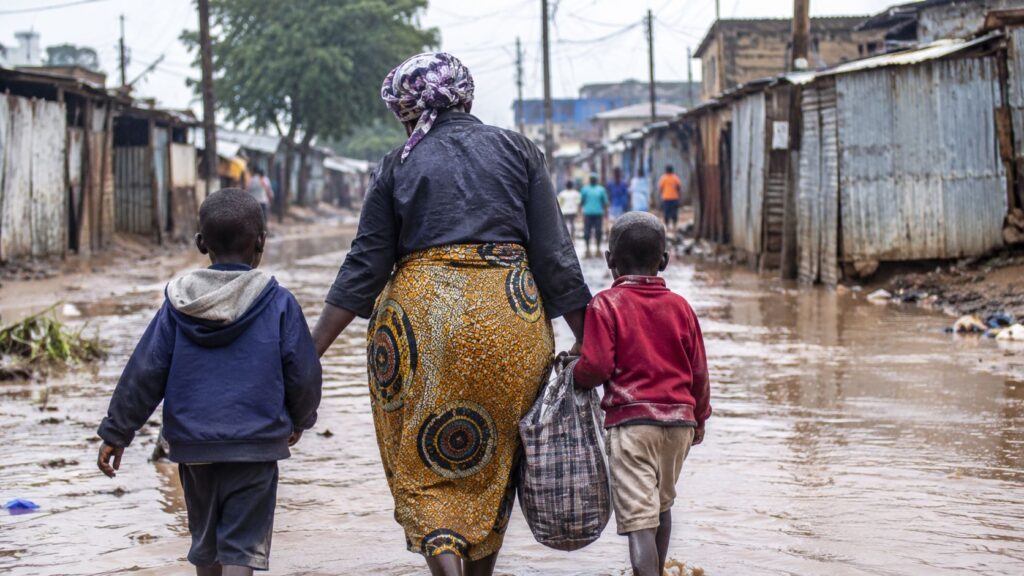
The report illustrates this divide using Nairobi, where heavy rain can be a manageable inconvenience for residents in well-built homes in affluent Lavington but destroy homes and livelihoods in informal settlements such as Kawangware.
Oxfam cites research showing that deaths from flooding are seven times higher in more unequal countries. It warns that repeated disasters can widen wealth gaps as better-off households recover faster and benefit from reconstruction, while poorer families lose assets and struggle to rebuild.
The consequences extend beyond the immediate destruction caused by storms and floods. As climate shocks recur, vulnerable households can be pushed deeper into poverty, with fewer resources available to withstand the next crisis.
The report also identifies food production and prices as important channels through which climate change worsens inequality as erratic rainfall, droughts and other extreme weather can reduce harvests and disrupt supply chains, pushing up food prices. Such increases hit low-income households hardest because food accounts for a larger share of their spending.
Oxfam estimates that food takes up 38.6 per cent of total expenditure among low-income households, compared with 15 per cent among high-income households.
When prices rise, poorer families may reduce the quantity or quality of food they buy or cut spending on healthcare and education, whereas, wealthier households have more room to absorb higher bills without making similar sacrifices.
The report also warns that climate-related shortages can create opportunities for profiteering. It cites cocoa and coffee markets in 2024, when extreme weather damaged production and prices rose sharply, while some intermediary traders made large profits.
It further highlights the concentration of farmland and financial resources among large owners, who are better positioned to invest in irrigation and other technologies that strengthen resilience, while on the other hand small-scale farmers often lack the capital to make comparable investments, widening the gap in their ability to adapt.
Oxfam warns that the growing cost of climate disasters is creating a lucrative market for companies involved in preparation, rebuilding and clean-up.
It estimates that the global disaster-recovery market could grow from US$70 billion to US$92 billion annually by 2029, driven increasingly by extreme weather events linked to climate change.
The report identifies 217 companies that profit from causing climate-related disasters, preparing for them or recovering from them in an index it calls “Destroy and Rebuild”.
Oxfam also warns that reconstruction can entrench inequality when public spending benefits private interests through privatisation, deregulation or land acquisition at the expense of affected communities.
The report calls on governments to ensure that disaster response prioritises human need rather than shareholder returns, including through stronger controls on corporate power, price caps, limits on profiteering and greater use of public alternatives.
The report proposes five broad measures to break the cycle between climate change and inequality. These include sharply reducing emissions from the wealthiest people through taxes on high-emitting luxury activities, including private jets, and increasing taxes on wealth invested in highly polluting industries.
Oxfam also calls on wealthy countries to provide substantially more climate finance to help lower-income countries adapt to climate impacts. It says this support should be delivered as grants rather than loans, with funds channelled through United Nations climate funds.
Other recommendations include setting national targets to reduce economic inequality, investing in climate-resilient public infrastructure and social protection, improving early-warning and evacuation systems, and strengthening food systems so that small-scale farmers have better access to land, irrigation and other essential resources.
Governments should also curb excessive corporate power and prevent companies from exploiting climate-related shortages and disasters for profit.