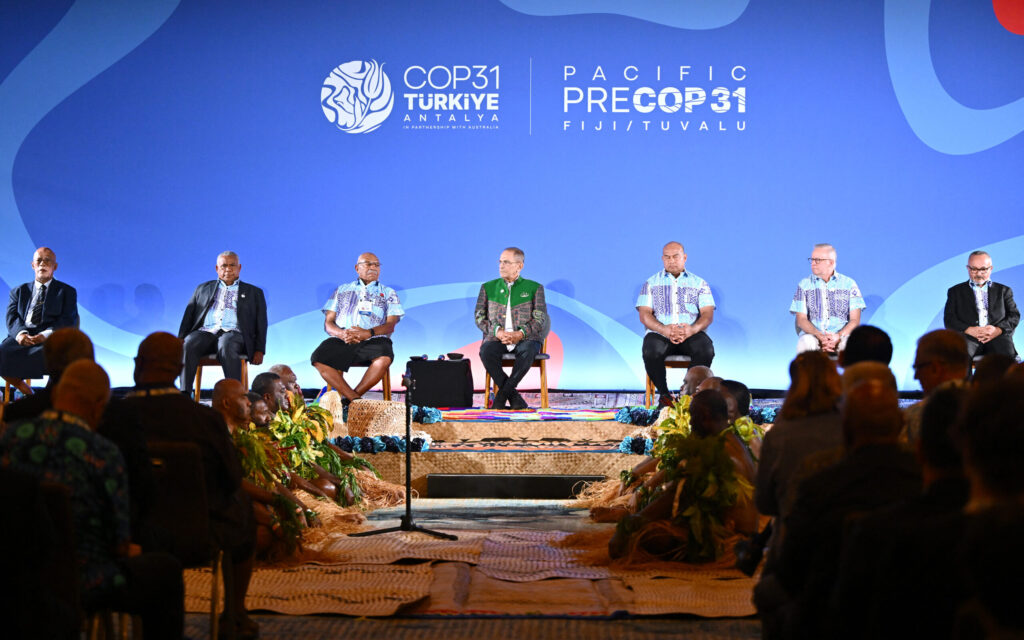

Amnesty International has called on world leaders attending COP31 in Türkiye to break the fossil fuel industry’s influence over climate negotiations and commit to a rapid and equitable phase-out of coal, oil and gas.
The human rights organisation says governments must move beyond climate pledges and confront corporate interests that continue to shape political decisions, sustain fossil fuel dependence and delay action on global warming.
In a statement ahead of the November 9–20 summit in Antalya, Amnesty said the credibility of COP31 would depend on whether governments translate existing commitments into concrete measures to cut emissions, finance a just transition and protect communities from worsening climate impacts.
“The climate crisis is not a failure of knowledge, but a failure of political courage,” said Marta Schaaf, Amnesty International’s Programme Director for Climate, ESJ and Corporate Accountability.She called on governments to end the influence of fossil fuel companies over political decision-making, warning that continued support for the industry was prolonging a crisis whose consequences were already being felt across the world.
Amnesty’s intervention comes amid warnings from the United Nations Environment Programme (UNEP) that the world is on course to overshoot the 1.5°C global warming threshold, with governments failing to take sufficient action to limit the scale and duration of the overshoot.
The organisation warned that further warming would intensify droughts, wildfires, storms, floods, glacier loss and rising sea levels, with disproportionate consequences for vulnerable communities.It said COP31 must deliver a full, fast, fair and funded transition away from fossil fuels, supported by expanded renewable energy, climate finance and protections for workers, Indigenous Peoples and communities on the frontline of climate change.
Amnesty also called for stronger safeguards against conflicts of interest at the climate negotiations, arguing that fossil fuel industry influence must not outweigh the voices of communities affected by climate change.
Among its key demands is the establishment of a strong Belém-Antalya Mechanism for Just Transition, with a human rights mandate and the capacity to support countries and communities moving away from fossil fuels.
The organisation further wants governments to advance the implementation of the Gender Action Plan, strengthen protection for women environmental defenders and ensure that affected communities participate in decisions shaping climate policies.On climate finance, Amnesty called on high-income countries with the greatest historical responsibility for greenhouse gas emissions to substantially increase grant-based funding for developing countries.
It proposed raising taxes on wealthy individuals, fossil fuel companies and their financial backers to mobilise additional resources for emissions reduction, adaptation, just transitions and loss and damage.
The organisation also wants loss and damage addressed as a separate agenda item at COP31 and the associated fund adequately replenished. It called for progress on climate finance negotiations, particularly the implementation of Article 9.1 of the Paris Agreement, which requires developed countries to provide financial resources to developing countries.
Amnesty singled out Türkiye and Australia for scrutiny over their climate leadership, given their respective roles as COP31 host and lead of the negotiations. Türkiye remains heavily dependent on coal and is pursuing expanded fossil gas production, while Australia is among the world’s largest exporters of coal and liquefied natural gas.
Schaaf said both countries faced a credibility test, arguing that they could not claim climate leadership while supporting policies that prolong dependence on fossil fuels.Beyond government commitments, Amnesty said the summit must give greater recognition to Indigenous Peoples, environmental human rights defenders and communities resisting destructive projects.
The organisation warned that these groups are frequently excluded from decisions affecting their land and livelihoods, while activists face intimidation, criminalisation and reprisals.
It also called on Türkiye to guarantee civic freedoms during the summit, including the right to peaceful protest, freedom of expression and participation without discrimination or intimidation.
“COP31 must remain open to public scrutiny, peaceful protest and dissent, with affected communities able to shape decisions about their futures without fear of reprisals,” the organisation said.Amnesty said the summit should also ensure that the second Global Stocktake under the Paris Agreement is grounded in human rights and shaped by affected communities, including through Global People’s Assemblies.