
ANTALYA, Türkiye
The United Nations has launched a global framework to track and publicly disclose the progress of businesses, financial institutions, cities and regional governments towards their net-zero emissions commitments, amid growing concerns over greenwashing.
The Net-Zero Recognition Framework (NZRF), launched by UN Climate Change at the ongoing COP31 climate summit in Antalya, seeks to strengthen accountability by giving organisations a platform to disclose their climate targets, transition plans and progress towards reducing greenhouse gas emissions.
The voluntary framework, which moves into full implementation following a year-long pilot, will use the UN’s Non-State Actor Zone for Climate Action (NAZCA) portal to make information on participating organisations’ climate commitments publicly accessible.
It is intended to help distinguish organisations that have made public net-zero promises from those that have developed transition plans, invested in emissions reductions and achieved measurable progress.
UN Climate Change Executive Secretary Simon Stiell said the framework would give the public, investors and governments a clearer picture of whether organisations were delivering on their climate commitments.
“The UN Climate Change Net-zero Recognition Framework is an important transparency tool and, today, it moves from pilot to implementation,” Stiell said.
“Through our renewed NAZCA portal, companies, financial institutions, cities, regions and more will be able to share their plans and report on progress.”
The framework has already attracted participation from eight eligible net-zero initiatives, representing nearly 80 signatories across 22 countries, according to Stiell.
More than half of the participating organisations have indicated their willingness to share independently reviewed transition plans, while nearly a third are prepared to disclose evidence of progress towards their interim emissions-reduction targets.
The participating initiatives cover different sectors, including fashion, sports, wine production, small and medium-sized enterprises and subnational governments.
The framework tracks organisations through five broad stages of their net-zero journey, from making public commitments and developing transition plans to demonstrating progress, achieving interim targets and ultimately fulfilling their net-zero commitments.
To qualify, organisations must belong to an eligible net-zero initiative whose science-based criteria have undergone independent third-party review. Participating businesses, financial institutions and local governments must also voluntarily opt into the framework.
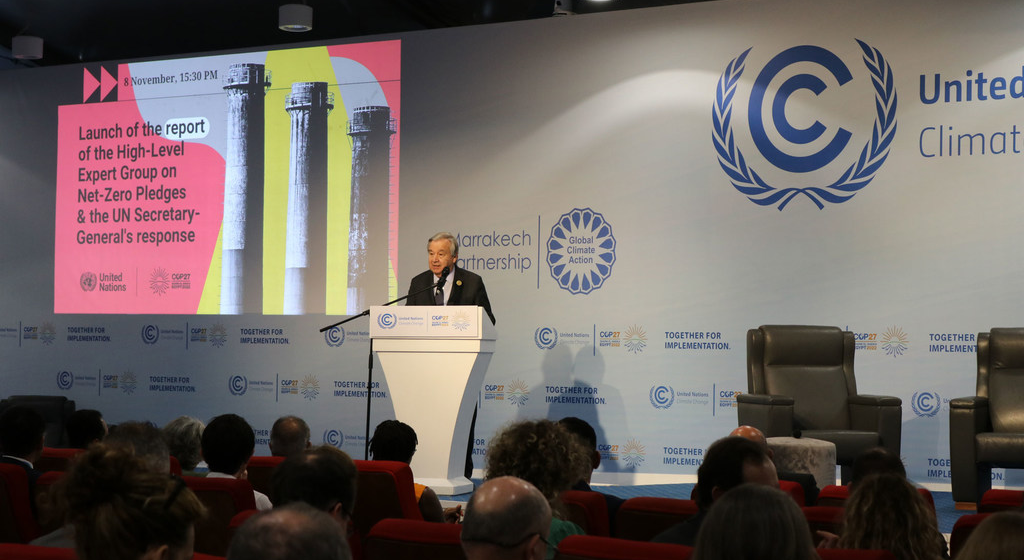
The framework draws on recommendations from the UN High-Level Expert Group on Net-Zero Commitments, particularly its report Integrity Matters, which sets out measures for ensuring that climate pledges are credible and supported by concrete action.
Xuehong Wang, UN Climate Change’s Director of Transparency, said making net-zero progress publicly visible would help organisations demonstrate leadership while allowing stakeholders to assess the credibility of their commitments.
She said better information on progress was necessary to identify implementation gaps and accelerate climate action.
The launch comes as governments and international organisations face mounting pressure to ensure that net-zero commitments translate into actual emissions reductions.
Businesses and financial institutions have increasingly announced climate targets, but questions persist over the credibility of their plans, the adequacy of interim targets and whether their investments are consistent with the transition to a low-carbon economy.
For developing countries, including those in Africa, the credibility of corporate climate commitments also has implications for investment decisions, access to climate finance and the development of low-carbon industries.
Stiell urged more climate initiatives to qualify for the framework and encouraged their members to make their progress publicly available.