

In Karanjo, within the Mukuru-Kayaba informal settlement, blocked drainage channels overflow with stagnant water mixed with household waste. Discarded containers, old tyres and other debris provide additional spaces where rainwater collects, sometimes remaining for days.
For residents, the immediate consequences are flooded pathways, contaminated surroundings and difficulties accessing homes and workplaces. But the pools of standing water also create potential breeding habitats for mosquitoes, raising questions about how climate variability, urban development and inadequate environmental infrastructure could influence the spread of mosquito-borne diseases.
The concern is particularly relevant as Nairobi experiences progressively warmer nights against a background of changing rainfall patterns and rapid urban expansion.
Although the capital has historically been considered unfavourable for sustained malaria transmission because of its relatively cool temperatures, scientists are increasingly concerned about whether changing environmental conditions could alter the city’s vulnerability to disease-carrying mosquitoes.
The threat is not necessarily that malaria is already spreading through informal settlements, rather, it is that the environmental conditions supporting mosquito breeding are changing, while an invasive malaria vector already detected in parts of Kenya presents an additional challenge.
According to Pamela Muange, Assistant Director of the Biometeorological Section at the Kenya Meteorological Service, long-term records indicate that Nairobi’s minimum temperatures have been increasing by approximately 0.3°C to 0.4°C per decade.
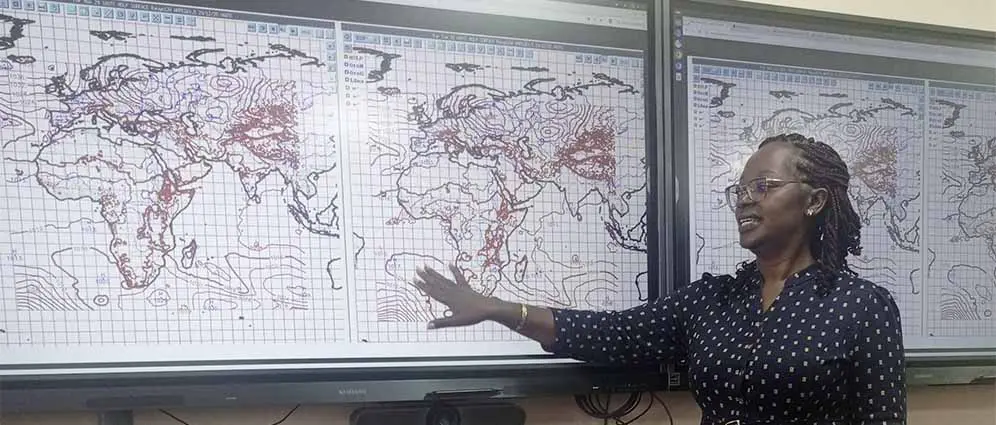
Night-time warming has been more pronounced than changes in daytime maximum temperatures, a pattern she associates largely with expanding urban development and the urban heat-island effect.
The urban heat-island effect occurs when buildings, roads and other built surfaces absorb and retain heat, making urban areas warmer than their surrounding rural environments, particularly at night. This is significant because temperature influences mosquito survival, reproduction and the development of disease-causing pathogens inside mosquitoes.
However, Muange cautions against attributing Nairobi’s worsening flooding problems solely to climate change. She says the city’s total rainfall has not changed significantly over the past 30 years. “Although annual rainfall may be increasing slightly, the number of rainy days has declined, suggesting that rainfall is becoming concentrated into fewer days,” she says.
Muange attributes the worsening effects of flooding primarily to rapid urbanisation and inadequate drainage, rather than a demonstrated long-term increase in rainfall intensity.
She identifies March to May and October to December as periods when relatively warm nights coincide with the long and short rains. These conditions can favour increases in mosquito populations, particularly where water collects in poorly drained neighbourhoods. She identifies informal settlements, areas around the Nairobi, Mathare and Ngong rivers, construction sites and warmer eastern parts of the city, including Embakasi, as environments that may support mosquito breeding.
But the species of mosquito present is as important as the environmental conditions supporting its breeding. Timothy Kibe, Nairobi County’s Malaria Coordinator, says routine mosquito surveillance has historically found Culex mosquitoes to be overwhelmingly dominant in the capital.
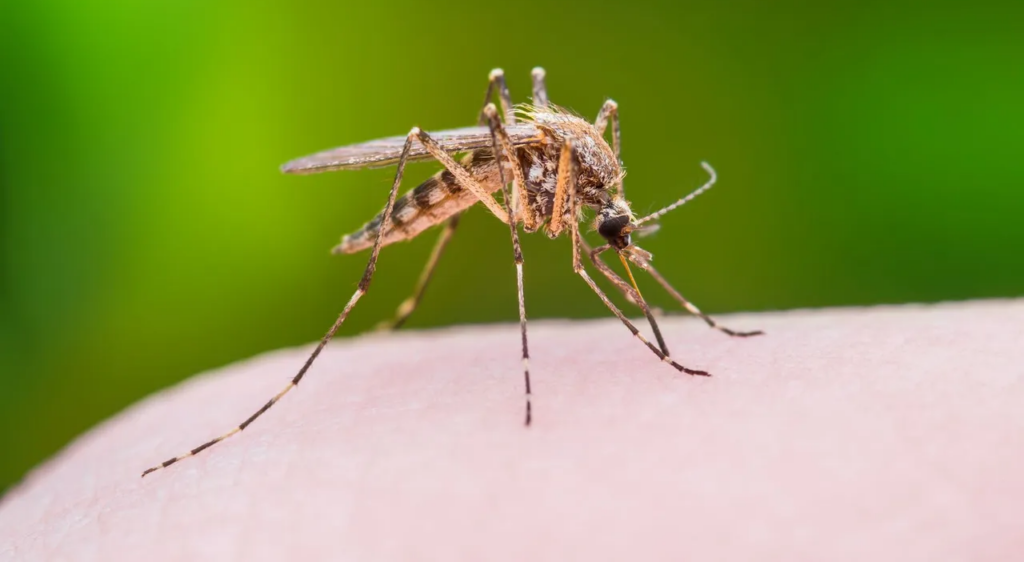
The last three or four surveillance exercises conducted in Nairobi produced broadly similar findings, with Culex accounting for approximately 99.8 per cent of mosquitoes collected and Anopheles accounting for about 0.2 per cent. Culex mosquitoes do not transmit malaria. Malaria is transmitted by infected female mosquitoes belonging to the Anopheles genus, while Aedes mosquitoes transmit dengue and chikungunya, among other viral diseases.
Kibe says Nairobi’s main concern is the possible arrival of Anopheles stephensi, an invasive malaria-transmitting mosquito originally native to South Asia. Unlike several malaria vectors traditionally associated with rural environments, Anopheles stephensi can thrive in urban settings, breeding in artificial water containers, storage tanks and other human-made habitats.
The mosquito has already been detected in several Kenyan counties but has notbeen identified in Nairobi. “Our major worry is now that new breed will emerge,” he says, warning that its establishment in the capital could create additional challenges for malaria control.
A 2023 alert by the World Health Organization identified Anopheles stephensi as an efficient urban malaria vector and warned that its spread across Africa could undermine existing malaria-control efforts.
In Kenya, a study published in December 2023 in the US Centers for Disease Control and Prevention’s journal Emerging Infectious Diseases, by Eric Ochomo and colleagues, documented the detection of the invasive mosquito in Marsabit and Turkana following surveillance conducted in December 2022.
Further evidence emerged in a 2025 study published in Scientific Reports, which examined the mosquito’s distribution in Kenya between 2022 and 2024. Researchers identified the species in seven counties of Turkana, Marsabit, Mandera, Wajir, Isiolo, Samburu and Elgeyo Marakwet. The study identified breeding habitats including discarded tyres, plastic containers, water-storage tanks and water pits.
For Nairobi, the implications extend beyond malaria. Aedes mosquitoes, which breed in water-holding containers around human settlements, can transmit dengue and chikungunya.
Dr Eric Ochomo, a medical entomologist and Head of the Entomology Department at the Kenya Medical Research Institute’s Centre for Global Health Research, says Anopheles stephensi is particularly worrying because of its adaptability.
In a March 2023 interview with the Johns Hopkins Malaria Research Institute’s Malaria Minute, Ochomo described findings from Ethiopia, where researchers had encountered the mosquito in diverse environments. “We worry about stephensi for multiple reasons. One, stephensi is highly adaptable,” he said. “They have found stephensi literally everywhere. They will breed anywhere.”
Ochomo warned that populations in urban areas with little previous exposure to malaria could face more severe infections if the mosquito establishes transmission.
For Nairobi, experts say an effective response requires more than conventional mosquito control such as closer integration of climate information, environmental management, urban planning and public-health surveillance.
They say that authorities would need to combine mosquito identification with climate records, flood mapping, environmental assessments and hospital data. Investigations should also establish whether infections are locally acquired or associated with travel to malaria-endemic areas.
According to Kibe, counties must also reconsider their dependence on external funding for essential public-health interventions, with governments allocating more domestic resources to disease prevention.