
ANTALYA, Türkiye
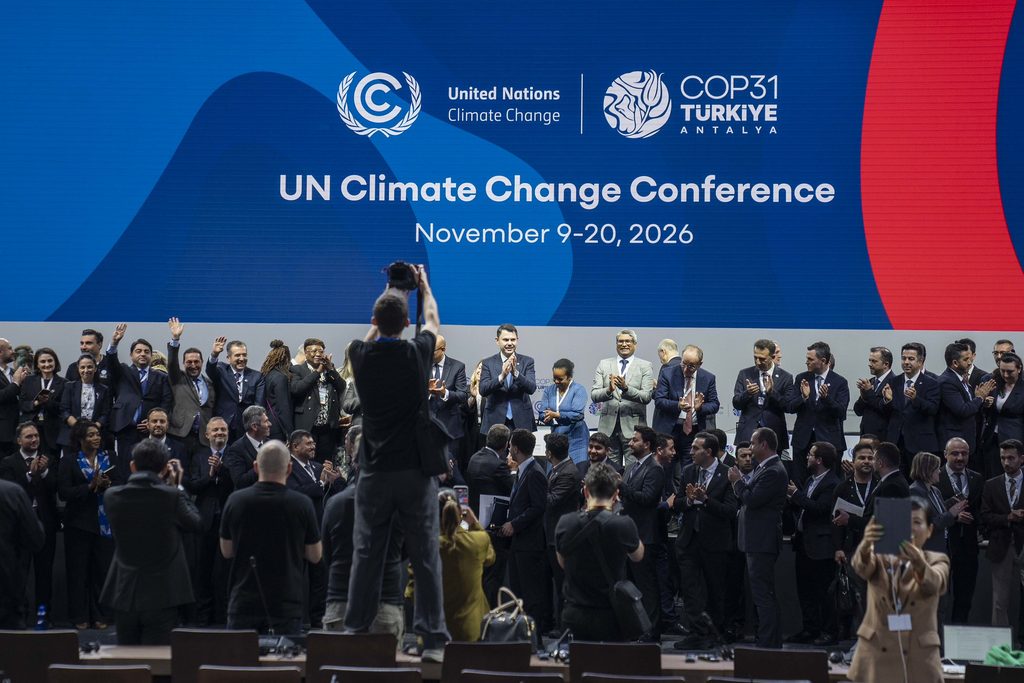
The UN climate negotiations at COP31 collapsed on November 22 after countries failed to reach consensus on a proposed final agreement, exposing deep divisions over fossil fuels, climate finance and the direction of international climate action.
The breakdown followed more than two weeks of negotiations that extended beyond the scheduled Friday deadline, with the European Union, the United Kingdom and several other countries rejecting the final draft presented by the Turkish and Australian presidencies.
COP31 President Murat Kurum acknowledged that governments had failed to reach consensus on the proposed agreement, effectively ending efforts to secure an overarching political declaration at the summit.
“It is clear that there are parties in this hall who oppose this text. We recognise that there is no consensus on this document. Therefore, these decisions have not been adopted,” Kurum told delegates.
The failure centred on a proposed political declaration, known as the Antalya Pact, which critics said fell short of what was needed to accelerate global climate action.
The European Union objected particularly to the omission of any explicit reference to fossil fuels or a commitment to transition away from coal, oil and gas, despite the agreement reached at COP28 in Dubai in 2023 calling for a transition away from fossil fuels in energy systems.
Ireland’s Environment Minister Darragh O’Brien, speaking on behalf of the EU, said the bloc could not endorse an agreement that ignored the principal drivers of climate change.
He said the proposed text failed to respond to the scientific evidence and risked widening the gap between international climate commitments and the action required to meet them.
Panama, the Marshall Islands and Norway also raised objections, with several countries arguing that the proposed agreement lacked the ambition needed to address the worsening climate crisis.
The disagreement over fossil fuels had dominated negotiations after successive drafts progressively weakened references to their phase-out.
An initial draft presented by Australia had called for faster action to move away from fossil fuels. Subsequent versions removed explicit references following opposition from Saudi Arabia and other oil-producing countries.
Instead, the final proposal promoted faster development of carbon-removal technologies, including carbon capture and storage, as part of efforts to address the anticipated overshoot of the 1.5°C global warming threshold.
However, critics questioned whether reliance on carbon-removal technologies could become a justification for continuing fossil fuel production rather than reducing emissions at source.
Saudi Arabia defended the inclusion of carbon capture and storage, arguing that the technology had a role in addressing climate change.
The collapse also exposed continuing disagreements over financial support for developing countries, particularly those facing escalating costs of adapting to climate change.
Developing countries have consistently demanded predictable and adequate funding to implement adaptation measures, strengthen resilience and address climate-related losses and damage. However, the proposed Antalya agreement failed to provide the clarity and stronger financial commitments sought by vulnerable countries.
The dispute reflects a longstanding divide between developed and developing nations over responsibility for climate change, the scale of financial obligations and the mechanisms through which funding should reach countries most affected.
The last major breakdown in UN climate negotiations occurred in Copenhagen in 2009, when countries failed to adopt the proposed Copenhagen Accord by consensus.
The breakdown comes at a particularly difficult moment for international climate action. The United Nations had warned ahead of the summit that the world was on course to exceed the Paris Agreement’s 1.5°C temperature threshold, increasing the risks of extreme weather events and other climate impacts.