


By Mary Juma
Across Western Kenya, school compounds once lined with ornamental flowers are being transformed into thriving farms as institutions turn to agriculture to cut food costs, improve student nutrition, and bring classroom learning to life.
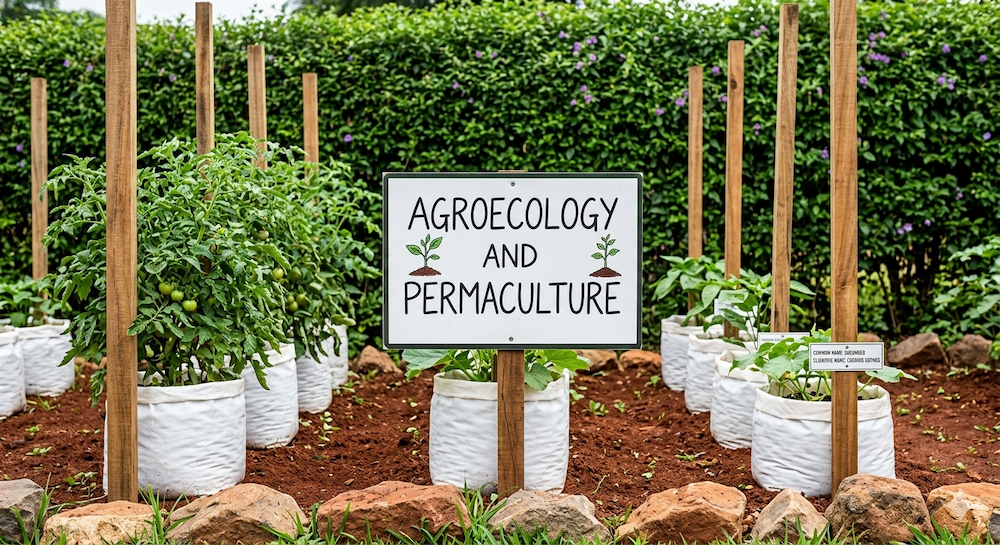
At St. Ann’s Sega Girls Primary and Junior School in Siaya County, vegetable gardens now occupy spaces that previously hosted decorative plants. Along classroom corridors, kales and spring onions flourish in suspended frame gardens and recycled polythene bags, while nearby plots support poultry and rabbits.
The transformation is part of a growing movement led by the Schools and Colleges Permaculture (SCOPE) Kenya programme, which is helping schools integrate sustainable agriculture into daily learning while building resilience against rising food prices and climate-related challenges.

The initiative was showcased during World Environment Day celebrations, where educators, students, and community members highlighted how schools are increasingly becoming centres of food production and environmental stewardship.
For St. Ann’s Sega Girls Principal Sister Mildred Akinyi, the shift has delivered significant financial relief at a time when schools are grappling with limited government capitation and rising operational costs.
“We are replacing flowers with vegetables, onions and other food crops,” she said.
The school now produces nearly 85 per cent of the vegetables consumed by learners, dramatically reducing expenditure on food purchases.
“When I look at the expenditures that I have right now, it is lesser compared to when we used to buy vegetables,” Akinyi said.
But beyond reducing costs, the farm has become an outdoor classroom where students put the Competency-Based Education (CBE) into practice. Members of the school’s Agriculture Club spend part of their learning time producing organic fertilisers and pesticides from locally available materials. Neem leaves and rabbit urine are processed into foliar feeds that are then applied to crops across the school farm.

“Once we are taught in class, we practically make the foliar feeds and apply them and see their uses practically,” said student Ipi Monica. “It is a much better advantage, and it also helps academically because it becomes easier to remember.”
Nearby, students manage what they call a “rabbit village,” housing five different rabbit breeds. The project forms part of a circular farming system in which rabbit waste feeds a vermiculture unit. The resulting nutrient-rich vermi-liquid is diluted and applied to crops as fertiliser and natural pest control.
Student Jane Zawadi said the integrated approach has taught learners how waste can be transformed into valuable agricultural inputs rather than becoming an environmental burden. The impact of the programme extends far beyond the school gates.
Through a 14-day practical training model, SCOPE Kenya equips teachers, learners and parents with skills in agroecology, food production and sustainable land management. The goal is to create a ripple effect that spreads from schools into surrounding communities.

“Our journey starts from the school, and then we walk to the community,” said John Macharia, a representative of SCOPE Kenya.
According to Macharia, the programme helps interested parents organise themselves into registered self-help groups, enabling them to replicate successful school-based farming models at home while restoring degraded land and strengthening household food security.
One such beneficiary is the Glorious Women Group, whose members have adopted permaculture techniques on their own farms. Today, the group’s 25 members grow indigenous African vegetables, fruits and bananas while producing their own seed stock.
“Initially, we used to be given seeds, but now we harvest our own seeds from our farms, so we don’t go back to the market to buy them anymore,” said group member Elizabeth Shirandula.
The benefits have been far-reaching. Surplus produce is sold to generate income for school fees, while some harvests are shared with vulnerable children and elderly members of the community.
School administrators say the emphasis on indigenous African foods is not only about reducing costs and improving food security but also about promoting healthier diets.

Under SCOPE Kenya’s slogan, “My Food is African,” schools are encouraging learners to embrace traditional crops and organic production methods as concerns grow over lifestyle diseases linked to highly processed foods and chemical-intensive farming systems.
Back at St. Ann’s Sega Girls, the ambition continues to grow. The school plans to become fully self-sufficient in poultry production by next year and is preparing to venture into aquaculture through the construction of a fish pond.
For Sister Akinyi, the success of the programme offers a lesson to schools across the country: limited land should not be viewed as a barrier to food production. “It is not the land that you have, but it is the attitude,” she said. “There is nothing that is impossible.”
As food prices continue to rise and climate pressures intensify, schools like St. Ann’s Sega Girls are demonstrating that classrooms can do more than educate. They can feed communities, nurture environmental stewardship, and equip the next generation with practical skills for a changing world.


Merci pour le partage très enrichissant
Congratulations SCOPE-Kenya. We in East Africa are proud of you. You have translated theories on education for self – help , linking schools to communities etc into visible actions. I suggest we explore cross- border ( Kenya-Uganda) learning initiatives, We can start online sessions between interested schools, farmer groups,parents etc.Wishing you all the best.