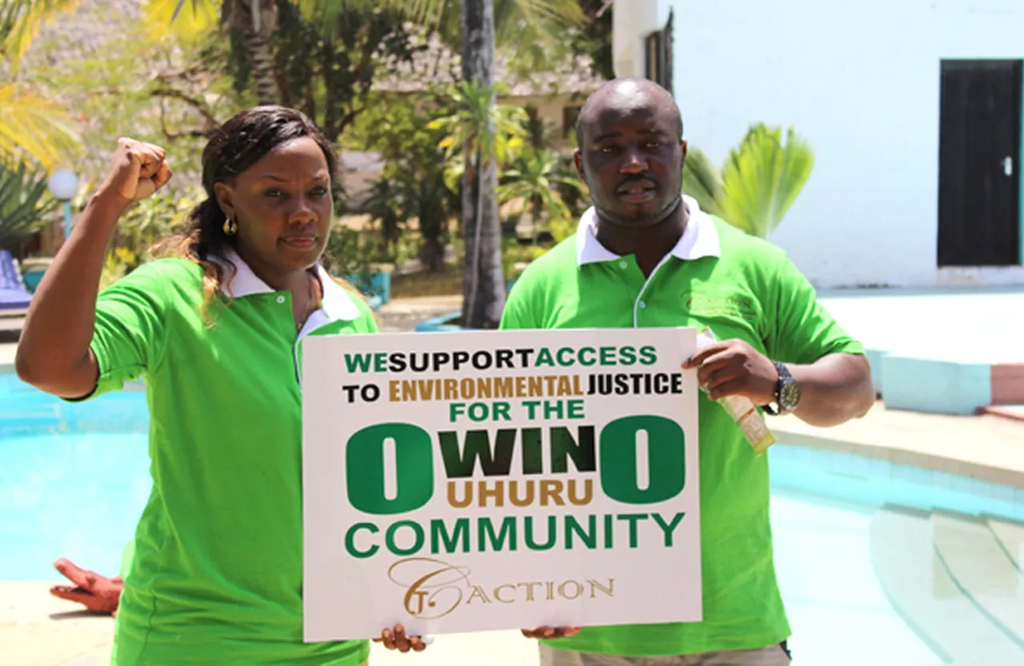

Six years after winning one of Kenya’s most significant environmental justice cases, victims of lead poisoning in Mombasa’s Owino Uhuru settlement are still waiting for compensation ordered by the courts.
The residents continue to live with the health, social and environmental consequences of toxic lead contamination linked to a battery recycling factory that operated in the settlement between 2007 and 2014.
The factory was found to have exposed children, pregnant women and other residents to dangerous levels of lead, leaving many with long-term health complications while contaminating the surrounding environment.
In 2020, the Environment and Land Court awarded the affected community KSh1.3 billion (about US$12 million) in compensation and ordered comprehensive environmental restoration of the area.
The decision was later upheld by the Supreme Court, reinforcing the constitutional right to a clean and healthy environment and affirming that public institutions can be held accountable under the polluter pays principle.
The judgment was widely celebrated as a landmark for environmental governance in Kenya and across Africa. However, despite the legal victory, none of the compensation has reached the victims.
This continued delay has placed the National Environment Management Authority (NEMA) under renewed judicial scrutiny with the Mombasa Environment and Land Court has giving NEMA a final seven-day ultimatum to explain why it has failed to comply with the court orders and to submit a clear, legally binding plan for settling the compensation.
Justice Bellinda Akoth Akello warned that the extension should not be interpreted as an escape from accountability but as a final opportunity to comply with the law. The court indicated that failure to meet the deadline would trigger the automatic release of funds held in NEMA’s bank accounts to satisfy the decree.
The court has also encouraged the parties to pursue an out-of-court settlement, provided it results in a realistic, enforceable and time-bound payment framework.
The Center for Justice, Governance and Environmental Action (CJGEA), which has represented the affected community for years under the leadership of environmental justice advocate Phyllis Omido, has welcomed the possibility of negotiations but cautioned against further delays.
The organisation says any agreement must guarantee the rights of the affected families and should not become another avenue for postponing justice through bureaucratic processes.
The case represents a broader struggle for environmental justice, public accountability and the enforcement of constitutional rights in Kenya.