
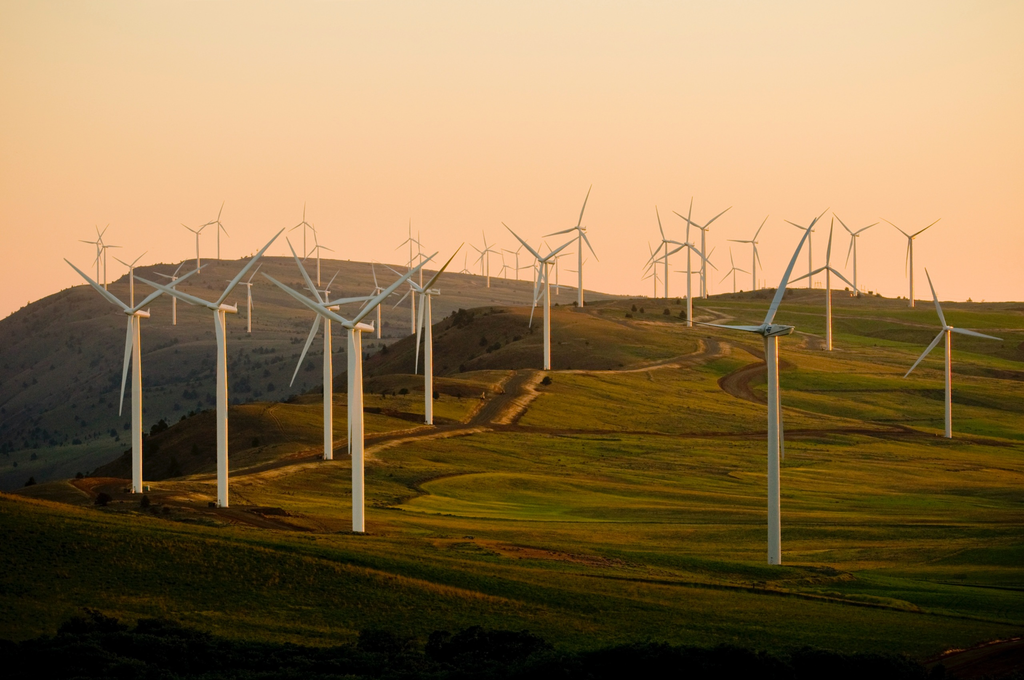

Africa will need to expand its installed renewable power capacity nearly sevenfold by 2035 and about 30-fold by 2050 to align with a global pathway for limiting warming to 1.5°C.
The scale of the required expansion highlights the challenge facing African countries as they seek to meet rising electricity demand, extend power access to underserved communities and reduce dependence on fossil fuels.
In its World Energy Transition Outlook 2026: 1.5°C Pathway, the International Renewable Energy Agency (IRENA) says Africa’s renewable power capacity stood at about 82 gigawatts in 2025. Under the agency’s 1.5°C scenario, this would need to rise to approximately 607GW by 2035 and 2,510GW by 2050.
The report identifies inadequate investment, high financing costs and insufficient electricity infrastructure as major obstacles to accelerating the transition, particularly in developing economies.
“Africa’s challenge is not simply to install more solar panels, wind turbines and other renewable energy technologies. Countries must also expand electricity grids, develop storage capacity and improve the systems needed to deliver power reliably to homes, businesses and industries,” the agency note in its outlook report.
It says the global energy transition is already being constrained by electricity networks that are failing to keep pace with new renewable generation and growing demand, with delays in connecting new projects to the grid risking slow deployment even where renewable technologies are available.
The investment gap is particularly significant for Africa. The report estimates that the continent will require about $3.2 trillion in cumulative investment in renewable power generation between 2026 and 2050 under the 1.5°C scenario.
Yet Africa and other least-developed countries continue to receive only a small share of global energy transition investment, which remains concentrated in China and advanced economies.
High borrowing costs, currency risks, limited fiscal space and perceived project risks make it harder for developing countries to attract the capital needed for large-scale energy infrastructure.
IRENA argues that governments and development partners must use concessional finance, guarantees and other risk-sharing instruments to mobilise private investment. Stronger domestic financial markets and predictable regulatory frameworks will also be necessary to make projects more attractive to investors.
According to the agency, the transition extends beyond climate targets with more than 565 million people in sub-Saharan Africa still lacking access to electricity. “IRENA estimates that mini-grids and standalone solar photovoltaic systems could provide about 60 per cent of the additional electricity connections needed in the region by 2030, equivalent to approximately 401 million people.
The agency says decentralised renewable energy should complement national electricity grids rather than replace them. “Combining grid expansion with mini-grids and standalone systems could help countries reach remote communities where extending conventional networks may be more expensive.”
For African economies, expanding electricity access is also linked to industrial development, job creation and improved living standards, and reliable and affordable power is needed to support manufacturing, agricultural processing, digital services and other productive activities to achieve these.
The report warns, however, that countries will not automatically capture the economic benefits of the energy transition simply by importing clean technologies. “Governments will need to develop domestic skills, manufacturing capabilities and competitive industries to participate in emerging renewable energy supply chains,” the report says.
IRENA’s modelling indicates that accelerating the transition can improve long-term economic performance, but the benefits will vary across countries, depending partly on their ability to attract investment and build local productive capacity.
The report calls for renewable energy deployment to advance alongside investment in transmission and distribution networks, electricity storage and system flexibility.
Under IRENA’s global 1.5°C scenario, annual investment in electricity grids would need to rise from about $500 billion in 2025 to approximately $1 trillion annually between 2026 and 2035.
The wider transition would require more than $256 trillion in cumulative investment and expenditure worldwide between 2026 and 2050, equivalent to about $10.3 trillion annually.
IRENA says the technologies needed for the transition are increasingly available, but deployment remains too slow and uneven to meet climate objectives. Existing government plans, if implemented as modelled, would leave the world on a warming pathway above 2°C.
The agency’s revised 1.5°C scenario accounts for a limited and temporary overshoot of the temperature threshold following delayed action. Returning to a 1.5°C-compatible pathway would require faster emissions reductions, a deeper expansion of renewables, greater energy efficiency, widespread electrification and additional carbon removals.