
Humanity is pushing the planet further beyond the environmental limits that have helped sustain civilisation, with worsening climate indicators coinciding with growing damage to forests, oceans, freshwater systems and biodiversity, according to two major scientific assessments recently released.
The 2026 State of the Climate Report: Challenges and Opportunities report finds that seven of 16 climate-related indicators are at record extremes. Meanwhile, the Planetary Health Check 2026 reports that seven of the nine planetary boundaries, the critical processes that regulate Earth’s stability and ability to support life, have been breached.
Together, the findings paint a picture of a planet under mounting strain, in which global warming is part of a wider environmental crisis. Scientists warn that continued deterioration could increase the risk of irreversible changes, threatening food production, water security, human health and livelihoods.
The Planetary Health Check, published by Planetary Boundaries Science, says all seven breached boundaries are moving in the wrong direction. These include climate change, biodiversity loss, land-system change, freshwater disruption, excessive nutrient flows, ocean acidification and the introduction of human-made substances such as plastics and synthetic chemicals.
The report stresses that crossing a boundary does not mean immediate collapse, but that the risks of destabilising the Earth system are increasing, with the possibility of severe and potentially irreversible damage rising as pressures intensify.
The climate report identifies fossil fuel combustion as the dominant driver of the current changes. Atmospheric carbon dioxide exceeded 428 parts per million in May 2026, about 50 per cent above pre-industrial levels.
Global fossil fuel consumption increased by 0.9 per cent in 2025, while energy-related carbon dioxide emissions exceeded 41 billion tonnes, according to the assessment. Although wind and solar energy consumption grew by about 18 per cent, the expansion has not yet displaced fossil fuels at the scale required to stabilise the climate.
The Planetary Health Check reinforces the warning, reporting that global warming has accelerated in recent years. It estimates that global temperatures rose at an observed rate of about 0.30 degrees Celsius per decade between 2016 and 2025, compared with an average of 0.19 degrees per decade over 1980–2020.
The assessment also reports that the Earth’s energy imbalance, the difference between the energy absorbed by the planet and the energy released back into space, has more than doubled since 1976–1995.
One of the most serious concerns in the Planetary Health Check is the weakening capacity of forests and other land ecosystems to absorb carbon dioxide. Forests, wetlands and oceans have historically absorbed a substantial share of human-generated carbon emissions, helping to limit the pace of warming. But the report says the land carbon sink is showing signs of weakening and stagnation.
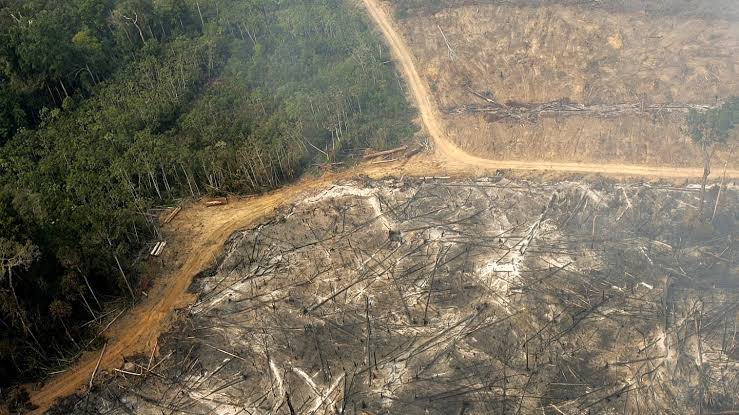
This raises the prospect of a dangerous feedback loop. As forests are degraded by logging, agricultural expansion, fires and drought, they store less carbon and become less effective at regulating local temperatures and water cycles. Further warming can then increase the likelihood of fires and forest loss, releasing more carbon into the atmosphere.
The climate report also highlights the continuing threat from forest fires. It estimates that fires destroyed 10.8 million hectares of tree cover in 2025, even as tropical primary forest loss declined by 36 per cent.
The Planetary Health Check broadens the picture by examining environmental pressures that cannot be addressed through emissions reductions alone. Freshwater change has crossed its safe boundary, with human activities disrupting both water in rivers and lakes and moisture stored in soils. These changes can intensify droughts and floods, threaten crops and increase pressure on drinking-water supplies.
Excessive flows of nitrogen and phosphorus, largely associated with fertiliser use, are polluting waterways and contributing to algal blooms and oxygen-depleted areas in lakes and oceans. Ocean acidification, caused by the absorption of carbon dioxide, is also making conditions more difficult for some marine organisms to build shells and skeletons.
The report raises concern about pollution from plastics, synthetic chemicals and “forever chemicals”, which can persist in the environment for long periods. Many substances are being produced and released faster than their effects can be adequately assessed, monitored or regulated.
The Planetary Health Check identifies continuing drought and food insecurity in East Africa, where environmental pressures and conflict can combine to deepen hardship. It reports that a drought affecting Kenya in 2025 and continuing into the reporting period had affected an estimated 2.2 million people.
The climate report also warns that adaptation remains underfunded. International public adaptation finance for developing countries was estimated at about US$64 billion in 2024, far below the annual US$310 billion to US$365 billion estimated to be needed by 2035.
Without stronger investment in early-warning systems, climate-resilient agriculture, water management, infrastructure and ecosystem restoration, vulnerable communities risk facing repeated losses with insufficient time or resources to recover.
Both assessments point to a narrow but still open opportunity to reduce future risks.
The climate report calls for rapid cuts in greenhouse gas emissions, effective adaptation, ecosystem protection and wider changes in how societies produce and consume energy. The Planetary Health Check similarly argues that phasing out fossil fuels must go hand in hand with restoring nature and reducing pressure on other planetary boundaries.
That means protecting existing forests, restoring degraded landscapes, safeguarding freshwater systems, reducing pollution and improving protection of marine ecosystems. It also requires stronger coordination between policies governing climate, biodiversity, land use, water and development.
The reports acknowledge signs of progress, including the rapid growth of renewable electricity and battery storage, as well as evidence of recovery in the stratospheric ozone layer following international controls on ozone-depleting chemicals. But the scientists warn that progress remains insufficient against the scale of the challenge.