
KCB Group has partnered with WWF-Kenya to develop investment-ready projects that can attract climate finance and fund environmental conservation, leveraging the bank’s KSh10 billion Green Climate Fund facility.
The partnership seeks to mobilise public and private capital for projects that restore ecosystems, strengthen climate resilience and support livelihoods dependent on natural resources.
Under the agreement, the two organisations will develop a pipeline of bankable nature-positive projects, structure blended-finance arrangements and promote the integration of environmental, social and governance (ESG) considerations into investment decisions.
Priority areas include tree growing, landscape restoration, clean cooking solutions for institutions and solarisation initiatives.
The collaboration aims to expand access to financing for enterprises and projects that deliver environmental benefits alongside economic returns.
A key challenge for nature-positive investments is turning conservation needs into projects that meet financing requirements. By combining KCB’s financial services with WWF-Kenya’s conservation expertise, the partnership seeks to bridge this gap and attract investment into projects that might otherwise struggle to secure funding.
WWF-Kenya Chief Executive Officer Jackson Kiplagat said the organisation had mobilised more than KES 17.18 billion in sustainable investments over the previous seven years.
“This is the scale of impact that must now be accelerated through stronger partnerships with Kenya’s corporate sector,” said Kiplagat.
The collaboration builds on previous efforts by WWF-Kenya to encourage financial institutions to account for nature-related risks in their governance systems and lending decisions.
The organisation has also worked with the Kenya Bankers Association to promote the integration of climate and nature-related risks into banking operations, reflecting the growing importance of environmental considerations in assessing investments and borrowers.
For banks, these risks can affect the long-term viability of businesses whose operations depend on water, forests, agricultural land and other natural resources. Incorporating them into financing decisions can help direct capital towards enterprises that reduce environmental damage and strengthen resilience to climate-related shocks.
WWF-Kenya says its restoration programmes have supported the recovery of more than 278,000 hectares of forests, wetlands, riparian areas and rangelands since 2020.
The organisation also reports that its work has directly benefited more than 369,000 people over the past seven years, helping communities generate more than KSh600 million in income.
Kiplagat said the KCB partnership would help connect conservation with enterprise development and finance, enabling communities and businesses to benefit economically while supporting the recovery of ecosystems.
The agreement comes as Kenya seeks greater private-sector participation in financing climate action and biodiversity conservation. Beyond funding individual projects, partnerships between conservation organisations and financial institutions can help establish mechanisms for assessing environmental risks, preparing viable investments and directing capital towards sustainable economic activities.
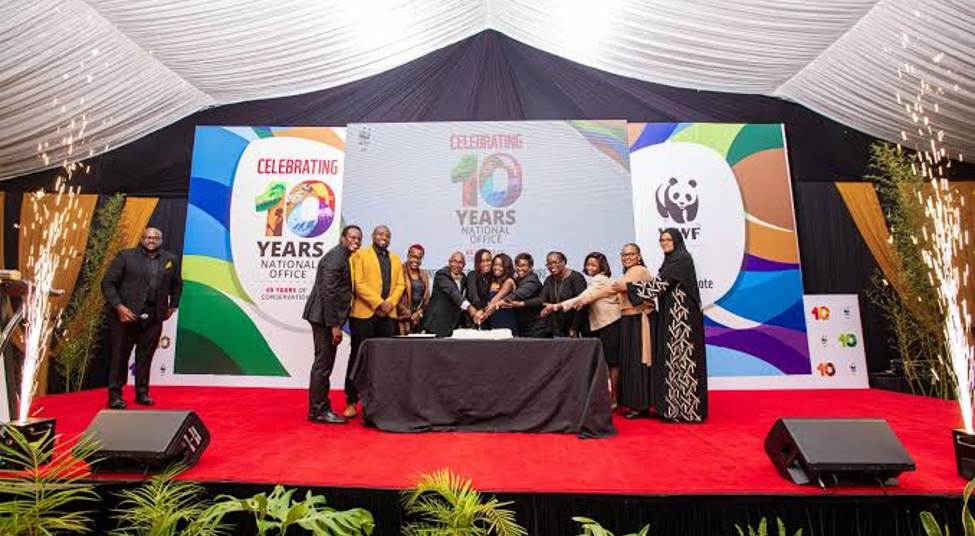
WWF-Kenya, which began its conservation work in the country in 1962, is seeking to deepen private-sector engagement as it advances its work on conservation and sustainable development.