
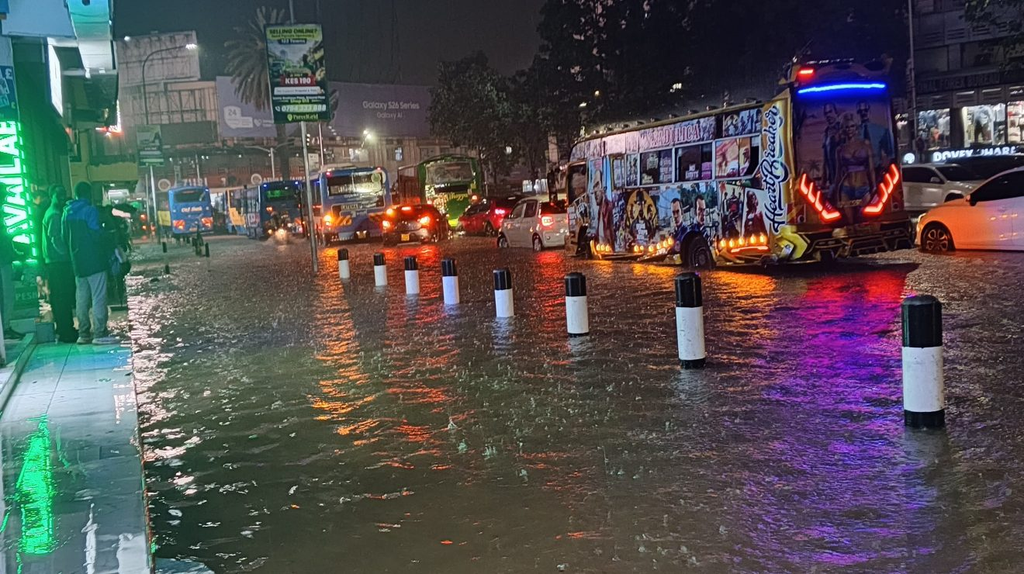

Nairobi’s drainage systems are already coming under pressure after the first significant rains in weeks flooded roads in different parts of the city, raising questions about the city’s preparedness for the anticipated El Niño rains.
The October 31 early morning downpour left sections of First Avenue in Parklands, near Oshwal School, submerged, forcing motorists to navigate through floodwater. In Githurai, flooding affected the busy roundabout, disrupting movement for motorists and motorcyclists. Similar situation was witnessed along Waiyaki Way and .
The incidents have renewed concerns about whether Nairobi’s drainage infrastructure can withstand prolonged and heavier rainfall, particularly after the national and county governments announced extensive preparations and allocated billions of shillings towards flood mitigation.
The flooding comes despite assurances by Nairobi Governor Johnson Sakaja that the county was undertaking drainage improvements, clearing waterways and preparing emergency response mechanisms ahead of the rainy season.
In August, the county announced a KSh2.4 billion flood-resilience programme involving the national government, Kenya Urban Roads Authority (KURA), Kenya National Highways Authority (KeNHA) and the Kenya Red Cross.
In September, the Nairobi Rivers Commission said it was working to unclog drainage systems and clear waterways in Westlands, including Woodvale Grove, Mpaka Road and First Parklands.
The county has also identified 227 flood-prone hotspots across its 17 sub-counties. On October 12, Sakaja told a meeting of national and county government officials that only 26 of 61 critical drainage sites had been cleared.
The latest flooding therefore raises a fundamental question about the difference between announcing preparedness measures and ensuring that drainage infrastructure is functional before the rains intensify.
The concerns come as the Kenya Meteorological Department forecasts above-average rainfall across much of the country. The department’s seasonal outlook forecasts enhanced rainfall in more than 40 counties, including Nairobi, with the season expected to feature prolonged wet spells and occasional isolated storms.
On October 16, meteorologists from seven countries in the Greater Horn of Africa reaffirmed the forecast despite the delayed onset of rainfall in some areas.
Nairobi’s informal settlements and neighbourhoods located along rivers face greater exposure to flooding, with the possibility of homes being inundated, sanitation facilities overwhelmed and household belongings destroyed.
Flooding can also contaminate water sources and increase the risk of waterborne diseases, including cholera and typhoid. The Ministry of Health activated preparedness measures in September, warning counties about the health risks associated with the anticipated rains and calling for stronger disease surveillance, water safety monitoring and emergency response.
The national government has also directed counties to identify vulnerable populations, prepare evacuation centres and coordinate emergency operations.