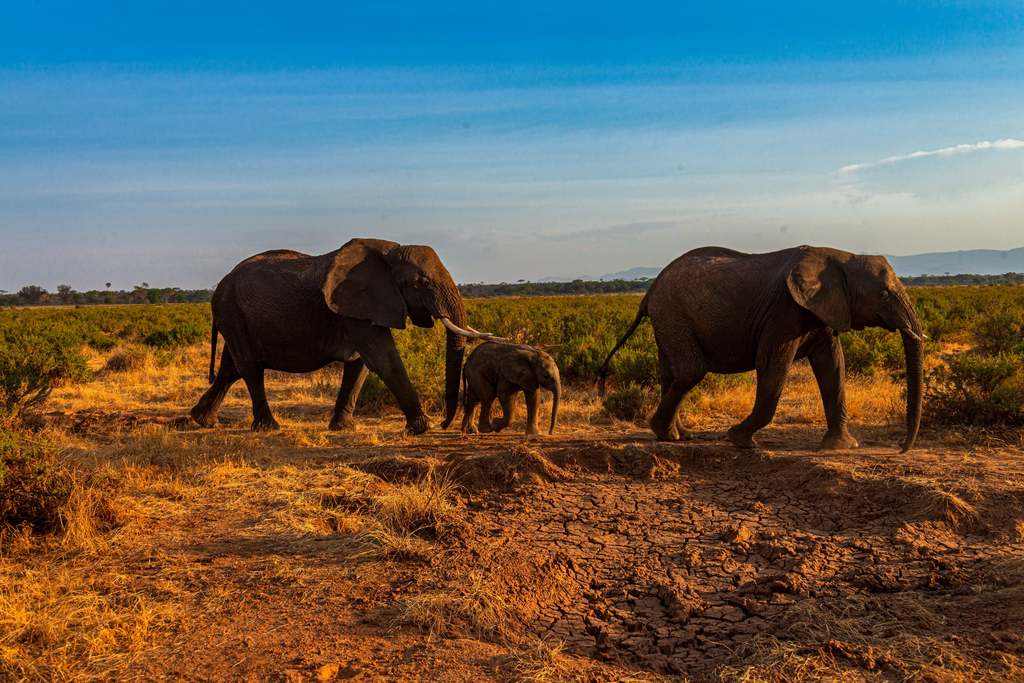

Kenya has secured a 200-kilometre elephant migration corridor linking Samburu, Isiolo and Laikipia counties, as conservationists from 10 African countries commit to restoring wildlife routes increasingly threatened by human settlements, agriculture and industrial development.
The corridor stretches from Kalama Conservancy in Samburu to Lower Naibung’a Community Conservancy in Laikipia, providing a route for elephants and livestock moving across the landscape in search of water and pasture.
Dr Ben Okita, director of the Wyss Academy for Nature’s East African Hub, said three corridors in the three counties had been legally secured, with work under way to protect more than 10 identified routes.
“We have identified more than 10 elephant corridors in Isiolo, Samburu and Laikipia counties, and we have already secured three of them with beacons through the support of local communities and the county governments,” he said.
The initiative involves conservation organisations, county governments and local communities working to demarcate migration routes, install boundary beacons and establish legal protection for the corridors.
Benjamin Loroju of Save the Elephants said landowners whose properties overlap with migration routes, particularly around settlements such as Oldonyiro in Isiolo County, may require alternative land arrangements facilitated by county governments.
Research indicates that about 98.5 per cent of the elephant range in the Laikipia–Samburu ecosystem lies outside formally protected areas. A 2021 study estimated the elephant population in the ecosystem at approximately 7,347.
The findings underline the importance of protecting community and privately owned land, which provides much of the space elephants need to move between habitats.
Human population growth, urbanisation, agricultural expansion and industrial development have increasingly restricted wildlife movement, raising the risk of encounters between animals and people, which can result in crop destruction, property damage, injuries and deaths.
Speaking at the close of a three-day continental conference in Laikipia County, Principal Secretary for Wildlife Sylvia Museiya said human-wildlife conflict remained a major challenge in Kenya, with the government spending about Sh1 billion annually on compensation. She said elephants accounted for approximately 80 per cent of reported cases involving deaths and injuries.
“Blocking of wildlife corridors forces elephants and other animals to stray into human settlements in search of food and movement routes,” Museiya said.
She cited the Nairobi National Park–Athi-Kapiti Wildlife Corridor as an example of the challenges facing wildlife connectivity, saying expanding human settlements had restricted traditional movement routes.
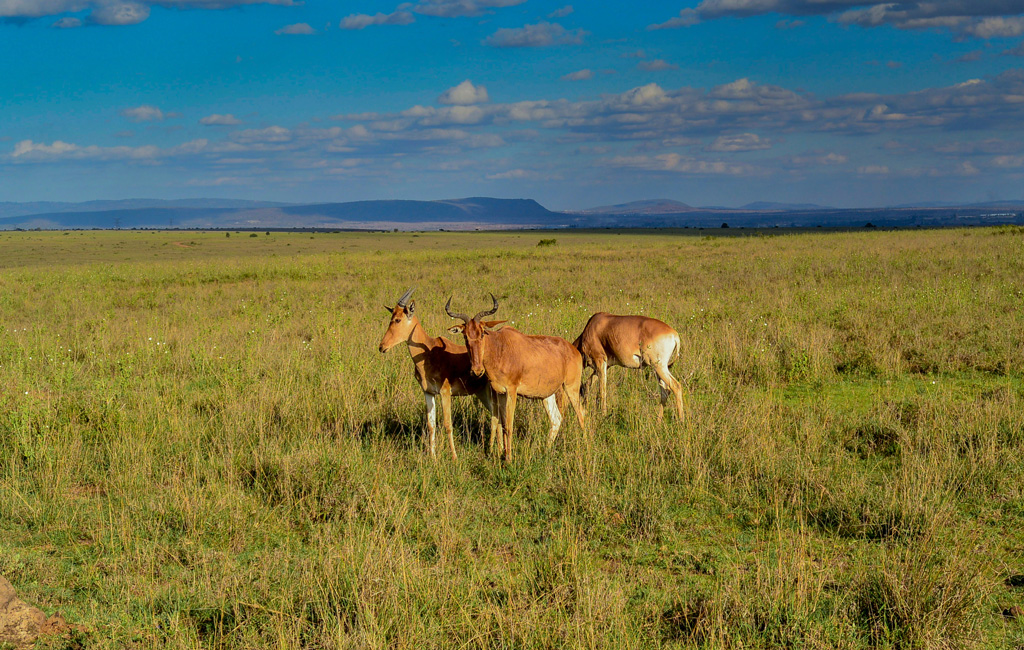
Museiya also raised concerns about the effects of habitat fragmentation on animal populations, including reduced genetic diversity where wildlife becomes isolated. She cited disruptions to the historic annual wildebeest migration between Kenya and Tanzania as another consequence of human interference with wildlife movement.
The conference, convened by the Wyss Academy for Nature under the theme Strengthening African Elephant Landscape Connectivity, brought together delegates from 10 African countries to share experiences and develop approaches to protecting migration routes across the continent.
In a joint communique, the delegates committed to reviewing their progress after 12 months and promoting approaches used in different countries to secure elephant corridors and maintain connected landscapes.
“We commit ourselves to promoting, documenting, scaling and replicating effective approaches such as ‘SOLUTIONSCAPE’ in Kenya, ‘PLEO’ in Democratic Republic of Congo and ‘LUCIS’ in Botswana to securing elephant corridors and multi-use landscape connectivity across Africa,” the communique stated.
The delegates also recognised the importance of ecological connectivity under international conservation frameworks, including the Kunming–Montreal Global Biodiversity Framework, the Convention on the Conservation of Migratory Species of Wild Animals and guidance from the International Union for Conservation of Nature.
The need for cross-border cooperation is particularly evident in Southern Africa, where the Kavango–Zambezi Transfrontier Conservation Area spans Angola, Botswana, Namibia, Zambia and Zimbabwe. A 2022 aerial survey supported by the World Wide Fund for Nature estimated the area’s elephant population at 227,900.
African savannah elephants (Loxodonta africana) and African forest elephants (Loxodonta cyclotis) depend on access to suitable habitats across large areas. Their movements follow seasonal changes in rainfall, vegetation and water availability, while older female elephants help guide herds to feeding grounds and water sources.
Emmanuel Hema, a delegate from Burkina Faso, said the meeting offered an opportunity to learn from Kenya’s approach to involving communities, government institutions and the private sector in wildlife conservation.
Steeve Gama, a delegate from Gabon, said he hoped to apply lessons from the conference to strengthen elephant conservation and corridor management in his country.
Kenya’s delegation included officials from the State Department for Wildlife, led by Museiya, representatives of the Executive Office of the President, Laikipia and Isiolo county governments, and local and regional conservation organisations.