
Africa will need to increase its renewable electricity generation capacity nearly 30-fold by 2050, requiring an estimated $3.2 trillion (KES 416 trillion) in investment, as the continent confronts the challenge of expanding electricity access while shifting away from fossil fuels.
The International Renewable Energy Agency (IRENA), in its World Energy Transitions Outlook 2026: 1.5°C Pathway, says Africa’s installed renewable power capacity, estimated at 82 gigawatts (GW) in 2025, must rise to approximately 607GW by 2035 and 2,510GW by 2050 to align with the global pathway for limiting temperature rise to 1.5°C.
The scale of expansion highlights the financing and infrastructure challenges facing African countries, where electricity access remains limited in many communities even as demand grows from households, businesses and industries.
The report estimates that Africa will require about $3.2 trillion in cumulative investment in renewable power generation between 2026 and 2050. Securing this financing will be difficult unless governments and development partners address high borrowing costs, currency risks and limited access to affordable long-term capital.
The investment challenge comes against a backdrop of widespread energy poverty, where more than 565 million people in sub-Saharan Africa still lack access to electricity, limiting economic opportunities and the expansion of essential services.
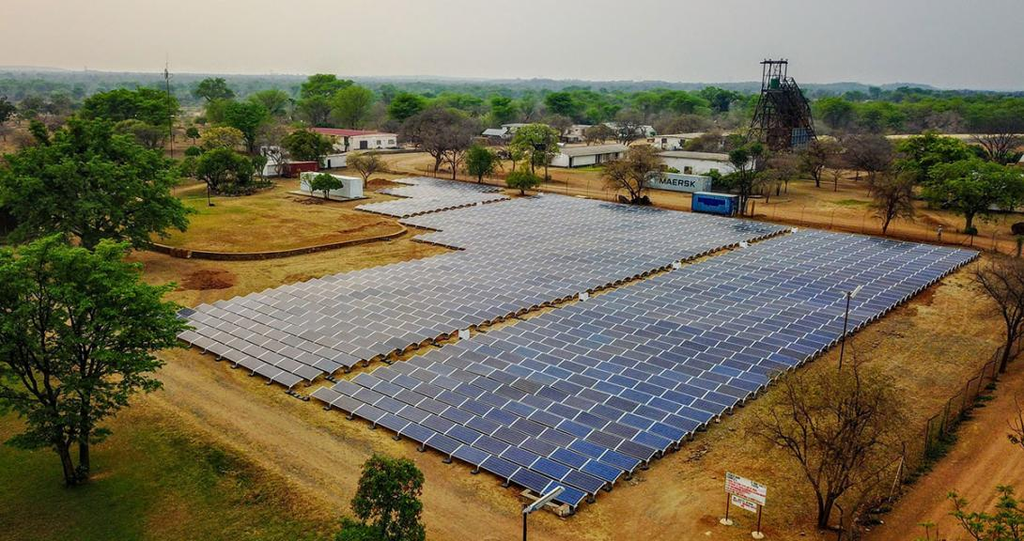
IRENA identifies decentralised renewable energy as an important part of the solution, particularly in remote communities where extending national electricity grids can be expensive.
The agency estimates that mini-grids and standalone solar photovoltaic systems could provide about 60 per cent of the additional electricity connections required in sub-Saharan Africa by 2030, reaching approximately 401 million people.
This would require governments to combine investment in large-scale renewable energy projects with smaller, community-based electricity systems capable of serving households and businesses beyond the reach of conventional grids.
However, expanding generation alone will not resolve Africa’s electricity challenges. The report points to inadequate transmission and distribution networks, limited storage capacity and insufficient system flexibility as constraints that could slow the integration of renewable energy into national electricity systems.
Without investment in these supporting infrastructure systems, countries risk developing renewable energy projects that cannot deliver their full potential because of limited grid connections and transmission capacity.
IRENA identifies high financing costs, currency risks, limited fiscal space and perceptions of investment risk as barriers to attracting capital into African renewable energy projects.
These challenges make renewable energy investments more expensive in developing economies than in advanced markets, despite the continent’s substantial solar, wind, geothermal and hydropower resources.
The agency calls for greater use of concessional financing, guarantees and other risk-sharing mechanisms to attract private investors and reduce the cost of capital.
“Stronger domestic financial markets and predictable regulatory frameworks will also be necessary to improve investor confidence and support long-term infrastructure development,” states the report.
The report’s investment projections also highlight the scale of the global financing challenge. Under its 1.5°C scenario, the world will require more than $256 trillion in cumulative energy transition investment and expenditure between 2026 and 2050, equivalent to an average of about $10.3 trillion annually.
“African countries will need to secure a larger share of these investments if they are to expand electricity access, develop clean energy industries and participate in the emerging global renewable energy economy,” the report highlights.
Beyond electricity generation, IRENA argues that African countries must use the energy transition to build domestic industrial capacity rather than remain dependent on imported renewable energy technologies. This includes developing skills, manufacturing capabilities and competitive industries linked to solar, wind, battery storage and other clean energy technologies.
Such investments could help countries capture more economic value from the transition while creating employment and supporting industrial development.
The agency also stresses the importance of integrated energy planning, with governments coordinating electricity generation, transmission, storage and demand to ensure that new investments support national development priorities.
For Africa, this means linking renewable energy expansion to productive sectors such as agriculture, manufacturing, transport and digital services, where reliable and affordable electricity can improve productivity and competitiveness.
IRENA’s outlook places these priorities within a wider global transition that requires renewable energy, electrification and energy efficiency to advance together.
Under its 1.5°C scenario, global renewable power capacity would need to reach 18.4 terawatts by 2035 and 38.2 terawatts by 2050, while electricity’s share of final energy consumption would rise from about 23 per cent currently to 35 per cent by 2035.
The agency warns that existing government plans remain insufficient to deliver the required transformation, particularly as electricity demand increases and investment in supporting infrastructure lags behind renewable energy deployment.