
Developing countries will need an estimated US$305 billion annually by 2035 to protect their populations and economies from climate change, but current international funding commitments would cover less than a third of that requirement.
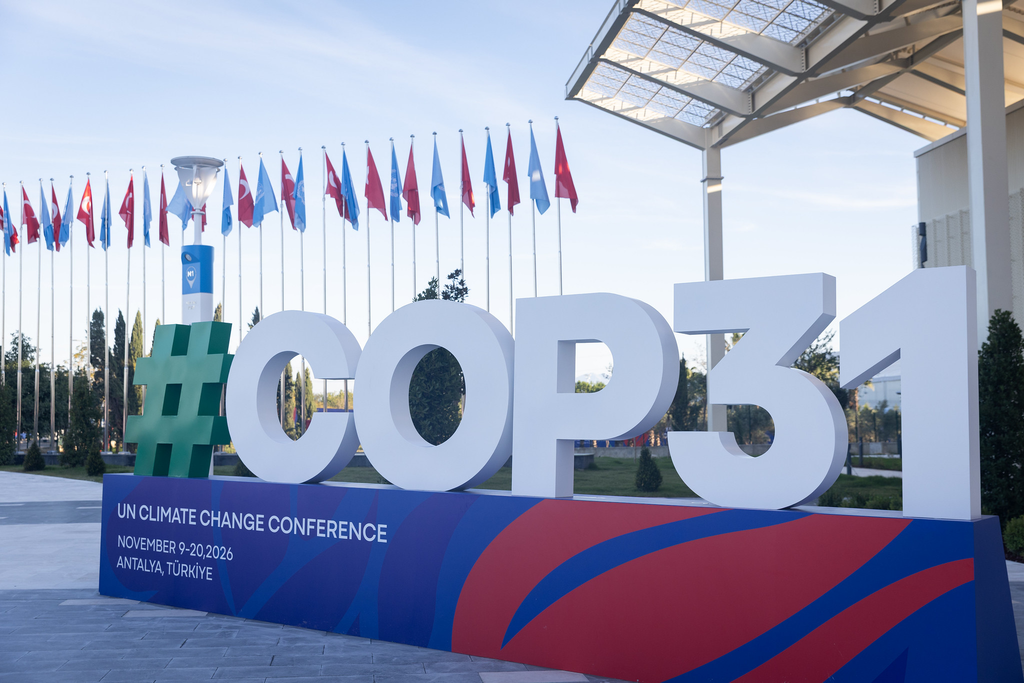
A new United Nations Environment Programme (UNEP) report put climate adaptation finance among the pressing issues facing governments at COP31, which begins in Antalya, Türkiye, on November 9, as vulnerable countries push for greater financial support to prepare for increasingly severe floods, droughts, heatwaves and other climate impacts.
The Adaptation Gap Report 2026: Ready? Not, released on November 4, estimates that annual adaptation requirements across 155 developing countries range between US$255 billion and US$328 billion over the coming decade, with a central estimate of US$305 billion by 2035.
Yet international public adaptation finance from developed to developing countries reached only US$28.2 billion to US$31.7 billion in 2024, representing an increase of just US$1 billion from the previous year.
The funding gap remains substantial even under the international commitment to triple adaptation finance by 2035, agreed at COP30 in Belém, Brazil in 2025.
UNEP estimates that delivering on this ambition would raise annual international public adaptation finance to between US$85 billion and US$120 billion, which would meet only 20 to 29 per cent of developing countries’ projected needs, leaving more than two-thirds of the requirement unfunded.
The figures raise questions about the adequacy of the COP30 commitment and whether governments at COP31 will agree on additional measures to mobilise resources for climate resilience.
UNEP Executive Director Inger Andersen said countries must intensify efforts to achieve the tripling ambition while recognising that substantially more funding would be required. “The world is not ready to adapt to current climactic conditions,” Andersen said. She called for greater adaptation investment to save lives, prevent losses and damages and protect economies.
The funding deficit has significant implications for Africa, where increasingly erratic rainfall, prolonged droughts, floods and extreme heat threaten agricultural production, water supplies, infrastructure and livelihoods.
For countries dependent on climate-sensitive sectors such as agriculture and tourism, inadequate adaptation investment increases the risk that extreme weather will undermine economic growth and deepen existing development challenges.
The financing terms are also a concern, with UNEP reporting that loans accounted for 55 per cent of international public adaptation finance in 2024, compared with 44 per cent provided as grants.
For developing countries already struggling with debt and limited fiscal space, borrowing to finance climate resilience could compound existing financial pressures. The report estimates that least developed countries (LDCs) and small island developing states (SIDS) require between US$40 billion and US$50 billion annually for adaptation, equivalent to three to four per cent of their combined gross domestic product.
Tripling adaptation finance specifically for LDCs and SIDS could meet between 49 and 84 per cent of their projected requirements by 2035, underscoring the importance of directing resources towards countries facing the greatest vulnerability.
Private investment is expected to contribute to closing the gap, particularly in climate-resilient infrastructure, agriculture, energy and business operations. However, UNEP warns that private finance cannot replace public investment, especially in sectors and communities where commercial returns are limited.
Beyond the financing shortfall, UNEP identifies weak institutional capacity as a major obstacle to translating adaptation commitments into practical interventions, saying that countries need stronger climate legislation, clearer responsibilities across government agencies and better coordination between national and local authorities to implement adaptation plans effectively.
The report also calls for stronger monitoring and accountability systems, as well as greater community participation in identifying climate risks and designing responses.
UNEP also highlights the growing burden of climate-related losses and damages, particularly in developing countries that lack sufficient resources to respond to extreme weather events.
Between 2020 and 2025, low- and middle-income countries accounted for 99 per cent of the 765 million people recorded as affected by floods and landslides. Nearly 240,000 deaths associated with extreme heat were also recorded during the period.
The report shows that the funding deficit is significantly evident in the Fund for responding to Loss and Damage, saying that during its first funding round, 119 developing countries submitted requests totalling US$2.8 billion against an initial allocation of US$342 million.
National systems for documenting climate-related losses also remain inadequate. Although 89 per cent of 118 countries refer to loss and damage in their nationally determined contributions or national adaptation plans, only 54 per cent have established systems to record such impacts, while 38 per cent have relevant legal frameworks. These gaps make it difficult to establish the full scale of climate-related damage, identify affected communities and determine the financial resources required for recovery.
The findings are likely to reinforce demands from developing countries for more predictable adaptation finance as governments meet in Antalya. The negotiations will take place against the backdrop of the New Collective Quantified Goal on Climate Finance agreed at COP29 and the COP30 commitment to triple adaptation finance by 2035.
The Global Goal on Adaptation will also remain an important negotiating issue, particularly efforts to establish measurable indicators for assessing progress in building climate resilience.
For developing countries, the central concern will be whether international commitments translate into accessible funding, particularly grants and affordable financing, rather than additional debt.