
The Democratic Republic of Congo (DRC) has demanded a Chinese-owned mining company to pay US$6 million in compensation to three communities affected by a toxic wastewater spill in Lubumbashi, warning that the suspension of its operations does not absolve it of responsibility for the pollution.
The demand comes a year after the November 2025 spill, which contaminated residential areas and waterways, raising concerns over the safety of drinking water, damage to farmland and the slow pace of environmental recovery.
The DRC Ministry of Mines has allocated US$2 million each to Kasapa, Kamatete and Kamisepe, the three affected communities. DRC Demands $6m Compensation for Communities Hit by Toxic Mine Spill, implementation of the collective compensation programme has been delayed, partly because the company cited financial difficulties.
The ministry insists that Congo Dongfang International Mining (CDM), a subsidiary of China’s Zhejiang Huayou Cobalt, must honour its obligations regardless of its financial position or decision to suspend operations.
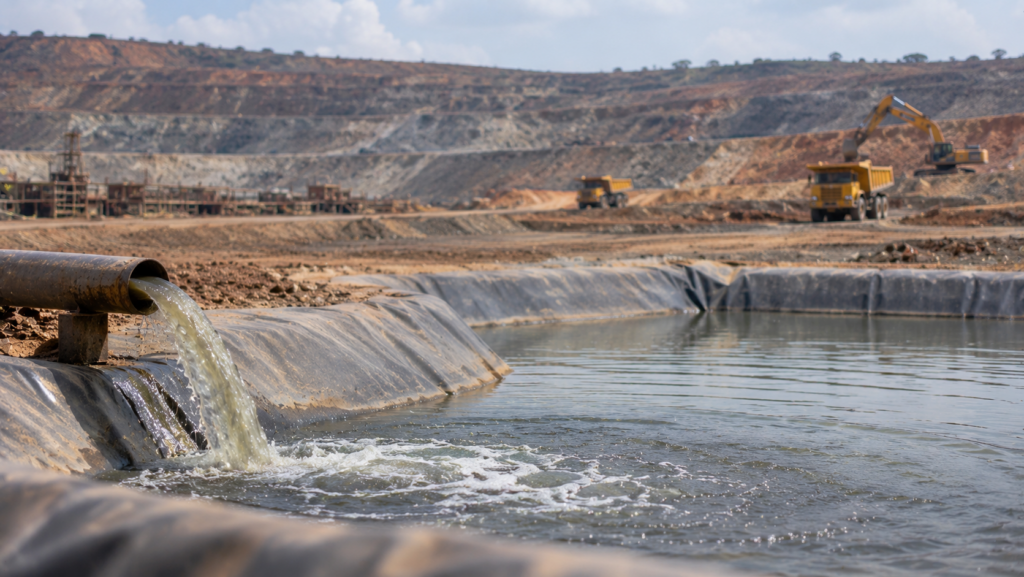
The company was initially suspended for three months following the November 4, 2025 incident, when wastewater escaped from a containment basin at its Lubumbashi mining facility. The basin, designed to retain water, had reportedly been used to store acidic industrial solutions.
A government investigation subsequently established environmental and human impacts, including elevated levels of lead, arsenic and other potentially harmful substances in water samples, as well as evidence of biodiversity loss after thr contaminated liquid spread into surrounding neighbourhoods and waterways. The government has also ordered CDM to pay a separate US$6.6 million penalty to the state treasury, separate from the US$6 million earmarked for community compensation.
However, the compensation dispute has exposed a wider problem of the difference between government orders, financial commitments and actual restoration of the environment.
In November 2026, five Congolese civil society organisations raised concerns that key reparations remained unfulfilled, a year after the incident. They called for the release of the full investigation report, including environmental testing results, and demanded action on compensation, healthcare and access to safe drinking water.
The government, meanwhile, says some assistance has already been provided. The Mines Ministry has reported support to 350 households, medical care for 612 people and individual compensation for 423 residents, alongside efforts to clean up identified contaminated areas and wells.
But accounts gathered by Mongabay from affected neighbourhoods four months after the spill described continuing damage to crops, concerns over the safety of local water sources and difficulties accessing healthcare. Residents also feared they could be excluded from compensation programmes.
The DRC is the world’s largest cobalt producer and second-largest copper producer. These minerals are essential to battery manufacturing, electric vehicles and other technologies supporting the global transition to cleaner energy. Chinese companies have a significant presence in the country’s mining sector, including through investments in cobalt processing and battery materials.