
Developing countries could attract more investment into climate projects under a new global initiative seeking to address fragmentation in carbon markets and improve access to carbon finance.
UN Trade and Development (UNCTAD) will launch the Global Carbon Market Network on 12 November at the 31st United Nations Climate Change Conference (COP31) in Antalya, Türkiye.
The initiative aims to strengthen connections between carbon markets and financial institutions, improve transparency and credibility, and facilitate cross-border investment in projects that reduce or remove greenhouse gas emissions.
Its establishment comes amid growing concerns that fragmented carbon markets, inconsistent standards and doubts over the quality of carbon credits are limiting the sector’s ability to mobilise finance, particularly for developing economies.
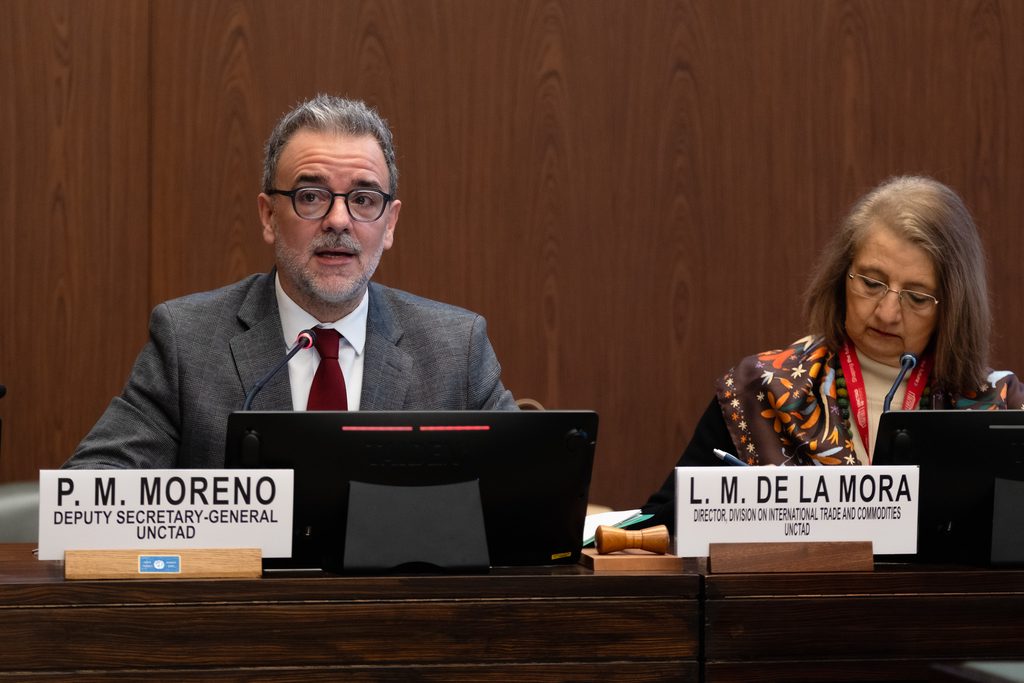
UNCTAD Acting Secretary-General Pedro Manuel Moreno said the initiative could help make carbon pricing a more effective instrument for reducing emissions and mobilising climate finance for developing countries.
“Carbon markets can play a role in putting a price on emissions and mobilizing finance for climate action, but their effectiveness depends on trust, integrity and functioning market infrastructure,” said Nan Li Collins, UNCTAD’s Director of Investment and Enterprise and Chair of the UN Sustainable Stock Exchanges Initiative.
The Network will bring together carbon exchanges, financial institutions and other market players to strengthen cooperation and address technical and institutional barriers that undermine confidence in carbon transactions.
Its work will include improving the measurement and verification of emissions reductions, benchmarking market practices and promoting digital technologies that can enhance transparency and reduce transaction costs.
The initiative comes as carbon pricing mechanisms expand globally. Emissions trading systems and carbon taxes now cover nearly 30 per cent of global greenhouse gas emissions and generated more than US$107 billion in public revenue in 2025.
However, the expansion of carbon pricing has not translated into an equally effective flow of investment into climate projects in developing countries. UNCTAD notes that carbon markets operate across different standards, registries and trading systems, making it difficult to establish consistent practices and facilitate transactions between jurisdictions. Concerns about the quality of carbon credits, transparency and double counting have also weakened confidence in the markets.
The Global Carbon Market Network will seek to address these challenges by connecting existing market initiatives rather than establishing a new carbon market or introducing another crediting standard. This is particularly relevant to voluntary carbon markets, which offer opportunities to channel private investment across international borders.
According to UNCTAD research, most voluntary carbon credits are generated by projects in developing countries and purchased by buyers in developed economies.
The Network’s founding membership includes institutions from Africa, Asia, the Middle East, Europe and Latin America, reflecting an effort to build cooperation across different carbon market systems.
African founding members include the Johannesburg Stock Exchange, Morocco’s Casablanca Finance City Authority and the Nigeria Sovereign Investment Authority. Other members include the Astana International Financial Centre Authority, Climate Impact X of Singapore, the Indonesia Stock Exchange, the Global Carbon Council of Qatar, Verra and the UK Carbon Market Forum.
The participation of African financial and market institutions could provide a platform for strengthening the continent’s engagement with international carbon markets and attracting investment into emissions-reduction projects.
The Network’s initial programme will include capacity-building initiatives, benchmarking of market practices and the preparation of a global report examining the state of carbon markets.
It will also engage regulators overseeing emissions trading systems on technical cooperation and interoperability, which could make it easier for different markets to work together.
The initiative will further seek to support implementation of Article 6 of the Paris Agreement, which provides for international cooperation through carbon markets and other mechanisms to help countries meet their climate commitments.