
In Nairobi, the benefits of the energy transition are becoming visible in the kitchen. A household that previously relied on charcoal switched to an electric pressure cooker costing about $70. Its monthly electricity bill increased by roughly $3.60, but its cooking energy costs fell by nearly 45 per cent. The family also saved almost an hour every day.
The experience illustrates what a successful energy transition could mean for millions of African households: lower energy costs, less time spent cooking and reduced dependence on polluting fuels.
But it also raises a bigger question confronting African governments and their development partners on whether the transition will deliver affordable, reliable and cleaner energy to ordinary people, or will its benefits remain largely confined to investment announcements and international climate pledges.
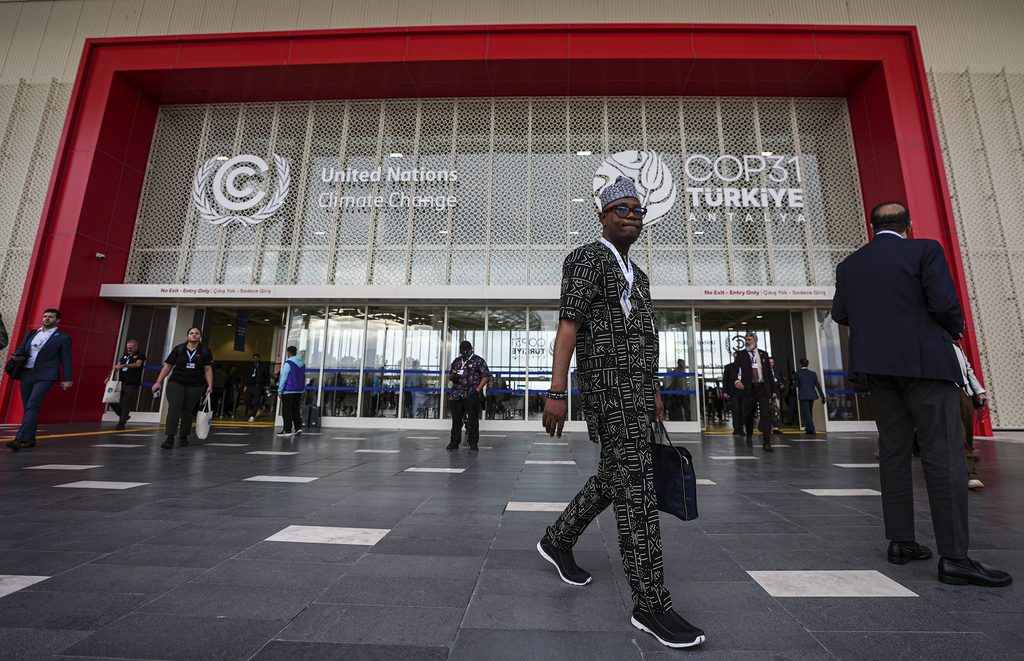
At COP31 in Antalya, Türkiye, the conference presidency has promoted the 35×35 pledge, which seeks to increase electricity’s share of global final energy consumption from around 20 per cent to 35 per cent by 2035.
The target signals an ambition to accelerate electrification across economies. However, increasing electricity’s share of energy consumption does not necessarily mean that more people will gain access to power, particularly in regions where millions remain unconnected or cannot afford to use the electricity available to them.
The Nairobi household experience draws on early electric pressure cooker pilots in East Africa, whose findings were published by the Modern Energy Cooking Services programme in 2023. The research examined 100 Kenyan households alongside participants in Uganda and Tanzania, documenting the potential for electric cooking to reduce household expenditure and save time, particularly among families previously dependent on charcoal.
The analysis projected that scaling electric pressure cookers to all grid-connected charcoal-using households in Kenya could generate more than $1.7 billion in net social benefits over ten years, demonstrating why cooking should be treated as an integral part of electrification policy, rather than a separate environmental intervention.
The opportunity extends beyond households to public institutions, where dependence on charcoal and other traditional fuels carries financial, environmental and health costs.
At COP31, Kenya Commercial Bank announced more than KSh2 billion to support the adoption of clean energy solutions in 600 schools and 60 technical and vocational education and training (TVET) institutions as Kenya target expanding the initiative to 10,000 secondary schools, 250 TVET institutions and 42 universities. The estimated financing requirement stands at $460 million.
Achieving that ambition will require substantially more capital, including concessional financing and risk-sharing arrangements that can attract private investors while keeping projects affordable for institutions with limited budgets.
Other African countries face a more fundamental problem of extending electricity connections to communities that remain beyond the grid. Even where connections exist, high tariffs, unreliable supply and the cost of electrical appliances can prevent households from making the switch from traditional fuels.
At COP31, African leaders have called for greater access to climate grants rather than additional debt, while urging developed countries to honour their climate-finance commitments. Kenya also called for replenishment of the Green Climate Fund.
The COP31 briefing estimates that Africa receives less than five per cent of global climate finance and about two per cent of global energy-transition investment. The figures highlight the gap between the continent’s electrification ambitions and the resources currently reaching its energy sector.
Several initiatives announced in Antalya sought to address this investment shortfall. The conference launched the Electrify Now Finance Coalition, backed by the COP31 presidency and Ethiopia, which is scheduled to host COP32. The World Bank and African Development Bank were named inaugural co-chairs.
The Climate Investment Funds also announced $94 million in catalytic financing, expected to help mobilise more than $1.2 billion in private investment for clean electricity, electricity grids and storage in developing countries.
Other initiatives included a partnership between Ethiopia and the Global Clean Power Alliance to support the country’s National Electrification Programme, alongside a new carbon-finance standard for energy-access projects in Eastern and Southern Africa. The standard will use digital monitoring and verification to support investments in distributed solar systems, mini-grids and clean cooking projects.
These interventions could contribute to wider regional ambitions, including the World Bank’s Mission 300 initiative, which aims to connect 100 million people in Africa to electricity.
But the scale of announced financing should not be confused with money already reaching households and projects. The ultimate test will be whether these mechanisms translate into completed infrastructure, functioning energy systems and electricity services that consumers can afford.
There are also environmental and social considerations that cannot be overlooked. The expansion of renewable energy technologies will increase demand for transition minerals, raising concerns about the environmental damage, labour conditions and human rights risks associated with their extraction.
For Africa, which holds significant mineral resources, the transition must create economic opportunities without reproducing the extractive practices that have historically left communities bearing environmental costs while benefits flow elsewhere.
Ultimately, the measure of COP31’s energy ambitions will be whether a household in Nairobi can continue cooking with electricity without facing prohibitive bills, whether a rural school can replace its charcoal stove with a reliable clean-energy system, and whether communities still without electricity can finally afford a connection.