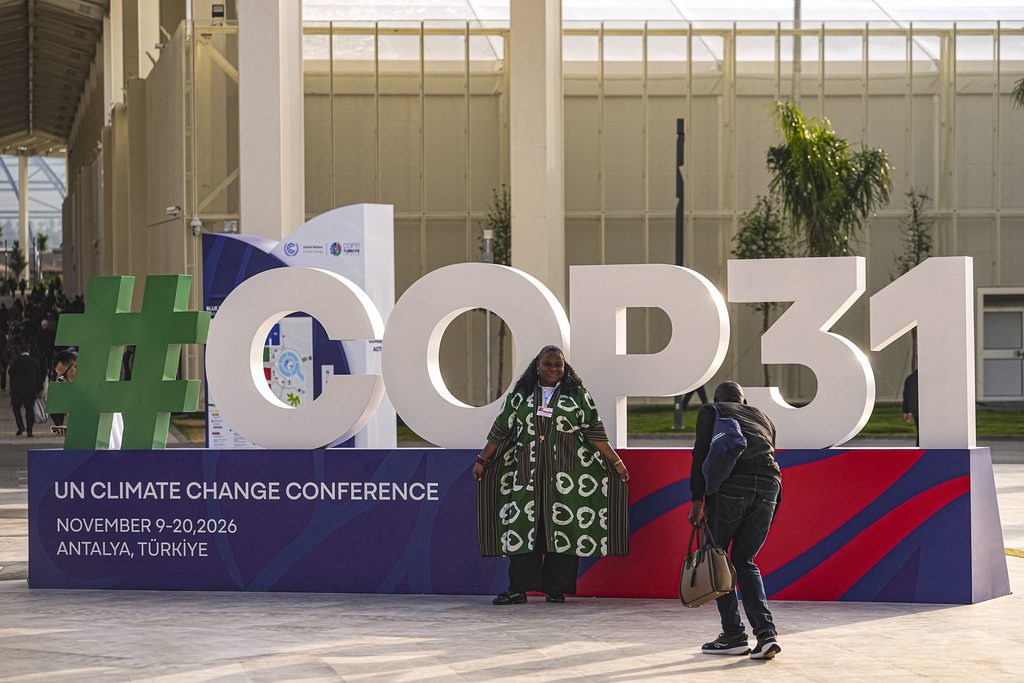

Antalya, Türkiye
The European Union has ruled out fresh climate finance commitments at COP31, insisting that developed countries should first deliver on existing pledges even as African nations press for a substantial increase in funding to help them cope with worsening climate impacts.
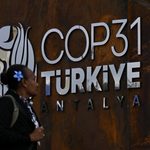
The EU position threatens to deepen divisions between developed and developing countries at the UN climate summit in Antalya, Türkiye, where the African Group of Negotiators is pushing for adaptation finance to triple by 2035.
But the EU, one of the world’s largest climate finance providers, says the immediate priority should be ensuring that money already pledged reaches countries that need it, rather than establishing new funding targets.
“We haven’t come to the table with additional monies or additional capital. It’s about what we have committed already and ensuring it’s deployed,” said Darragh O’Brien, who leads the EU delegation at COP31 on behalf of the Irish presidency of the Council of the EU.
O’Brien acknowledged that developing countries face significant difficulties accessing available climate finance but maintained that improving delivery mechanisms should take precedence over securing additional commitments.
European Commission climate commissioner Wopke Hoekstra reinforced that position, arguing that new pledges would mean little if existing commitments were not reaching vulnerable communities.
“If you are a vulnerable nation in the Pacific or one of the Least Developed Countries (LDCs) and the money is in the bank but does not land on the ground then it is effectively meaningless,” he said.
Hoekstra said the EU had contributed $30 billion towards the $100 billion annual climate finance commitment made by developed countries, arguing that other wealthy nations should shoulder a greater share of the responsibility.
The disagreement comes against a backdrop of mounting evidence that adaptation finance remains severely inadequate.
The UN’s latest Adaptation Gap Report estimates that developing countries will require approximately $300 billion annually by 2035 to meet their adaptation needs. Yet developed countries provided only about 10 per cent of that amount in 2024.
Sub-Saharan Africa alone requires approximately $51 billion annually in adaptation finance, while the Middle East and North Africa needs an estimated $112 billion, according to the UN’s previous assessment.
Under the 2015 Paris Agreement, developed countries are required to provide financial support to developing nations to help them address climate change, including through adaptation.
The financing dispute has also exposed the challenge of the limited capacity of some African countries to develop and implement National Adaptation Plans (NAPs), which identify climate risks, prioritise interventions and provide a framework for attracting international support.
African negotiators, however, argue that the absence of national adaptation plans should not become a condition for withholding finance, particularly when the continent’s vulnerability and funding requirements are already established.
Mahlet Eyassu Melkie, a senior strategic adviser to Ethiopia’s COP32 presidency, said comprehensive adaptation plans were useful for identifying priorities and preparing funding proposals, but Africa’s financing requirements could be established through scientific assessments, vulnerability studies and national and regional priorities.