
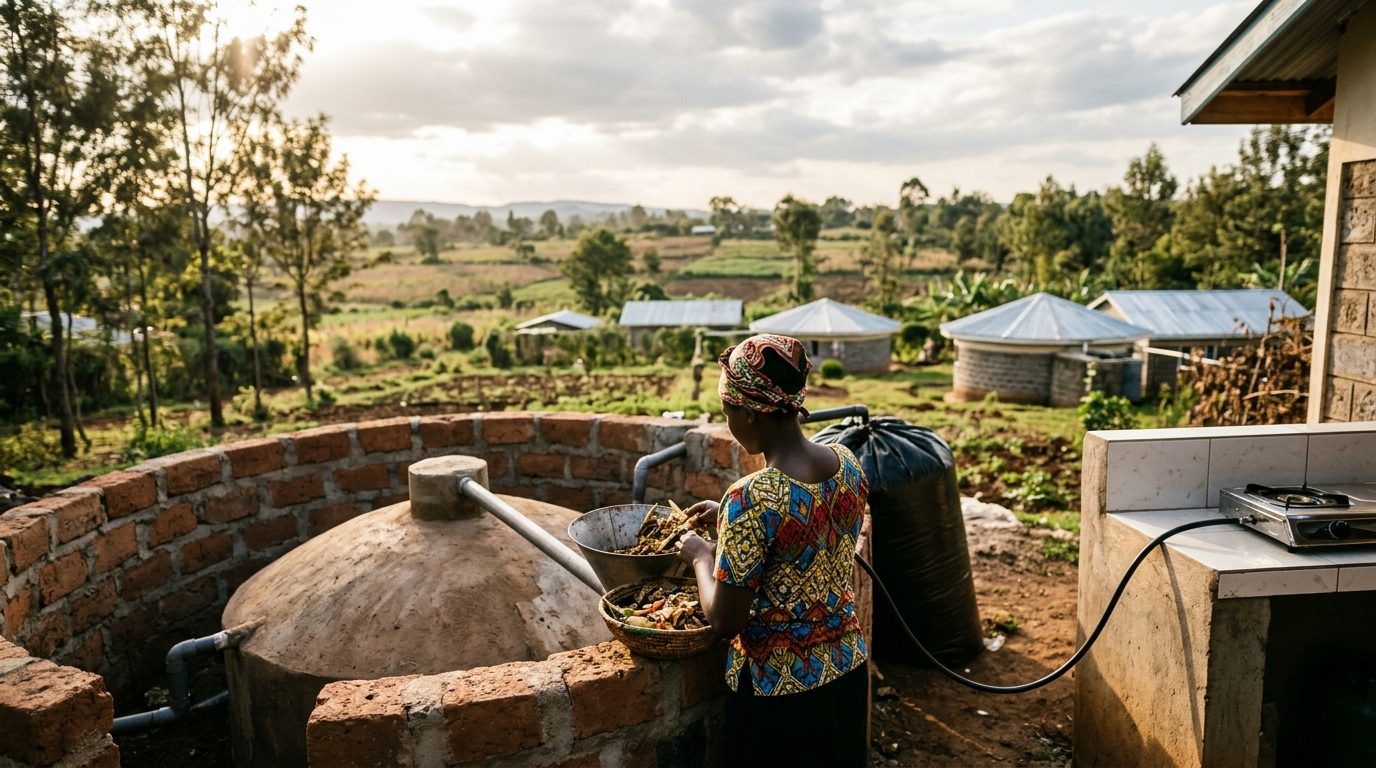
In Kipsirat village, on the edge of Chepalungu Forest in Bomet County, Flouncy Cheruiyot strikes a match, not to spark wood fire, but to ignite a biogas flame that now lights her kitchen.
After years of relying on firewood that cost her household more than Sh8,000 a month, Flouncy says her life has changed dramatically since her village embraced clean energy through a community biogas project.
“I use biogas for cooking and lighting the house. The project has changed our lives completely. The time we used to go look for firewood is now diverted to other activities,” she said.
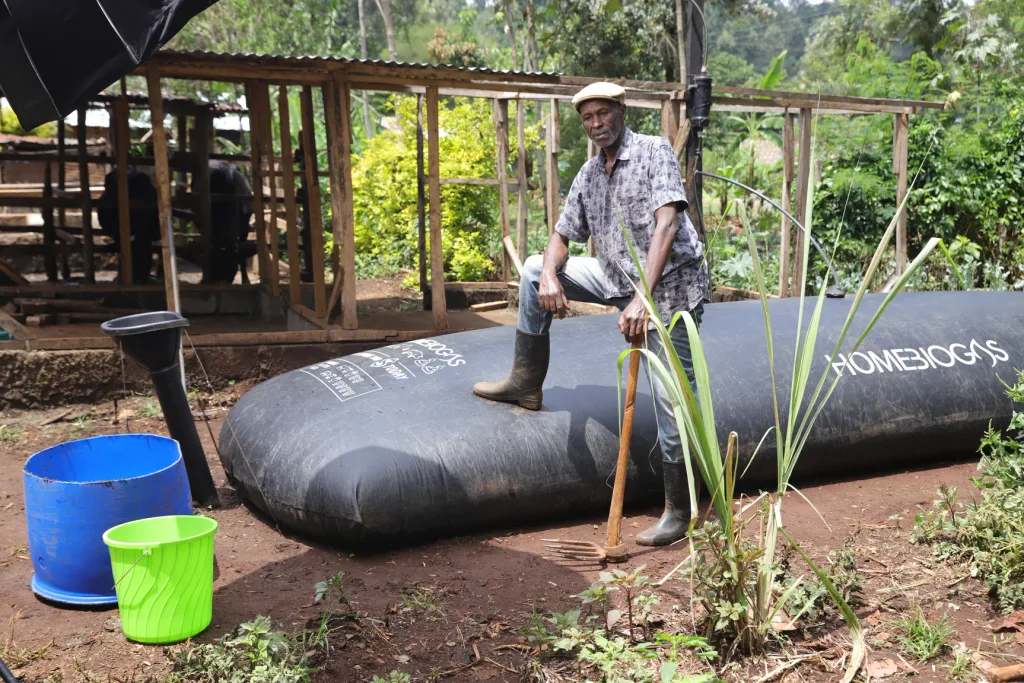
Flouncy is a member of the Kipsirat Youth Group, which runs a shared biogas system powered by livestock waste from its dairy herd. The project has not only reduced dependence on the forest but also reshaped how the group farms and earns a living.
At the centre of the initiative is a herd of 25 cows, kept on the farm of one member. The herd has grown from 12 animals to 25 in just two years, as the project expanded.
“We are using one of our group member’s farm to run the biogas project which is currently lighting one home, but our plan is to light up seven homes from this one biogas system,” said Mike Cheruiyot, the group’s chairperson.
Beyond household energy, the biogas system now powers a chaff cutter used to prepare feed for the cattle. The savings, members say, are significant.
“If the chaff cutter was using fuel, the group could be spending over ten thousand shillings every week to make food for our 25 cows,” Cheruiyot said. “We use a little fuel to jump-start the machine, after which energy from the biogas takes over.”
The benefits extend beyond energy and livestock. Slurry from the biogas digester is used as organic manure in the group’s greenhouse tomato project, while excess is shared among members for use in their individual farms. The shift has reduced dependence on chemical fertilisers and strengthened food production within the community.
For the group, the project represents more than energy access—it is also an environmental intervention. Formed in 2007 under the Ministry of Social Services with 15 members—seven men and eight women—the group says it has since focused on restoring degraded landscapes around Chepalungu Forest.
According to Flouncy, they have also raised and distributed more than one million tree seedlings, supporting forest restoration and farm planting efforts across the region.
The biogas initiative was further strengthened after the group secured funding through a successful proposal submitted via the Kenya Forest Service (KFS) to the Green Zone Development Support Project in 2022. The support enabled expansion of livestock numbers, installation of a biogas unit, and establishment of fodder crops.
Green Zones Project Manager Jerome Mwanzia said the intervention included the provision of 10 Sahiwal cows and a bull, construction of the biogas facility, and development of fodder systems, at a cost of Sh1.25 million.
A few kilometres away, however, the reality is different.
In another village within the same Chepalungu Forest ecosystem, smoke drifts from Sharon Chepkemoi’s kitchen as she prepares breakfast for her children. Later, she will head into the forest to harvest grass, which she sells as animal feed and also uses for her own livestock.
Unlike Flouncy’s village, Chepkemoi’s household is still dependent on firewood and traditional cooking methods. There is no organised clean energy initiative in her community to ease the pressure on the forest.
She is among millions of Kenyans still exposed to household air pollution caused by wood smoke. According to the Kenya Medical Research Institute (KEMRI), more than 26,000 deaths in Kenya were attributed to hazardous air pollution last year, with warnings that the figure could rise if cleaner energy solutions are not scaled up.
Globally, air pollution is linked to an estimated eight million premature deaths annually.
Both communities sit within the wider Chepalungu Forest ecosystem, a landscape that has endured both destruction and recovery. Following the disputed 2007 presidential election, parts of the forest were heavily degraded as communities turned to charcoal burning, timber, and firewood harvesting in large-scale clearing.
In the years that followed, deforestation contributed to worsening droughts and failed rainfall patterns across the region.
Today, restoration efforts led by the Kenya Forest Service and other partners are slowly reversing the damage. A Sh40.9 million solar-powered fence covering 22.1 kilometres of the Siongiroi Forest block, funded by the African Development Bank and the Government of Kenya under the Green Zones Development Support Project Phase II, has strengthened protection and allowed natural regeneration to begin.
Chepalungu Forest Station Manager Josh Patel said the violence of 2007 left a major gap in forest protection and management, but ongoing conservation work is now bearing fruit.
“Community Forest Associations have been very instrumental in supporting the recovery efforts,” Patel said.
As the forest regenerates, signs of recovery are becoming visible: rainfall patterns are improving, farms are becoming more productive, and communities that once depended on the destruction of the forest are now beginning to rebuild around its survival.