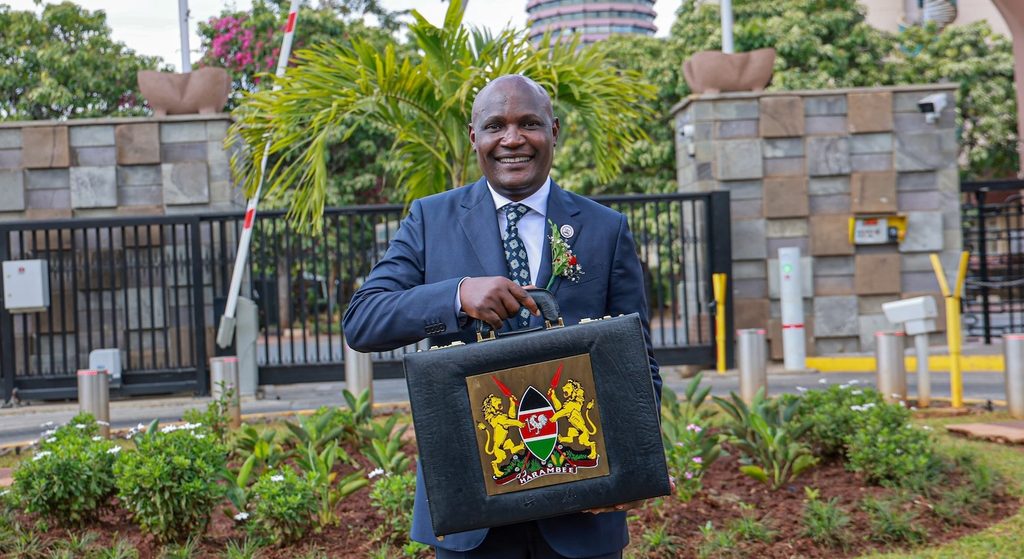

Kenya’s 2026/2027 national budget has allocated Sh124.8 billion to the environment, water and natural resources sector, positioning climate action as a central pillar of national planning.
But as the country braces for El Niño this year and early 2027, recurring droughts, and more destructive floods, a central question persists: whether the allocation is sufficient for the scale and speed of the crisis unfolding on the ground.
The funding package is broad in scope covering water infrastructure, forest restoration, carbon markets, climate adaptation systems, waste management reforms and agricultural resilience programmes. Yet the scale of recent climate impacts offers a sobering benchmark for comparison.
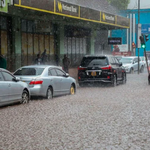
During recent rains, floods have displaced thousands of households, destroyed infrastructure across Nairobi, Mai Mahiu, Garissa and the Lake Victoria basin, and left hundreds dead nationwide.
Drought cycles in northern and eastern Kenya have repeatedly wiped out livestock, strained water systems and deepened food insecurity. Against this backdrop, the budget raises as much scrutiny as it does optimism.
At the centre of the allocation is Sh51.5 billion for water and sewerage infrastructure, by far the largest single component. The government has prioritised expansion of irrigation systems, water storage and catchment protection, alongside flagship investments such as the Thwake Dam project.
Borehole drilling and small water pan development are also expected to expand in arid and semi-arid counties including Turkana, Marsabit, Wajir, Garissa and Mandera.
Yet water engineers and climate planners have long warned that Kenya’s hydrological stress is accelerating faster than infrastructure expansion. With aquifers depleting, rainfall patterns shifting, and flood events becoming more intense, questions remain over whether current investments can meaningfully close the widening water deficit gap.
Forestry has been allocated Sh13.4 billion, with an additional Sh1.7 billion for research, anchored on the government’s 15 Billion Tree Programme and the national ambition to reach 30 percent tree cover. Restoration efforts span the Cherangany Hills, Lake Naivasha basin and Lake Victoria catchment, alongside county-level agroforestry programmes.
But here too, the scale challenge is evident. Kenya loses tens of thousands of hectares of forest cover annually through encroachment, logging and land-use pressure. While tree planting campaigns have accelerated, critics argue that survival rates, maintenance funding and long-term ecosystem restoration remain under-resourced relative to the scale of degradation.
The budget also marks a strategic pivot toward carbon markets, with the government working on a regulatory framework to formalise carbon credit trading. The ambition is to monetise Kenya’s renewable energy base, forests and conservation landscapes through international climate finance systems.
However, analysts caution that carbon markets remain volatile and heavily dependent on global demand, pricing structures and verification systems that many developing countries struggle to fully control.
While counties such as Nakuru, Baringo, Kajiado, Narok and Laikipia stand to benefit from geothermal, wind and conservation-linked credits, the long-term revenue certainty of carbon finance remains uncertain compared to traditional development funding.
In climate adaptation, the government is investing in early warning systems, weather forecasting infrastructure and disaster preparedness. This includes the installation of automatic weather stations and expansion of meteorological monitoring networks across multiple counties.
Yet recent flood disasters have exposed gaps not only in forecasting, but in response systems, evacuation planning and urban drainage infrastructure, particularly in rapidly growing cities. The question is not only whether early warnings exist, but whether institutional response capacity is keeping pace.
Agricultural resilience is also a major focus, with crop insurance being expanded to all 47 counties. The programme is designed to cushion farmers from climate-induced losses, especially in maize and horticultural zones in Rift Valley, Central and parts of Eastern Kenya.
Still, agriculture remains one of the most climate-exposed sectors in the country, and insurance alone does not address underlying vulnerabilities such as soil degradation, rainfall variability and market shocks.
Waste management and circular economy reforms, including recycling systems and material recovery facilities in urban centres, add another layer to the climate response. But urban pollution, plastic waste and landfill pressures continue to rise faster than formal waste infrastructure can absorb, particularly in Nairobi.
The broader picture emerging from the budget is one of expansion with more programmes, more frameworks, more institutional interventions. But it also reveals a tension between policy ambition and climate reality.
In that context, Sh124.8 billion may represent a significant commitment in fiscal terms, but whether it is proportionate to the accelerating scale of climate risk remains an open and urgent question.