

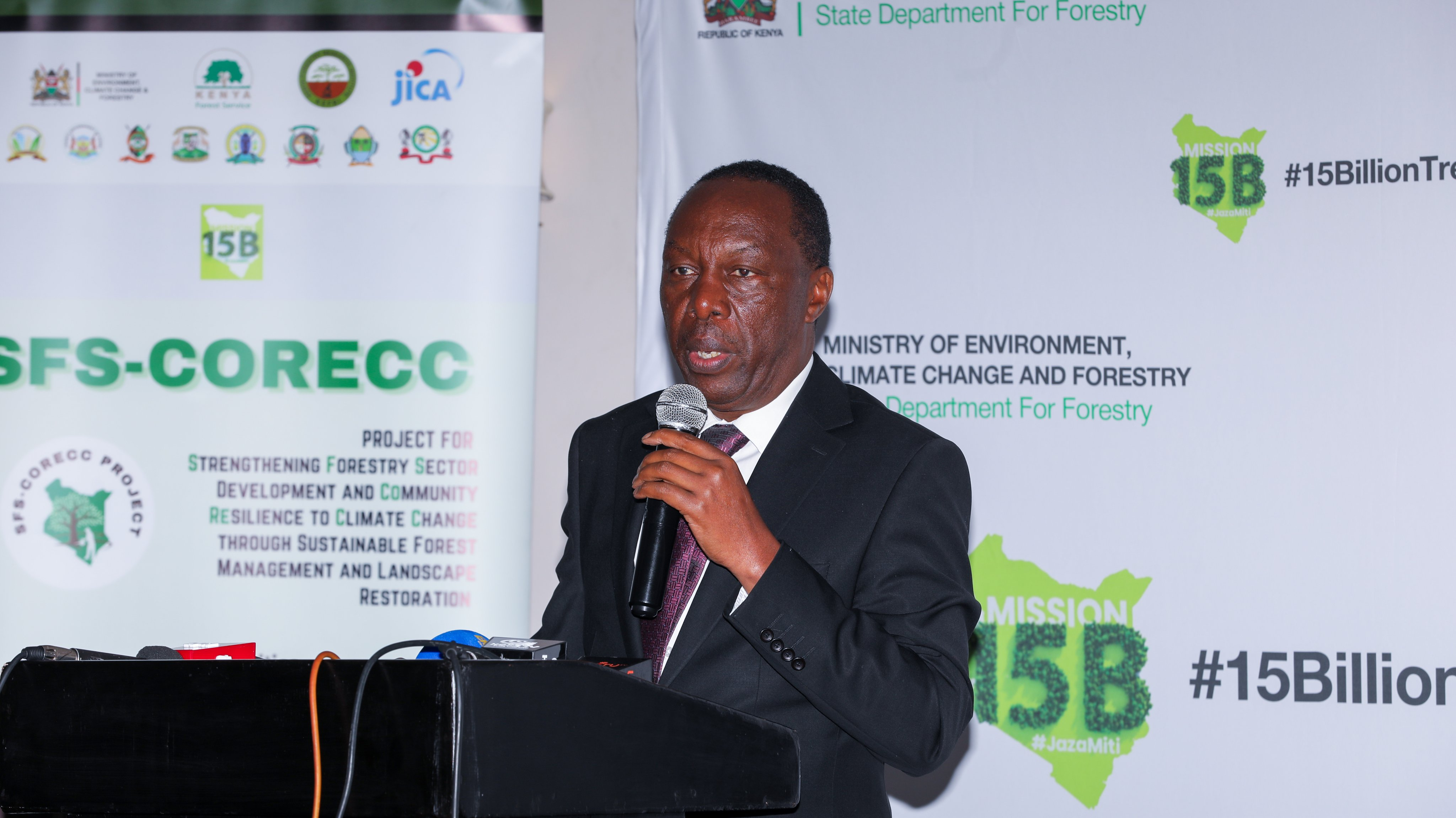
When Forestry Principal Secretary Gitonga Mugambi addressed development partners in Nairobi on July 22, the meeting was intended to mobilise investment for forest restoration and climate resilience. Instead, his defence of infrastructure projects in forests and protected areas became the main public issue.
“We can’t halt development because of conservation. We must develop. We must grow our economy, but at the same time, we must conserve,” he said.
The remarks came as courts were considering disputes involving Nairobi National Park, Upper Imenti Forest and Ngong Road Forest. The government says the contested projects would improve public facilities, transport and tourism while creating jobs. Environmental organisations say the issue is not whether Kenya should develop, but why protected land is repeatedly selected and whether legal safeguards are followed before work begins.
The Kenya Wildlife Service (KWS) proposes moving the Nairobi Animal Orphanage from its 7.4-acre site to 89 acres on the northern side of Nairobi National Park, saying the ageing orphanage is too small for injured, orphaned and confiscated animals.
Petitioners describe a broader development involving parking for about 1,300 vehicles, an access road and a pedestrian bridge to the Bomas of Kenya complex. They argue that the project would convert free-ranging wildlife habitat into intensive visitor and transport infrastructure.
The conflict entered public view on June 8, when police used tear gas to disperse protesters outside the park and arrested at least nine people, including former Chief Justice David Maraga. The Environment and Land Court later inspected the existing orphanage and the proposed site and stopped further work pending a July 30 hearing.
In Meru, the government proposes an airstrip in the Kithoka section of Upper Imenti Forest, alongside plans for a State Lodge, golf course and road expansion. The Kenya Forest Service (KFS) says the airstrip and supporting infrastructure would occupy about 11 hectares in an area with sparse vegetation. Mugambi has argued that the projects would improve aviation access, attract investment and create employment.
Opponents question why the facilities must be built inside a gazetted forest that forms part of the Mount Kenya ecosystem and performs water-catchment, biodiversity and wildlife-habitat functions. They argue that the impact cannot be reduced to the hectares cleared because a runway and roads can fragment habitat, alter water movement and create access for further development.
The Environment and Land Court issued orders barring clearing and construction while the petitions are heard. Petitioners later alleged that tree felling and machinery operations continued despite the orders. KFS subsequently announced public participation and an environmental and social impact assessment. Environmentalists argue that both processes should have preceded any work.
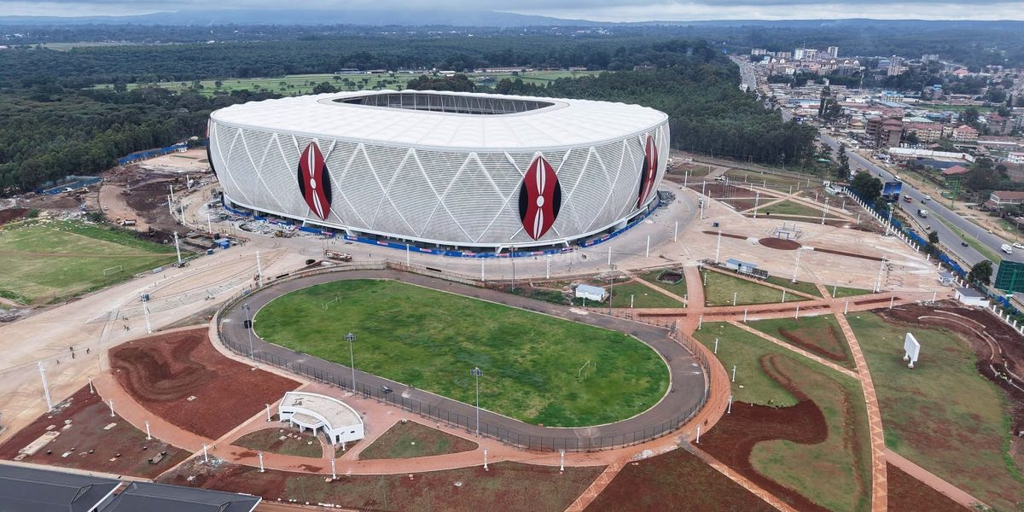
The 60,000-seat Talanta Sports City is central to Kenya’s preparations to co-host the 2027 Africa Cup of Nations. The government regards it as a sports and tourism investment. Conservation groups say its construction and proposed access roads add to decades of forest loss around Ngong Road Forest. Greenpeace Africa says about 50 acres associated with the forest landscape were taken up by the stadium, although published estimates vary.
The dispute is sharpened by a February Environment and Land Court judgment that quashed approvals for a separate golf range, restaurant and miniature golf facility in the Miotoni block. The court found that the environmental assessment and public participation did not meet legal requirements. KFS had maintained that the facilities would occupy natural clearings and would not require trees to be felled.
The individual projects are unfolding as a new forest law changes the rules governing public forests. President William Ruto assented to the Forest Conservation and Management (Amendment) Act on May 29, which the government says will strengthen regulation, penalties, natural-capital accounting and community participation.
The Green Belt Movement and Just Act have challenged provisions in the law allowing easements for public roads and installations and wayleaves for utilities inside public forests. They argue that the amendments give KFS excessive authority and could enable forest fragmentation. The government says controlled easements are necessary for roads, power lines, water systems and other public facilities and do not remove environmental safeguards.
The government also points to its target of growing 15 billion trees and restoring 10.6 million hectares by 2032, claiming that about 1.78 billion trees had been planted. Environmentalists respond that planting totals do not measure seedling survival or replace the soils, water systems and ecological relationships of a mature forest.
Mugambi’s position that Kenya must conserve while developing is not the central point of disagreement. The unresolved questions are whether the projects must occupy protected land, whether less damaging sites were considered and whether environmental assessments, public participation and court orders were respected before agencies committed themselves to construction.
The pending rulings will therefore reach beyond the projects before the courts. They will help determine how much infrastructure can be placed inside a national park, what development claims can justify construction in a gazetted forest and how far state agencies may open public forests to roads and utility corridors.