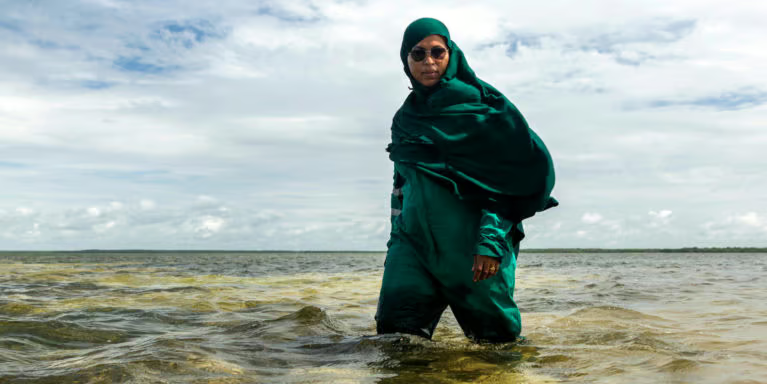

Along Kenya’s Lamu coast, Mwanasha Mbwana has watched the ocean change. Growing up on Shanga Rubu, a small island in the Lamu archipelago, the sea was both her playground and the foundation of community life. Its coral reefs provided breeding and feeding grounds for fish, supported local livelihoods and helped protect the shoreline.
Over time, however, Mwanasha saw sections of the once-vibrant reefs deteriorate under pressure from climate change, pollution and unsustainable fishing practices. Instead of accepting the loss, she joined efforts to restore them.
The 40-year-old mother of six is now widely known as Mama Matumbawe, Kiswahili for “Mother of Corals”, because of her work restoring damaged reefs and mobilising her community to protect the ocean.
“I never thought I would venture into coral restoration, but the satisfaction I feel when I see a coral that I constructed growing motivates me to do more,” she says.
Mwanasha leads a team of about 40 coral restoration practitioners working through the Pate Marine Community Conservancy.
With support from the Northern Rangelands Trust and The Nature Conservancy, the team installs artificial structures on degraded sections of the seabed to provide a foundation on which coral fragments can grow.
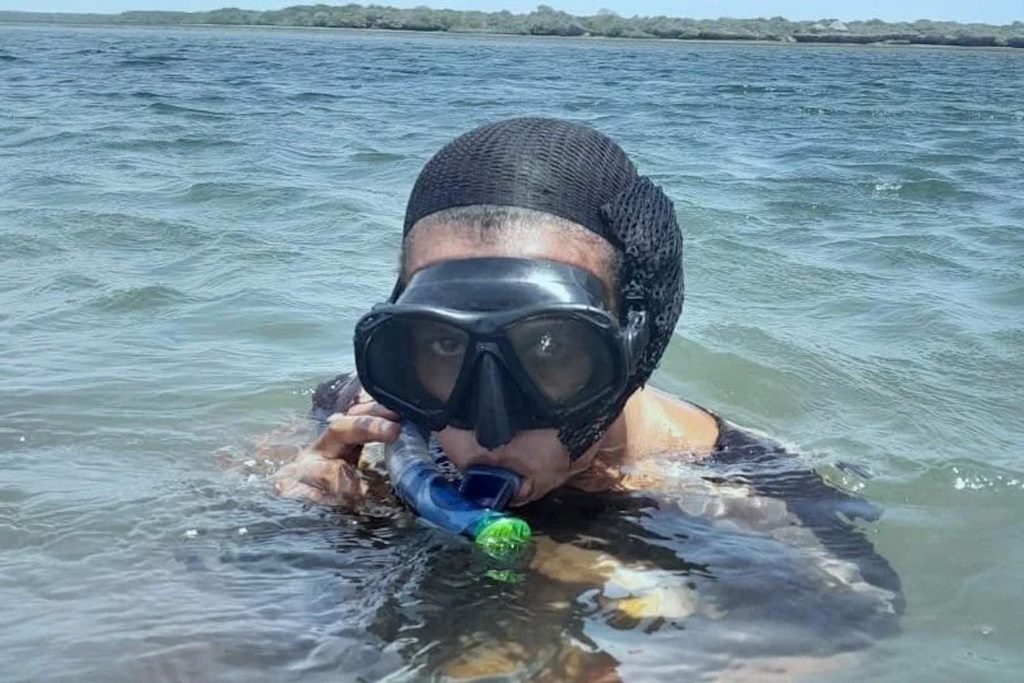
Coral restoration is painstaking work. The structures must be carefully placed, the coral fragments monitored and threats to the recovering reef controlled. Visible progress can take time, but each surviving coral contributes to the gradual recovery of the wider ecosystem.
For Mwanasha, seeing marine life return to a restored area confirms that the effort is worthwhile.
Healthy coral reefs provide habitats for fish and numerous other marine species. They also reduce the force of waves reaching the shore, helping to limit coastal erosion and protect settlements from storms.
For fishing communities such as those on Pate Island, reef recovery is therefore connected directly to food security, household incomes and resilience to extreme weather.
Mwanasha’s role extends beyond working in the water. She speaks to residents about the value of coral reefs and the practices needed to protect them. As an Early Childhood Development Education teacher, she also introduces children to conservation at an early age.
Her work connects two generations: adults whose livelihoods depend on marine resources today and children who will inherit the condition in which those resources are left.
The women restoring Lamu’s reefs are also challenging assumptions about who should make decisions concerning the ocean.
Marine management and fishing have traditionally been treated as male domains in many coastal communities. Women’s involvement has often been concentrated in fish processing, trading and other activities conducted after the catch reaches the shore.
By taking part in reef monitoring, restoration and community education, Mwanasha and her colleagues are expanding women’s influence over the management of the ecosystems on which their families depend.
Their participation matters because environmental damage affects women in specific ways. Declining fish catches reduce household income and food availability, while stronger storms and coastal erosion place homes and community facilities at risk. Involving women in conservation allows their experience and priorities to inform local responses.
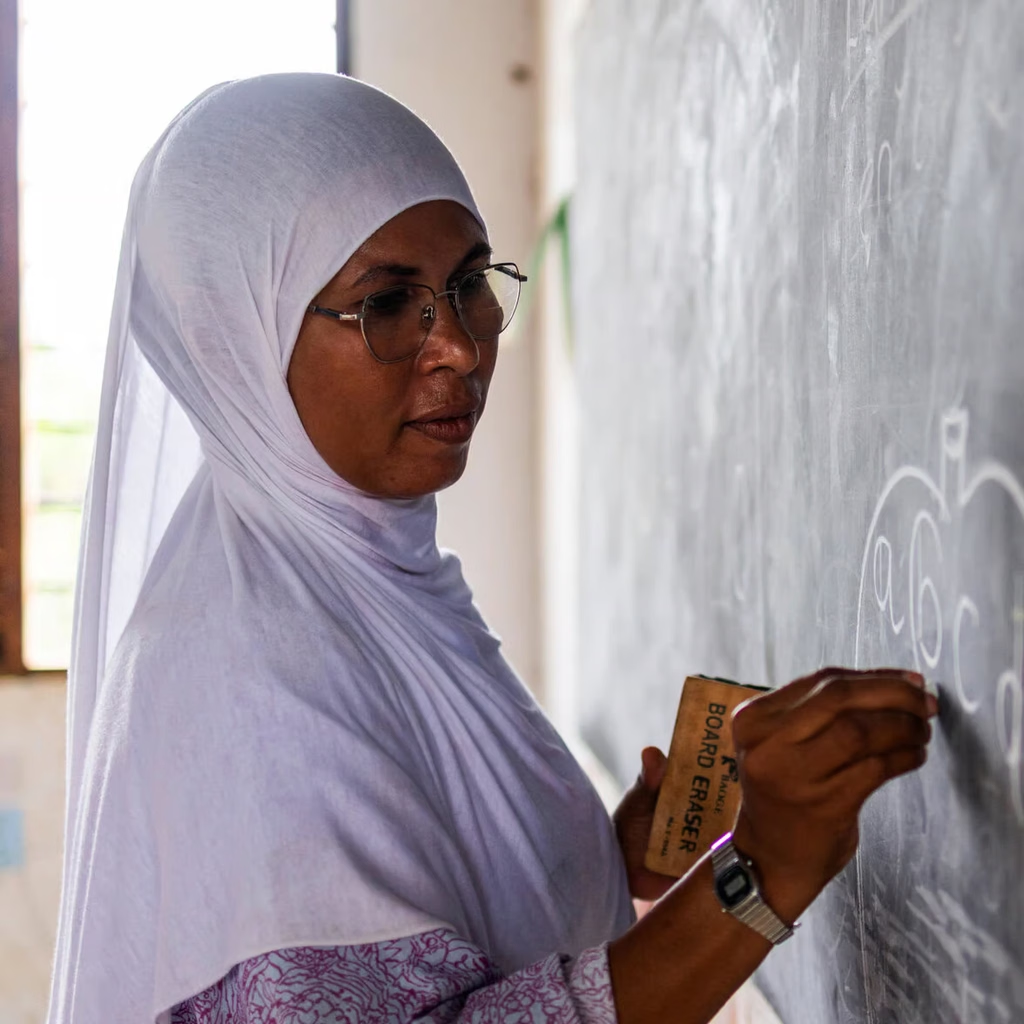
Elsewhere on Pate Island, another woman is leading conservation work along the water’s edge. Zulfa Hassan, popularly known as Mama Mangrove, coordinates a group of between 20 and 30 women in Mtangawanda who restore and protect mangrove forests.
Mangroves form a natural barrier between land and sea. Their tangled roots provide nursery grounds for fish, trap sediment and help protect shorelines from erosion and storm surges.
They also capture and store substantial quantities of carbon, particularly in the waterlogged soils beneath them, making their protection important to both climate mitigation and coastal adaptation.
Zulfa’s initiative was initially met with scepticism. Some community members questioned why women were involving themselves in mangrove planting, work that had not traditionally been associated with them.
The women continued through persistent planting and conservation work, demonstrating that restoring mangroves could protect the environment while creating opportunities for women.
The initiative has also connected participants with microfinance activities, enabling them to strengthen household livelihoods alongside their conservation work.
This link is critical. Coastal restoration is more likely to endure when communities can see how protecting an ecosystem also supports their immediate economic and social needs.
Mwanasha and Zulfa are part of a growing group of women sometimes described as Lamu’s “Eco Mamas”. Their work shows that locally led climate action does not always begin with large institutions or expensive infrastructure. It can begin with residents recognising the deterioration of the ecosystems around them and organising to reverse it.
The women are repairing two interconnected natural defences. Coral reefs weaken incoming waves before they reach the coast, while mangrove forests protect the shoreline and provide habitats for marine life. Restoring both ecosystems strengthens the resilience of coastal communities whose homes, food supplies and incomes are closely tied to the sea.
Their work also demonstrates that conservation can produce changes beyond the environment. Women who were once questioned for entering male-dominated spaces are becoming restoration practitioners, community educators and local decision-makers.
For Mwanasha, the motivation remains visible beneath the water, where a coral fragment fixed to a restoration structure survives, grows and gradually becomes part of a living reef. Each new growth carries the possibility of returning marine life, sustaining another fishing family and protecting another stretch of coast.
Along Lamu’s islands, the Eco Mamas are showing that restoring nature can also restore livelihoods, community resilience and women’s place in decisions about the sea.