
By Elvine Ouma
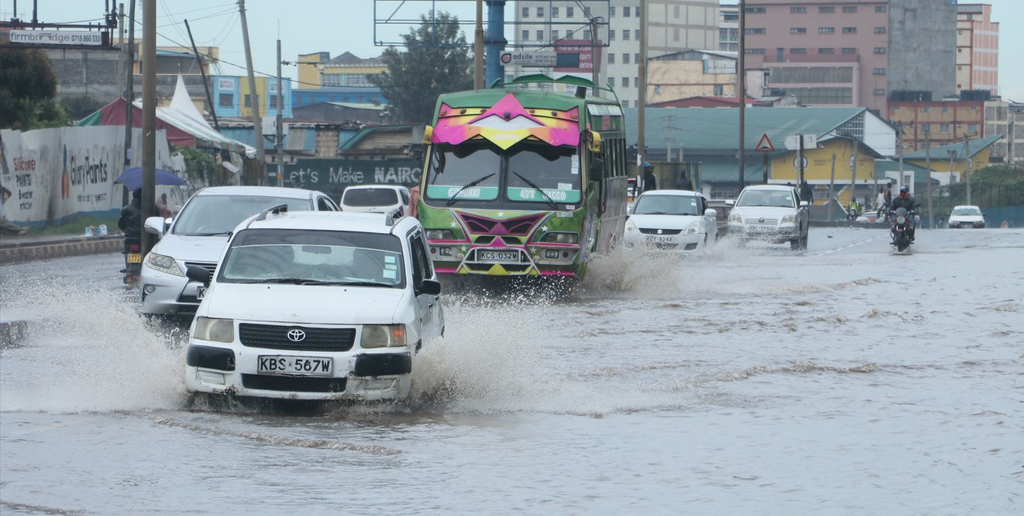
Stepping out of her house during the 2024 Nairobi floods, Andy felt like preparing for battle. “The water is unpredictable,” she explains. “Sometimes it’s ankle-deep, sometimes it’s waist-high for me, and I don’t always know what’s underfoot.”
Andy is a person of short stature and a resident of Kibera, Nairobi’s largest informal settlement, built along the banks of the Ngong River, where poor drainage, uncollected garbage, and decades of deferred infrastructure investment mean that every long rainy season brings the same crisis, and the same people are left to manage it alone.
During the March–May 2024 long rains season, the scale of that crisis was impossible to ignore. The floods led to 294 fatalities across Kenya and displaced approximately 55,000 households.
In Nairobi County alone, an estimated 31,015 people across informal settlements, including Kibera, Mukuru kwa Njenga, Viwandani, and Kayole, were affected, largely because of poor and blocked drainage systems. Nairobi accounted for 77 per cent of all displacement in the country.
For persons with disabilities, the floods brought a set of compounding crises, physical, financial, economic, and bodily, that the city’s disaster response was completely unprepared to address.
Elina, who uses crutches to walk, lost them to the floodwaters one morning. “The current just swept them away,” she recalls. “Without my crutches, I couldn’t go to work. I was stuck for days trying to figure out how to replace them.”
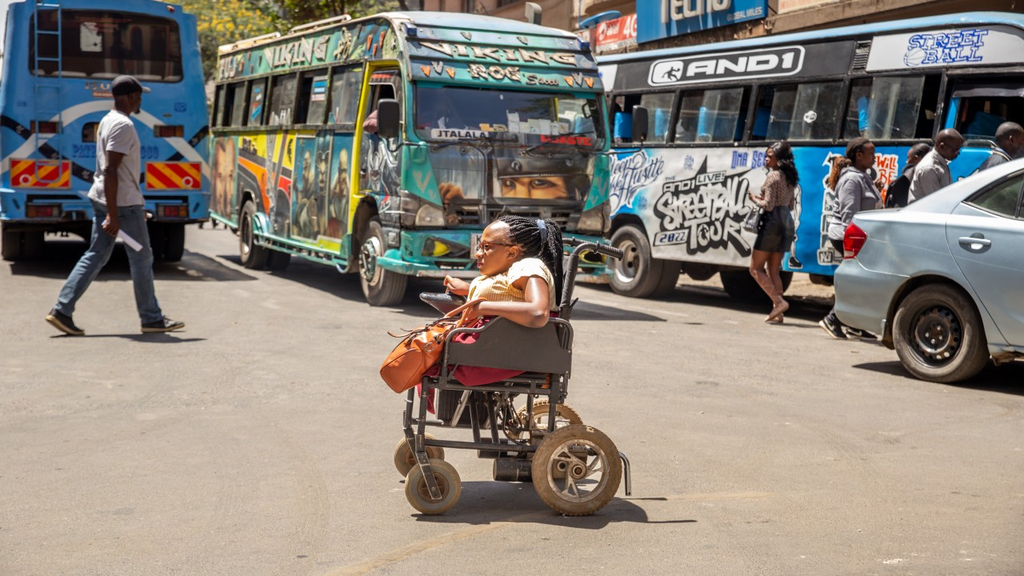
Maria, a wheelchair user, described navigating streets turned into rivers of murky water, concealing potholes, broken bottles, and sharp metal debris. “I can’t risk wheeling through that,” she says. “On top of that, the blocked roads from garbage make it feel like the city has turned against us.”
For persons with disabilities, losing an assistive device is not only an inconvenience, but also a financial and logistical emergency. Wheelchairs, crutches, and hearing aids are expensive, difficult to source, and time-consuming to replace or repair, often taking weeks. During that time, a person may be unable to work, access healthcare, or leave their home safely.
Andy knows this pressure intimately. “During the rains, my boss gives me that look, the one that says, ‘maybe you’re not cut out for this,'” she said. “I can’t risk losing my job, but I also can’t risk my life trying to wade through this mess.”
The threat to her livelihood did not end there. During one attempt by a stranger to help her navigate the floods, Andy lost her purse, containing her phone, cash, and house keys, in the chaos of an uncoordinated rescue. She was also groped.
This is not an isolated incident. Andy described being lifted and carried by men without her consent on multiple occasions. “They mean well, but I feel humiliated and unsafe,” she said. “If only they’d ask, I could explain how to help without violating my dignity.” What presents itself as assistance can, without consent or guidance, become harassment. “Most people don’t realise how their actions can harm us,” she said. “Even well-meaning help can turn into humiliation.”
Kenya’s Persons with Disabilities Act, 2025, which came into effect in May 2025, replacing the 2003 Act, contains explicit protections for persons with disabilities in disaster contexts. Section on situations of risk states that persons with disabilities have the right to protection in situations of risk, including natural disasters, and requires every institution, whether public or private, to maintain an inventory of all persons with disabilities within its establishment and submit that inventory to national and county governments and agencies responsible for disaster management.
A UNPRPD situational analysis found that the existing shock-responsive social protection system fails to consider or support persons with disabilities during emergencies, and that organisations of persons with disabilities have had inadequate involvement in emergency response planning.
The same analysis found significant gaps in the inclusion of persons with disabilities in emergency preparedness and response, as well as in climate change mitigation processes.
Mary Murwa, a disability rights advocate, is clear about what needs to change. She is calling on the Nairobi City County government to invest in proper drainage systems across informal settlements, establish a fund for emergency replacement of assistive devices, ensure persons with disabilities are included in all disaster planning and response committees, and conduct public education campaigns on disability etiquette, especially, how to offer assistance that respects dignity and seeks consent.
Big3 Africa reached out to the Nairobi City County government and the State Department for Social Protection for comment on their disaster preparedness provisions for persons with disabilities. No response was received by the time of publication.
Research has documented that women residing in informal settlements are especially vulnerable to climate-related events because they are more likely to experience worse health-related impacts than men, but less likely to have access to health services. For women with disabilities, these two vulnerabilities multiply.
The floods of 2024 were exceptional in scale but not in nature. They exposed what has always been true that Nairobi’s infrastructure was not built with its most vulnerable residents in mind, and its disaster response has not been redesigned to correct that failure.
The Persons with Disabilities Act, 2025, creates a legal obligation. Nairobi County now needs to demonstrate the institutional will to meet it, before the next long rains arrive, and before more people are left to prepare for battle alone.