

Kenya risks falling behind its 2030 biodiversity targets because of fragmented data, uneven species monitoring and a multibillion-dollar conservation funding gap, a new policy brief by CIFOR-ICRAF has warned.
The brief says information held by government agencies, research organisations and conservation groups is not sufficiently integrated to provide a coherent national picture of changes in species and ecosystems.
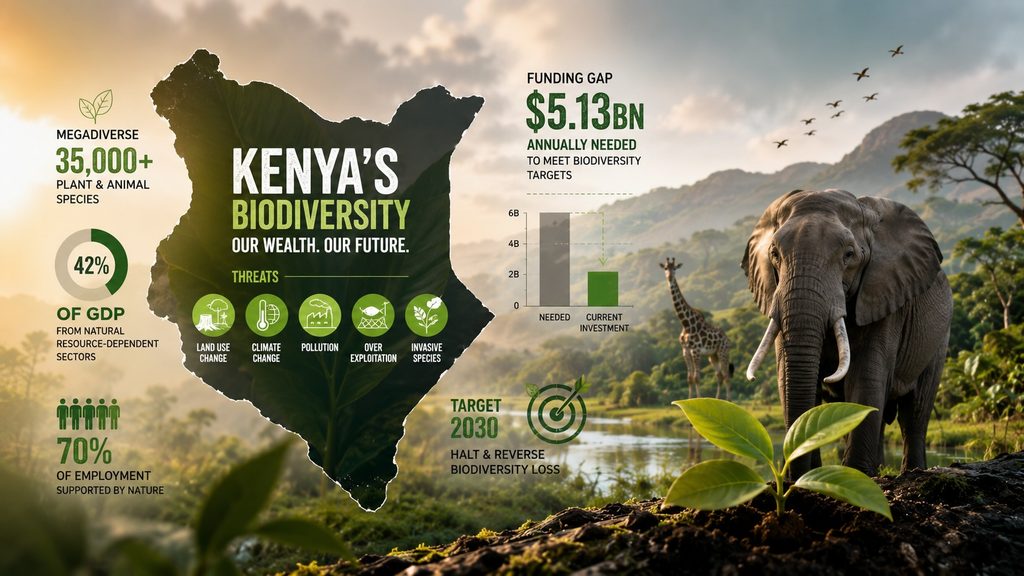
Kenya is recognised as one of the world’s megadiverse countries, with more than 35,000 recorded plant and animal species across forests, grasslands, wetlands, mountains, drylands and marine ecosystems.
Natural-resource-dependent sectors generate an estimated 42 per cent of the country’s gross domestic product and account for about 70 per cent of employment, according to UN Environment Programme. This biodiversity supports agriculture, tourism, fisheries, energy production and rural livelihoods.
It is, however, increasingly threatened by land-use change, climate change, pollution, overexploitation and invasive alien species.
The CIFOR-ICRAF brief finds that Kenya has improved its reporting under international environmental agreements but still lacks an integrated system for tracking biodiversity trends at the national level.
“Data are collected and stored by different institutions using varying indicators, methods and reporting schedules. The resulting institutional silos make it difficult to combine the information into national biodiversity indices that can show whether species and ecosystems are recovering or declining,” the bries says.
Without comparable and regularly updated data, the brief says, policymakers may respond to biodiversity loss only after serious damage has occurred.
Kenya is expected to measure its progress against the Kunming–Montreal Global Biodiversity Framework, which commits countries to halt and reverse biodiversity loss by 2030.
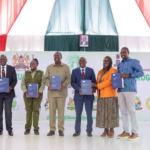
The country completed and submitted its Seventh National Report to the Convention on Biological Diversity in February 2026 following a multi-agency process involving government, researchers, civil society, the private sector and community representatives. The report is intended to show progress against the global framework.
The policy brief also identifies a strong taxonomic imbalance in Kenya’s biodiversity monitoring. Research and conservation programmes tend to concentrate on well-known mammals and other visible species, including elephants, rhinos and large carnivores.
Plants, fungi, insects, soil organisms and other microorganisms receive much less attention, despite their role in pollination, nutrient cycling, soil fertility, decomposition and ecosystem health. The shortage of information about these groups limits their consideration in conservation planning and funding decisions.
“Wildfires are another major but inadequately measured source of biodiversity loss,” the brief says. “Existing monitoring systems do not consistently record where fires occur, how much land they burn, how often affected areas burn or how ecosystems recover afterwards.
Kenya’s National Wildfire Management Strategy and Action Plan 2024–2034 identifies wildfires as a threat to forests, grasslands, wildlife habitats, soil organisms and livelihoods.
The CIFOR-ICRAF brief recommends integrating satellite observations with field data to provide near-real-time information on fire outbreaks, burned areas and ecological damage.
Financing remains an additional obstacle. Kenya faces an estimated annual biodiversity-financing deficit of $5.13 billion, according to an assessment of nature-related financing and investment opportunities.
The policy brief says existing public allocations, including wildlife and ecosystem-management budgets, do not match the scale of conservation needs. It calls for blended financing that combines government resources with private investment, development finance and other conservation mechanisms.
CIFOR-ICRAF recommends establishing an interoperable national biodiversity data platform, agreeing on common indicators and reporting standards, strengthening technical capacity in national and county institutions, and expanding monitoring to neglected species and ecosystems.
The brief also calls for closer cooperation among government agencies, universities, museums, conservation organisations, Indigenous peoples, local communities and the private sector.
“Without integrated data and sustained financing,” the brief says, “Kenya will struggle to establish whether its conservation policies are reversing biodiversity loss before the 2030 deadline.