
August 2026 was the world’s warmest month on record, extending an exceptional period of global heat as a strengthening El Niño raises the risk of disruptive weather well into 2027.
The World Meteorological Organization (WMO) said August 2026 was also the joint-hottest month ever measured, matching July 2023.
The Northern Hemisphere experienced its warmest summer on record, while the Southern Hemisphere had a near-record warm winter.
Data from the European Union’s Copernicus Climate Change Service (CCCS) showed that the average global surface temperature during August was 1.65 degrees Celsius above pre-industrial level.
The US National Oceanic and Atmospheric Administration (NOAA) separately found that the global temperature was 1.32°C above the 20th-century average, making August the warmest in a record extending back to 1850. All 10 of the hottest Augusts have occurred since 2016, according to NOAA.
Record temperatures covered large parts of Africa, Greenland, Europe, Asia and the Americas, as well as extensive areas of the Atlantic, Indian, Southern and Arctic oceans. The findings were based on separate assessments by Copernicus, NOAA and the US space agency NASA.
The oceans also entered unprecedented territory as average sea-surface temperatures outside the polar regions reached a daily record of 21.11°C during the month. Exceptional warmth covered much of the tropical Pacific Ocean, where El Niño has become firmly established.
El Niño is a naturally occurring warming of the central and eastern tropical Pacific that alters atmospheric circulation and influences rainfall and temperature patterns across the world. Its effects are now being added to the longer-term warming caused mainly by human emissions of greenhouse gases.
WMO said the current El Niño is expected to intensify into a very strong event over the coming months, with major effects on rainfall and temperature patterns continuing into 2027.
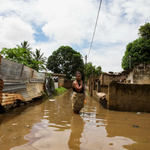
El Niño does not affect every part of the continent in the same way, but it can shift rainy seasons and contribute to excessive rainfall in some regions and dry conditions in others.
The Greater Horn of Africa is among the regions where El Niño can significantly influence seasonal rainfall, although local outcomes depend on other ocean and atmospheric conditions.
Globally, El Niño also influenced tropical cyclone activity during August. Nineteen tropical storms were recorded, five of which reached hurricane or typhoon strength.
During the month of August, Europe experienced heatwaves after months of exceptional warmth. Severe drought was reported in France, Britain, Hungary, Romania and Serbia, while flows in major rivers, including the Rhine and Danube, fell to exceptionally low levels.
Sea ice extent remained below average in both the Arctic and Antarctic, adding to evidence that the August warmth extended across the climate system rather than being confined to land temperatures.