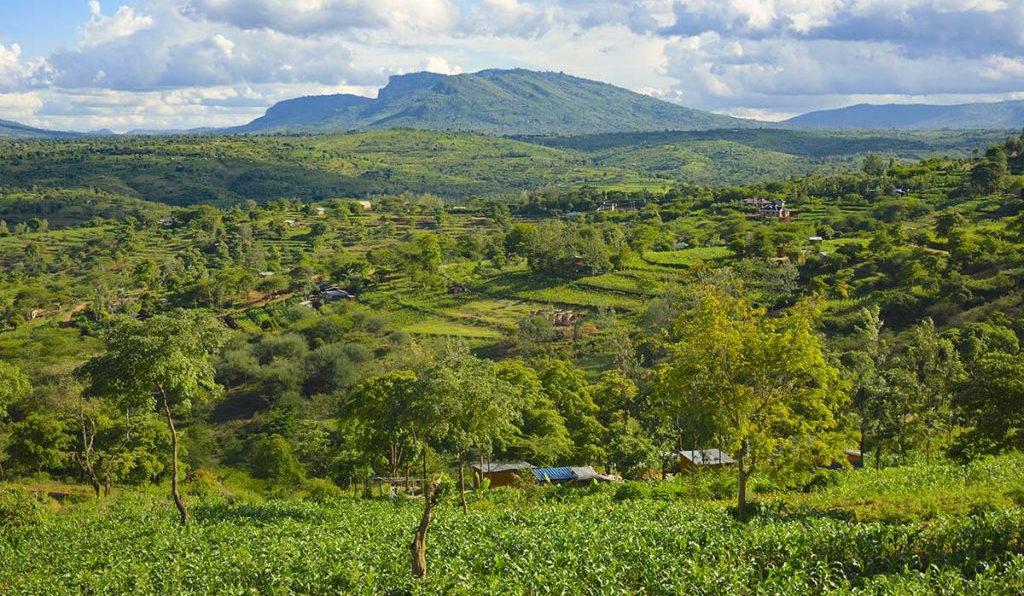

When George Matete bought seven acres of land in Kimaeti, Bungoma County in 1983, he hoped farming would provide food and income for his family after his career as a teacher. But for years, the farm struggled to fulfil that
promise.
Maize harvests averaged only two to three sacks per acre, soil erosion carried away fertile topsoil, crop diseases reduced production and the household had little surplus to sell. Matete frequently bought food to cover the shortfall, placing additional pressure on an income that also had to meet school fees and other family expenses.
Today, much of the homestead is shaded by mature trees and younger avocado trees. Crops, fodder and fruit trees occupy different parts of the farm while grass strips slow the movement of rainwater across the fields and mulch protects exposed soil.
Sitting with his wife beneath a Java plum tree, commonly known as zambarau, Matete can point to a practical change in the farm’s fortunes. He says maize yields have risen to between 10 and 12 sacks per acre, depending on the season.
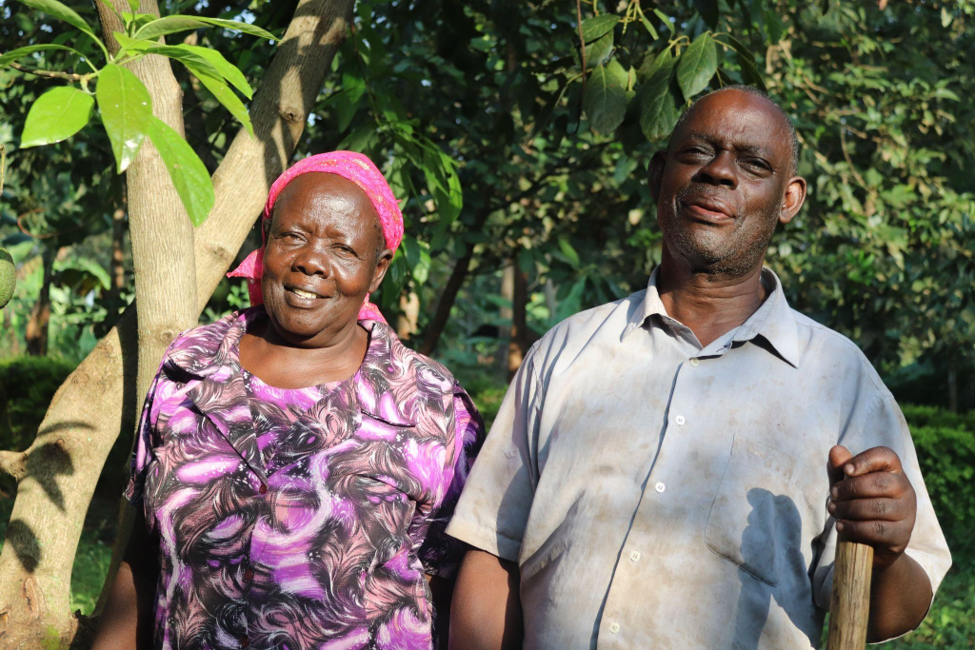
The improvement did not result from a single new crop or expensive technology. It followed years of learning how to manage soil, water, trees and crops as parts of the same farming system.
“Low productivity necessitated buying extra food because we lacked knowledge of good agricultural practices such as sustainable agricultural land management,” says Matete, now 65.
The turning point came around 2009, when Matete joined the Tulukuyi Women Group, a local farmer organisation, and began receiving training supported by Vi Agroforestry.
The training introduced him to sustainable agricultural land management, an approach that helps farmers maintain soil fertility, control erosion, conserve water and produce food without continually degrading the land.
Matete began applying the lessons gradually. He planted indigenous trees along the farm boundaries and introduced avocado and fodder trees. He established grass strips across sloping sections of the land to slow runoff and hold soil in place. He also adopted mulching and crop rotation.
Instead of depending heavily on maize, the household diversified its production, and the farm now grows beans, cassava, sweet potatoes, finger millet, sorghum, bananas, sesame and vegetables alongside maize, and also fodder crops that support livestock.
This diversity gives the household several sources of food and reduces the risk of losing an entire season’s production when one crop performs poorly. Crop residues and livestock manure can also be returned to the soil, while trees provide shade, organic matter and protection from wind.
The system is particularly useful as farmers contend with increasingly unreliable rainfall. Mulch reduces the loss of moisture from the soil, while grass strips help water soak into the ground instead of washing soil away. Trees protect exposed land and can provide fruit, fodder, fuelwood or timber, depending on the species planted and how they are managed.
According to Lordvicus Okwach, an agroforestry expert at Vi Angoforestry, the practice entails choosing the right tree for the right place and the right purpose.
“We work with nitrogen-fixing trees like Sesbania and Calliandra to naturally enrich the soil, fruit trees to provide nutrition and income, and fodder trees to feed livestock. By creating these multi-layered, diverse ecosystems on a single piece of land, we mimic the efficiency of a natural forest while producing food,” says Okwach.
While these practices do not prevent droughts or intense rainfall, they help reduce some of the damage by improving the farm’s ability to retain water during dry periods and control runoff during heavy rain.
The clearest measure of change for Matete is the maize harvest. His reported increase from two or three sacks to as many as 12 sacks per acre means the household is better able to meet its food needs and sell part of the surplus.
The benefits extend beyond maize. Growing different food crops gives the family more dietary choices and allows harvesting at different times of the year.
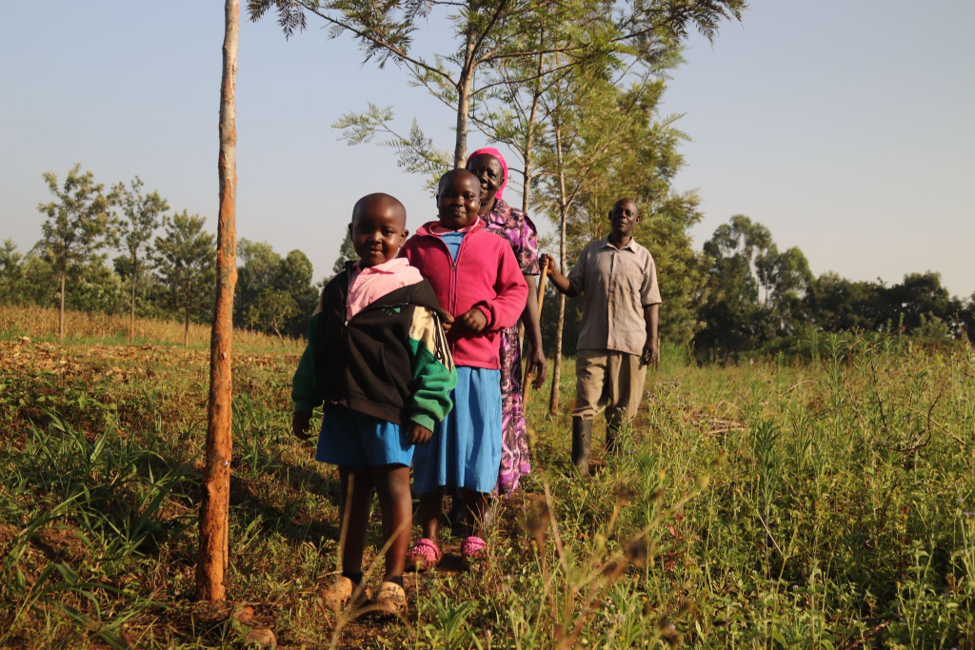
For a household of about 15 people, including children and grandchildren, that greater supply of food matters. Before the changes, low harvests forced the family to spend limited cash on staples that could otherwise have been produced at home.
Matete’s experience also shows why improving smallholder agriculture cannot be reduced to distributing seeds or fertilizer, because farmers need knowledge suited to the conditions of their land, followed by enough time and support to test, adapt and maintain new practices.
The recovery of degraded soil is usually gradual. Trees take years to mature, and grass strips require land that might otherwise be planted with crops. Some farmers may also lack labour, seedlings, tools or secure rights to the land they cultivate, issues that constraints influence on who can adopt the practices and how quickly benefits emerge.
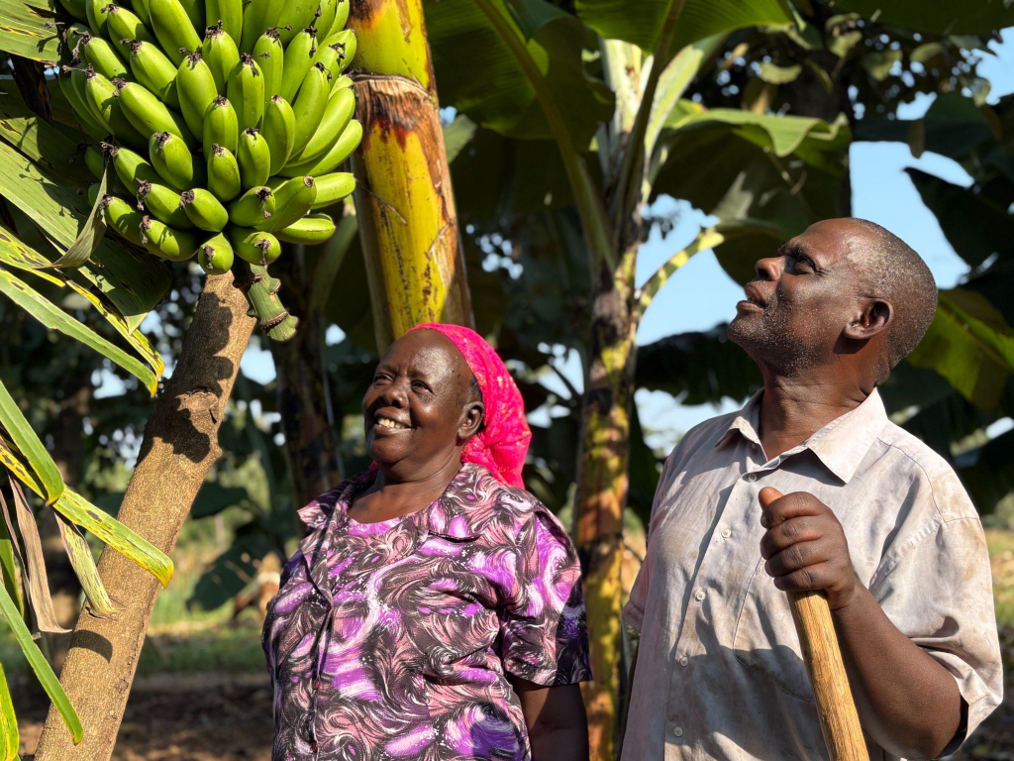
In Matete’s case, owning the land and receiving training over time allowed him to make long-term changes. His results offer a useful example, but they should not be treated as a guarantee that every farm will achieve the same yields.
Higher production has not resolved every problem. Poor rural roads and weak access to reliable markets continue to affect farmers in the area. When produce is ready for sale, smallholders may have few buyers and limited bargaining power, and perishable crops can spoil before reaching a market, particularly when roads become difficult to use during rainy periods.
These obstacles show the limits of farm-level solutions, including training that can help a farmer restore soil and increase production, but it cannot repair roads, organise transport or guarantee a fair price.
Expanding the benefits of sustainable land management will therefore require support beyond individual farms including extension services that can provide technical guidance and farmer groups that can help members obtain seedlings and share knowledge, while better storage, transport and market information can reduce losses after harvesting.
Matete now wants to expand his agroforestry system and produce more fodder for livestock., while also sharing what he has learnt with other farmers.
“Agroforestry is more than a farming technique. It is a lifeline for our future,” Matete says. “With the right knowledge, we can feed our families, protect our land and build a sustainable legacy for the next generation.”