
By Mark Hillsdon
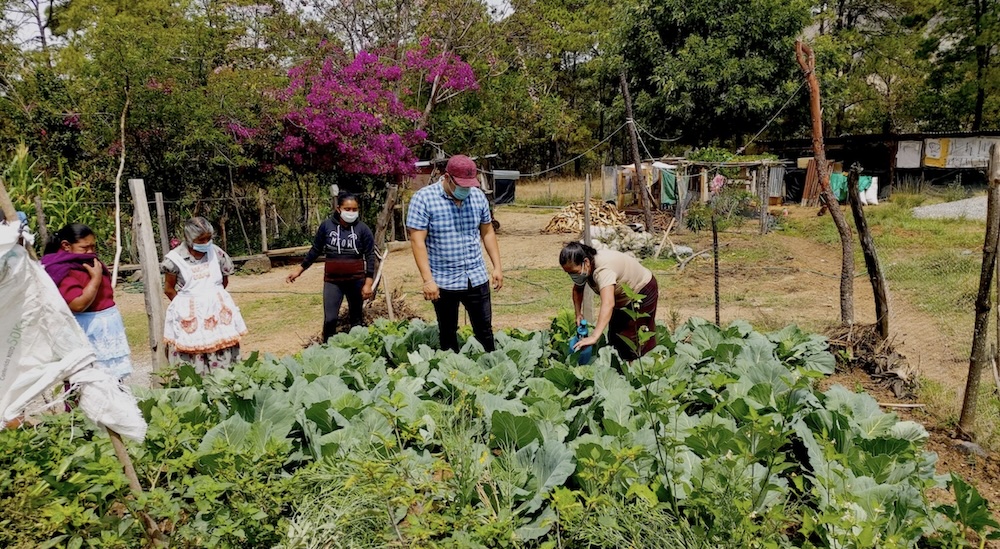
In the mountain villages of Guatemala’s Western Highlands, farmers are combining ancient Maya knowledge with modern sustainable farming techniques to protect their crops from pests and disease.
They are creating homemade biopesticides using plants with strong smells and flavors to deter pests on their family plots. This is helping to cut back on the use of increasingly expensive agrochemicals, many of which have been labeled as dangerous to human health and linked to soil degradation.
About 60 Guatemalan communities in the Western Highland departments of Sololá and Huehuetenango, as well as Chiquimula in the east, are working to revive these traditional techniques with support from the international development organization World Neighbors. Their focus is to restore and strengthen traditional knowledge, combining it with agroecological practices that help families produce surplus food they can sell to boost household incomes.
“Traditional farming techniques are becoming popular because they are simple practices to apply, use local resources, and have proven to be effective,” Dayani Roche, a program associate at World Neighbors, told Mongabay via email.
Rather than a single ancient recipe, farmers are using “a living combination of ancestral knowledge, local experimentation and more recent agroecological practices,” he said, which are “safer for families, soil, water and biodiversity than many chemical alternatives.”
The Maya civilization, which once stretched across modern-day Central America, had a rich history of farming dating back to 2000 B.C.E. Its most celebrated agricultural system is the milpa, a form of intercropping that involves a mix of maize, beans, and squash, each mutually benefiting the other. The maize provides support for the beans, which in turn fix nitrogen into the soil, while the squash acts as weed-suppressing mulch.
There’s also evidence of early biopesticide use, including painting a mixture of burnt lime and water around the base of fruit trees to deter pests from climbing the trunk.
In modern-day Guatemala, the whitefly (Trialeurodes vaporariorum) is among the most common pests, attacking crops such as tomatoes, beans, and cucumbers. Maize is particularly vulnerable to fall armyworm (Spodoptera frugiperda) infestations, while coffee plants are targeted by the coffee berry borer (Hypothenemus hampei), which damages the bean and its quality.
Fungal infections include gomosis (Phytophthora), which can decimate avocado, citrus, and other fruit trees, while green mold (Aspergillus and Penicillium) mainly affects stored grains and poses the additional risk of producing mycotoxins, which can be dangerous to humans.
Roche also spoke to Mongabay on behalf of farmers from different communities. Jorge Letona, a farmer in the municipality of San Lucas Tolimán, Sololá, has been using biopesticides and organic fertilizers for about 40 years. “I learned it from my grandfather and my father,” he said. “I’ve tried to make everything I produce organic, for my health and that of my family.”
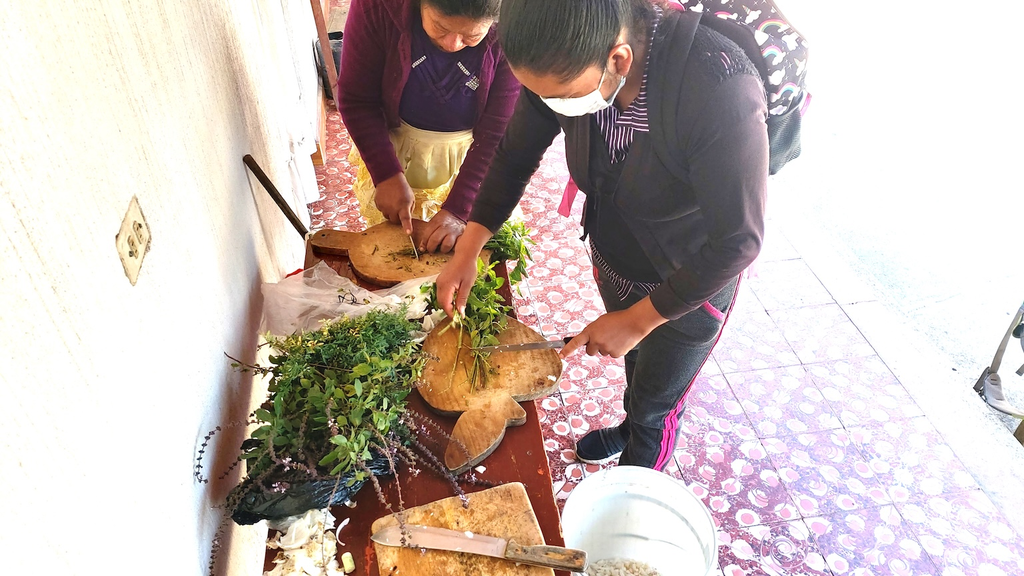
Strong-smelling concoctions that include garlic, chili and ginger are among the most common natural deterrents, which, when mixed with water, form a pesticide that can be sprayed onto plants.
José Bixcul’s farm in the village of Quixayá, Sololá, was recently hit by a plague of zompopas (Atta cephalotes), a type of leafcutter ant that strips the leaves from vegetables such as beans and cucumbers. “[It] left me with nothing in a day,” Bixcul said. To prevent further attacks, he used a mixture of chili, garlic and cinnamon, which he sprayed on the crops, while also adding other strong-smelling plants to his plot, such as rue (Ruta graveolens), to bolster defenses.
While some Guatemalan farmers can draw on old family recipes, others seek support from organizations such as World Neighbors to develop their own biopesticides. Training is an important part of this work, Roche said, because to be effective, biopesticides must be applied consistently; when done so, they can help reduce infestation by as much as 90%.
World Neighbors holds workshops to show farmers how to crush the bark, leaves and flowers of a range of endemic plants, diluting the juices with water, to create a range of natural pesticides. So far, more than 6,000 families have taken part.
By using freely available plants and water, Roche said, the main expense with making biopesticides is labor; they cost around a sixth of the price of industrial pesticides. Other research has also shown that biopesticides “can be easily sourced without the need for expensive chemicals.”
One of the most commonly used plants is chichicaste (Urera baccifera), a native shrub covered in stinging hairs. The plant can grow up to 4 meters (13 feet) high. In addition to being used in local medicine as an analgesic and anti-inflammatory, its leaves can be fermented to create a pesticide that deters insects like aphids, while also preventing fungal infections and promoting root growth.
Also widespread is flor de muerto (Tagetes erecta), whose bright yellow flowers are traditionally used in religious ceremonies. Mixed with soapy water and left to steep for two days, the infusion can be sprayed on plants as a natural insect repellent; planted around the edge of a plot, the plant works as a living barrier.
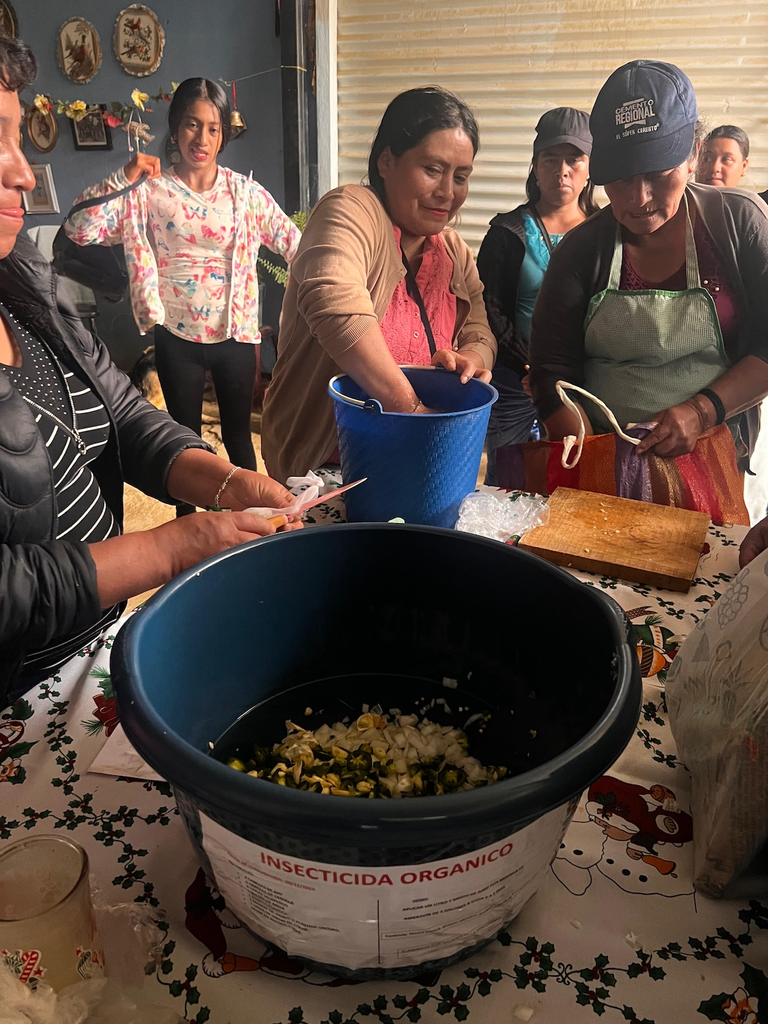
Increasingly, farmers are also using natural fertilizers derived from livestock manure and vermicomposting (earthworms breaking down organic waste) to further reduce their costs, Roche said.
How and why agrochemicals came to be used in Guatemala
The use of agrochemicals boomed in Guatemala in the 1950s during the so-called Green Revolution, when U.S. interests began to move into the country’s agricultural sector. This introduced more industrialized farming techniques, which included an increase in the use of chemicals. By the 1970s, Roche said, artificial inputs were being strongly linked to issues such as economic dependence, human health, and soil degradation.
According to the U.N. Environment Program, around 25% of Guatemala is degraded and overexploited due to a mixture of unsustainable agricultural practices such as monocultures and chemical use. Bixcul is among those farmers concerned about the impact of conventional insecticides on soil fertility. “The soils do not renew themselves,” he said, “chemicals also contaminate water sources,” and in the long term, affect the health of those applying them.
Guatemala began to move away from excessive chemical use in the 1990s due to a growth in international demand for more organically grown produce. Today, although Guatemala’s annual pesticide use has dropped from around 22,900 metric tons in 2007 to 13,000 metric tons in 2023, a quantity below that of many of its Central American neighbors. The Food and Agriculture Organization (FAO) has warned that high reliance on chemicals poses severe risks to the country’s ecosystem health and vulnerable Indigenous communities.
While many chemicals have been banned in the EU and U.S., including a small group called highly hazardous pesticides (HHPs), many are still openly available across Latin America, threatening ecosystems and reducing the nutritional value of food.
“The advantage [of biopesticides] over chemical insecticides is that they break down very quickly, so they don’t persist in the environment for long,” Alexander Stuart, international project manager for agroecology at Pesticide Action Network (PAN) UK, told Mongabay in an interview.
Stuart said he believes that with the right training and more awareness of the potential health issues, farmers will make the switch to less hazardous alternatives. The FAO is also looking to make this easier by helping governments fast-track biopesticide registration and speed up availability.
But, Stuart said, things can’t be rushed. “You can’t just directly transfer from a chemical-intensive system to an ecological system,” he said. “It’s [about] more than switching from one input to another.”
Natural solutions typically only work if they’re used as part of an integrated approach, Stuart said, and need a supportive environment to be most effective. This includes healthy soils and, in places like Guatemala, traditional farming techniques such as crop rotation and intercropping. “Avoiding chemical pesticides and increasing plant diversity encourages natural enemies of crop pests that help to keep pest populations under control,” Stuart said.
Globally, there’s also evidence that pests are becoming resistant to industrial insecticides, often because dosages are poorly applied or incomplete. Letona, the Guatemalan farmer, has seen this firsthand, with neighbors having to repeatedly fumigate their plots against coffee leaf rust, as one dose of fungicide is no longer enough to manage the problem. Bixcul has seen the same with farmers using several chemical doses to control whitefly populations.
Many synthetic pesticides are nondiscriminatory too and can prove equally lethal to bees and other pollinating insects. Meanwhile, chemical sprays can inadvertently spread to crops that are being grown organically, preventing them from receiving certification.
Biopesticides are quickly moving from a niche market to a mainstream component of pest management, with the global market projected to grow from $9.91 billion in 2025 to $40.61 billion in 2034. They are also recognized as an important element of integrated pest management, used with conventional chemical pesticides to offer pest control with a lower environmental impact.
Sensing a business opportunity, global agrochemical companies are also moving into biopesticides and buying up smaller manufacturing companies. While this will help to scale up production and bring down costs, natural solutions made up just 10% of the market in 2023, according to a study.
Bixcul said some farmers continue to buy insecticides and herbicides “because they give quick results.” He cites the widespread use of Paraquat, also marketed as Gramoxone, to kill weeds: “They do not think about the consequences. What I do is take them out by hand using my hoe; it costs a little more time, but it is better because I don’t pollute and I take care of my plot.”
Courtesy of Mongabay: https://news.mongabay.com/2026/06/ancient-maya-knowledge-helps-guatemalan-farmers-cut-agrochemical-use/