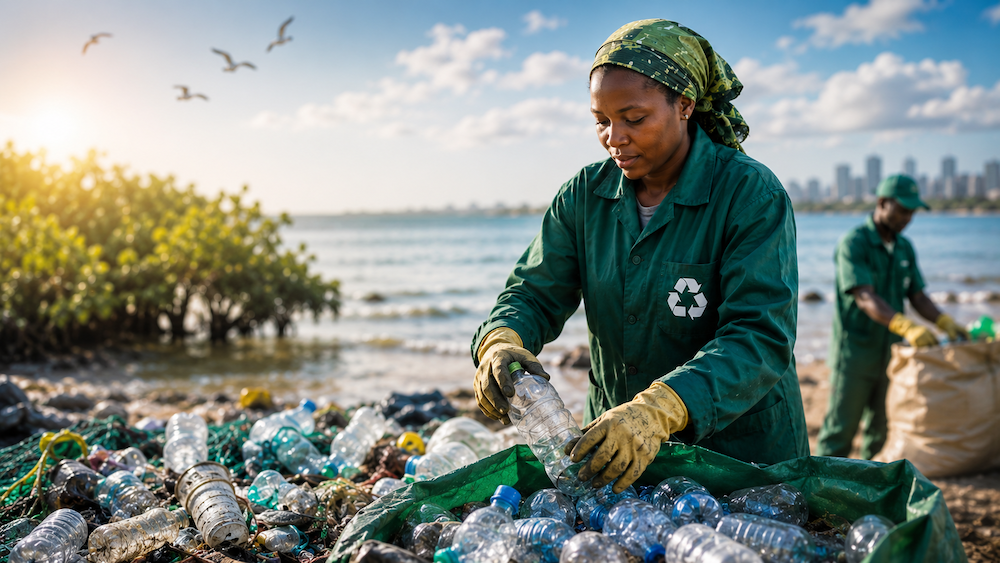

The waters of the Indian Ocean have long sustained Kenya’s coastal communities, supported fisheries, powered tourism, and served as a gateway to global trade. Yet beneath the beauty of the country’s marine ecosystems lies a growing environmental crisis of plastic pollution.
Every year, thousands of tonnes of plastic waste find their way into rivers, beaches, mangrove forests, and eventually the ocean, threatening biodiversity, undermining livelihoods, and contributing to the broader climate crisis.
Last week, however, Kenya signaled a major shift in how it intends to confront the challenge. On the sidelines of the 11th Our Ocean Conference in Mombasa, Kenya, the National Plastics Action Partnership (NPAP-Kenya) was officially launched, a groundbreaking initiative that seeks to transform plastic waste from an environmental burden into a driver of green economic growth.
The launch marks one of the country’s most ambitious steps toward building a circular economy, an economic model that keeps materials in use for as long as possible through recycling, reuse, and innovation rather than disposal.
The announcement comes at a pivotal moment for global ocean conservation efforts. During the conference, world leaders, development partners, businesses, and environmental organizations adopted the Mombasa Declaration, committing to more than 300 new pledges aimed at protecting marine ecosystems, combating pollution, and advancing sustainable blue economy initiatives. For Kenya, the NPAP is expected to become a central pillar in delivering those commitments.
Kenya has often been hailed as a continental leader in environmental protection, particularly after introducing one of the world’s strictest bans on plastic carrier bags in 2017. Yet despite that progress, plastic pollution remains a significant challenge.
Rapid urbanization, population growth, increased consumption of single-use plastics, and inadequate waste management systems continue to generate enormous volumes of plastic waste. Much of this waste ends up clogging drainage systems, contaminating agricultural land, polluting waterways, and flowing into the Indian Ocean.
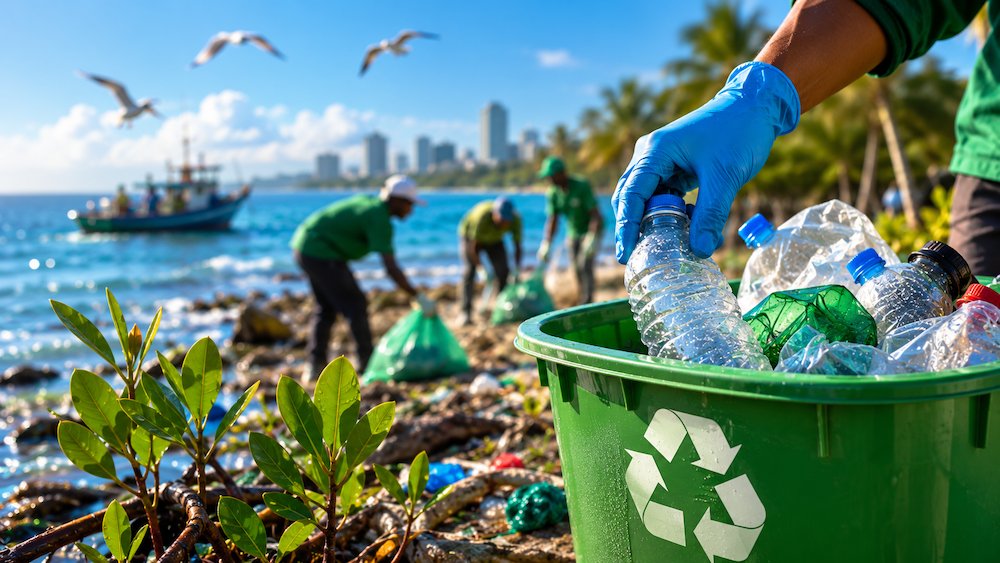
Environmental experts warn that plastics are no longer just a waste management issue. As plastics break down into microplastics, they infiltrate food chains, threaten marine life, and pose emerging health risks to humans.
The climate implications are equally alarming. Globally, plastics are produced primarily from fossil fuels. From extraction and manufacturing to transportation and disposal, plastics generate significant greenhouse gas emissions. According to international estimates, the plastics sector could account for an increasing share of global carbon emissions in the coming decades if production continues unchecked.
Reducing plastic leakage, increasing recycling rates, and promoting circularity are therefore increasingly viewed as climate solutions as much as environmental ones.
Speaking during the launch, Environment Cabinet Secretary Deborah Barasa underscored the need for a paradigm shift: “We are not here to manage waste. We are here to build an industry that empowers our people.”
Her remarks reflected a growing recognition that plastic pollution can no longer be addressed solely through clean-up exercises and landfill expansion. Instead, Kenya is seeking to create an ecosystem where waste becomes a valuable economic resource.
The NPAP brings together the Ministry of Foreign and Diaspora Affairs, the Global Plastic Action Partnership (GPAP), and UNDP Kenya, alongside private sector players, recyclers, investors, development partners, and civil society organizations.
The initiative aims to bridge the persistent gap between policy formulation and implementation, particularly around Kenya’s Extended Producer Responsibility (EPR) regulations, which require producers to take responsibility for the collection and management of the waste generated by their products.
While the legal framework exists, stakeholders acknowledge that enforcement challenges, fragmented markets, and inadequate coordination have slowed progress.
During discussions moderated by Maina Chege, participants emphasized that Kenya’s plastic challenge is increasingly one of market coordination rather than technological limitations.
Across the country, recycling enterprises have emerged to convert discarded plastics into construction materials, household products, textiles, and industrial inputs. Yet many continue to struggle because of inconsistent supply chains and limited access to reliable buyers.
Without predictable demand, investments in recycling infrastructure often remain risky. The NPAP seeks to address this bottleneck by strengthening linkages among waste collectors, recyclers, manufacturers, and consumers. By strengthening markets for recycled materials, policymakers hope to stimulate investment, encourage innovation, and increase the value of recovered plastics.
The vision is to create a self-sustaining circular economy where waste is viewed not as garbage but as raw material for new industries.
A key component of the initiative is the development of transparent traceability systems. Investors increasingly require assurance that materials marketed as recycled have indeed been recovered, processed, and traded through verifiable and ethical supply chains. Such transparency is becoming essential for attracting climate finance and sustainability-linked investments.
Kenya hopes that establishing robust traceability systems will unlock significant green capital from international investors seeking environmentally responsible projects.

This comes at a time when countries across Africa are competing to attract financing for climate adaptation, green manufacturing, and sustainable development initiatives. The ability to demonstrate measurable environmental impact could position Kenya as a regional hub for circular economy investments.
Among the most significant aspects of the partnership is its recognition of waste pickers as critical actors in the recycling ecosystem. For decades, thousands of informal waste workers have recovered valuable materials from dumpsites, streets, and landfills, often under difficult and hazardous conditions. Despite their contribution to environmental protection, many have remained excluded from formal economic systems.
The NPAP seeks to change that by integrating waste pickers into formal value chains, improving working conditions, enhancing incomes, and providing greater economic security.
For a country grappling with youth unemployment, the circular economy presents a significant opportunity. Experts estimate that recycling, waste recovery, repair services, and green manufacturing could create thousands of jobs while simultaneously reducing environmental degradation.
The implications extend beyond economics. Plastic pollution threatens coral reefs, seagrass beds, mangrove forests, and fisheries that support millions of livelihoods. These ecosystems are also vital natural defenses against climate change. Mangroves, for instance, store vast amounts of carbon and protect coastlines from storm surges and erosion. When choked by plastic waste, their ability to provide these services diminishes.
By reducing marine pollution, Kenya is not only safeguarding biodiversity but also strengthening climate resilience for vulnerable coastal communities.
The NPAP initiative signals a broader transformation in how Kenya views environmental challenges by seeing them not only as threats to be contained but as opportunities to create jobs, attract investment, reduce emissions, and build a more sustainable future.