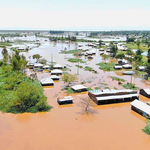
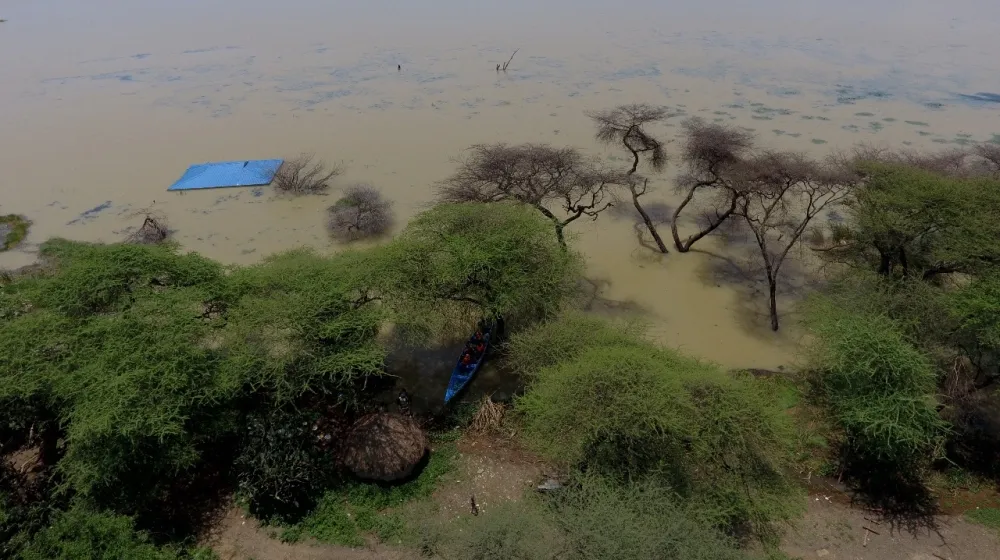

Rising water levels in Kenya’s Rift Valley are threatening to create a connection between saline Lake Bogoria and freshwater Lake Baringo, potentially exposing fish, aquatic habitats and fishing communities to a damaging change in water chemistry.
The immediate danger is that Bogoria could overflow towards Baringo, carrying dissolved salts and highly alkaline water into an ecosystem that supports freshwater species.
The greatest concern is a change in conditions beyond what Baringo’s freshwater organisms can tolerate. Sustained high pH can damage fish gills, skin and eyes, reduce growth and reproduction, and ultimately cause deaths. It can also increase the toxicity of ammonia already present in the water.
Damage could extend through the food chain, because changes affecting plankton and aquatic invertebrates could reduce food for fish, while declining fish populations would affect predators and fishing livelihoods. Sensitive organisms could also disappear from affected areas while more tolerant species become dominant.
For lakeside households, ecological disruption could translate into reduced catches, lost earnings and greater pressure on food supplies as significant salinisation could restrict the suitability of water for irrigation and other uses.
A 2024 study in the Journal of Hydrology: Regional Studies placed Bogoria’s spill point at approximately 1,000.2 metres above sea level. At its 2020 maximum, the lake needed to rise only another 70 centimetres to reach that threshold. However, its level subsequently declined by about 1.5 metres by 2023, demonstrating why historical measurements cannot establish today’s overflow risk.
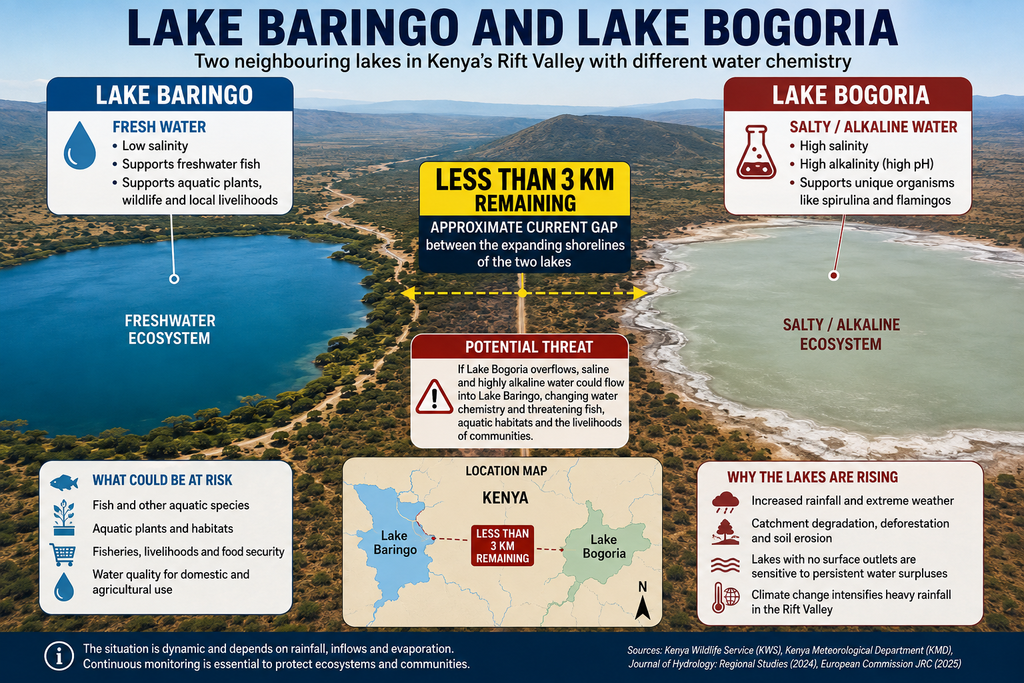
Bogoria’s own ecology is already under pressure from rising freshwater inputs. Kenya Wildlife Service says dilution of saline lakes changes the conditions needed by Arthrospira fusiformis, the microscopic cyanobacterium commonly called spirulina that feeds lesser flamingos.
When that food supply declines, flamingos move elsewhere. KWS reports that changing lake chemistry has affected Bogoria, Nakuru and Elementaita.
Research points to increased rainfall as a principal driver of the regional rise. A 2021 analysis of Baringo, Bogoria, Nakuru, Solai, Elementaita and Naivasha linked their expansion to changes in rainfall and water balance. Many Rift Valley lakes lack surface outlets, making them sensitive to persistent surpluses: when rainfall and inflows exceed evaporation and other losses, water accumulates
Climate change adds to the risk, but does not provide a complete explanation for every lake’s fluctuations. The Intergovernmental Panel on Climate Change (IPCC) projects increasingly intense heavy rainfall in eastern Africa. Natural variability, including El Niño and the Indian Ocean Dipole, also influences rainfall, particularly during the short-rains season.
Catchment degradation compounds the problem. A 2025 European Commission Joint Research Centre assessment documented forest loss, expanding cropland and increasing soil erosion around five Kenyan Rift Valley lakes. Degraded land can accelerate runoff and deliver sediment into lakes, altering shallow areas and worsening flooding.
The effects extend beyond Baringo and Bogoria. NASA reports that Naivasha’s water level rose about seven metres between 2010 and 2026, while its area expanded roughly 40 per cent, flooding homes, flower farms and infrastructure.
Kenya Meteorological Department reported that levels in Nakuru, Naivasha and Turkana surpassed their 2020 peaks from May 2024.