
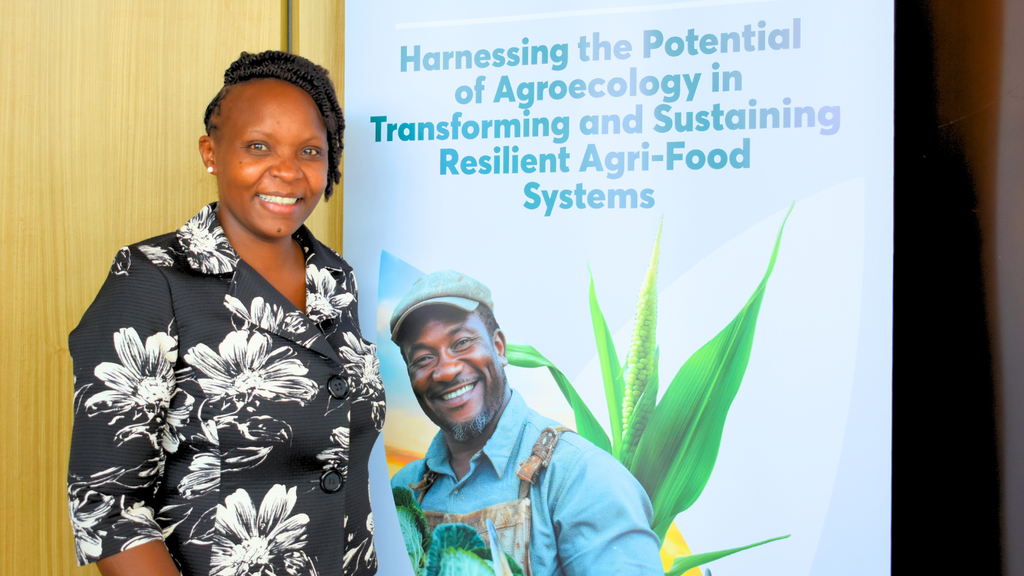
Dr Monica Nderitu
As the world marks World Food Day 2026 under the theme “Innovate Today. Nourish Tomorrow,” we are reminded that the future of food security depends on the choices we make today.
Innovation is not only about new technologies, it is about combining science, indigenous knowledge, data, institutions and human creativity to build productive, resilient and nutritious food systems while protecting the natural resources future generations depend on. The theme resonates strongly with Vi Agroforestry’s mission of strengthening sustainable livelihoods through agroforestry, Sustainable Agricultural Land Management (SALM), strong farmer organisations and climate resilience.
Across East Africa, food systems are under immense pressure. Climate change is driving prolonged droughts, erratic rainfall, land degradation and declining soil fertility, nowhere more visibly than in drylands such as the Karamoja Cluster spanning Kenya and Uganda, where food production, livestock productivity and nutrition are increasingly threatened. Yet partnerships between farmers, scientists, governments and development organisations are showing how innovation can transform landscapes and livelihoods.
At Vi Agroforestry, science is the foundation. Through Restor4More and Include2Restore, researchers, universities and communities are generating evidence for large-scale restoration and resilient food systems, using systematic soil and land health assessments, participatory research and Livestock Cafés, knowledge-sharing platforms where communities and researchers jointly test and refine restoration practices.
These innovations are practical, scalable and rooted in nature: soil health monitoring, water and soil conservation, pasture reseeding, fodder development, water harvesting and Farmer Managed Natural Regeneration (FMNR), a cost-effective approach that restores trees and vegetation from existing root systems. FMNR improves soil fertility and water infiltration, provides livestock fodder and strengthens drought resilience. Agroforestry, integrating trees, crops and livestock, further improves soil health, diversifies food production, increases carbon storage and strengthens ecosystem services.
Innovation is also increasingly powered by data. Satellite technologies such as Landsat, combined with field assessments, allow practitioners to monitor vegetation recovery, soil health and restoration outcomes across vast landscapes. Digital tools and climate information systems help communities anticipate droughts and plan for shocks. Through collaboration with ICRAF and the Regreening App, farmers and partners gain information for smarter land-use and agroforestry decisions. Data is becoming essential for understanding climate impacts, measuring progress and ensuring investments deliver results.
However, technology alone will not nourish tomorrow. Some of the most powerful innovations already exist within communities, particularly among women, the custodians of Africa’s food systems. They produce food, preserve seeds, manage household nutrition and pass knowledge across generations. Their indigenous understanding of local ecosystems, drought coping strategies, traditional crops and sustainable land management is invaluable for climate-resilient agriculture.
Yet women are often excluded from decision-making, resources and innovation. Empowering them as leaders, innovators and entrepreneurs is not only a matter of equity; it is essential for food and nutrition security. A woman’s knowledge of native fodder species, seasonal grazing patterns or traditional food preservation can complement soil analysis, climate modelling and restoration planning. The most effective solutions combine both.
Young people are equally important. As digital natives, they are positioned to drive innovation across agricultural value chains through climate information services, digital extension, agribusiness applications, e-commerce, precision agriculture and food processing, making agriculture modern, profitable and attractive. They are also developing new approaches to value addition, food preservation, cold storage and waste reduction that improve nutrition and reduce food loss.
Strong farmer organisations are another critical ingredient. They enable collective action and knowledge sharing, aggregate produce, strengthen bargaining power and connect farmers to markets, finance and advisory services. By organising production and marketing, they reduce supply chain disruptions, improve food distribution, raise smallholder incomes and help scale climate-smart agriculture and sustainable land management.
Ultimately, the future of food lies in bringing together science, technology, nature and people. East Africa’s drylands show that restoring landscapes, strengthening livelihoods and improving nutrition are not competing objectives. They can and must advance together.
As we celebrate World Food Day 2026, let us recognise that innovation lives not only in research laboratories and digital tools, but in the wisdom of rural women, the creativity of young people, the determination of farmers and the power of collective action. By investing in evidence-based agroforestry, empowering women, harnessing youth innovation, strengthening farmer organisations and scaling SALM practices, we can truly innovate today and nourish tomorrow.
Dr Monica Nderitu is Regional Environment and Climate Change Advisor at Vi Agroforestry